In this letter to the editor, the reader responds to the story, “Diversity Mode Helps You Unlock Lost FM Channels.” Radio World welcomes letters to the editor on this or any story. Email [email protected].
The author is a longtime overseer of the Worldwide TV-FM DX Association.
Your last Signal Spot talked quite a bit about Andy Bolin and antenna phasing. I posted the original article about it on my website, which is still online.
Bolin admitted to me at that time that he may have gone a little too deeply into explaining how the process worked. Maybe it was too deep for some people, but not for others.
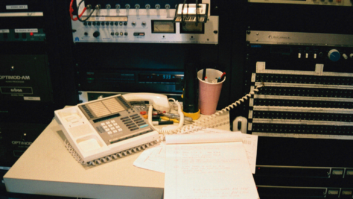
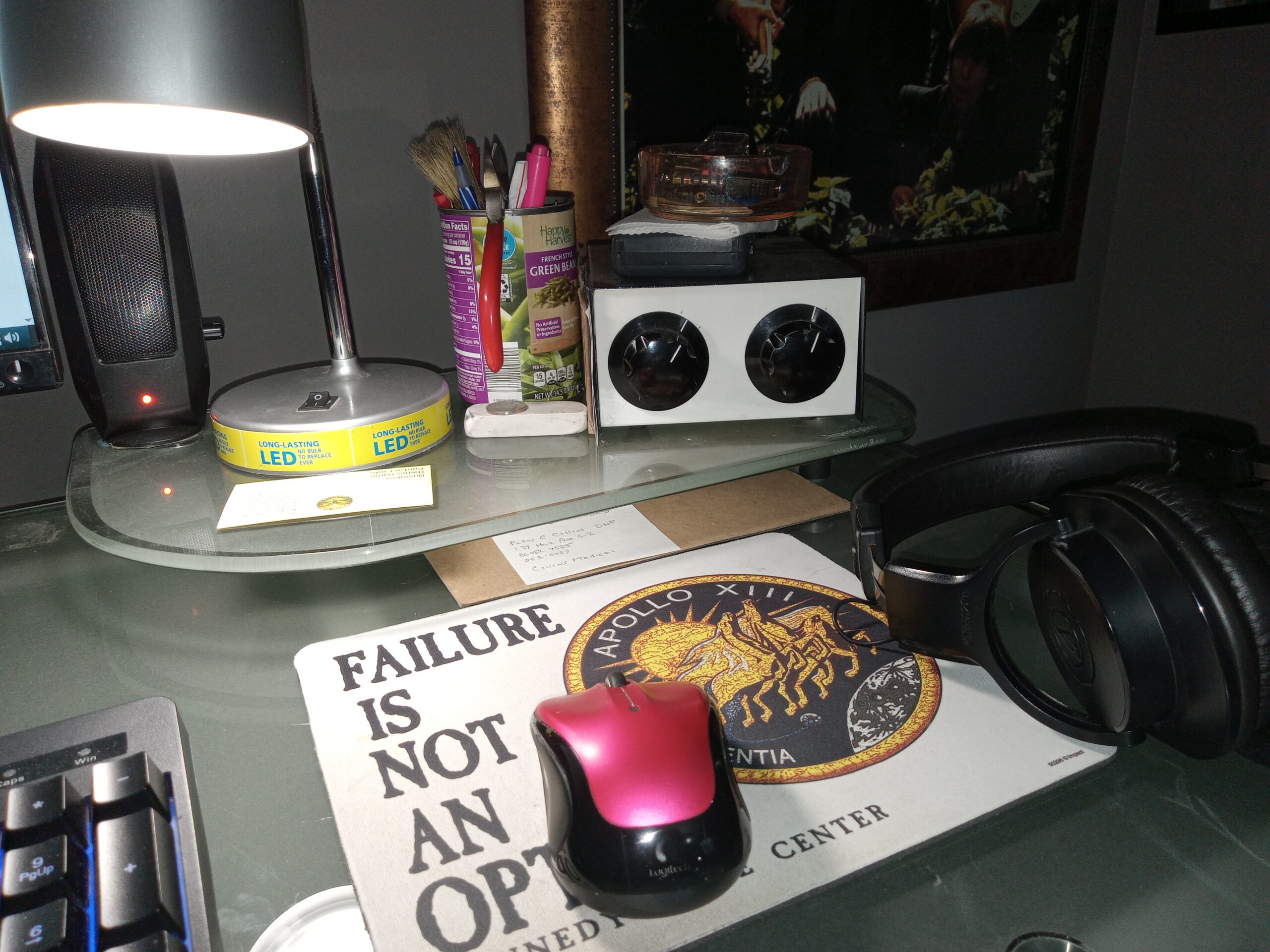
If you look at the photo in Fig. 1, you will see a real, live Bolin phase box sitting on my desk right now. All summer, I used an RSPDuo and diversity mode. Diversity mode is great for nulling out stations. The only negative is that you can only use it on an RSPDuo.
The Bolin box will work with anything — an Elad SDR, Airspy R2, anything — and right now I have an Airspy HF+ Discovery connected to it.
There is sort of a trick to using the phase box. If you look at the picture, you will see that the dials on the phaser are set at roughly 2 o’clock. When using two similar antennas with similar gain aimed in the identical direction of a semi-local station 50–60 miles away, the best null will be found at roughly 2 o’clock on the phaser knobs. If you can’t get a null on any station at those knob positions, then something isn’t right. One antenna might not be aimed in the direction you think it is, or you might have to try a longer or shorter piece of coax between the phaser and the splitter. But once you have found the correct length, there is no need to ever change it again.
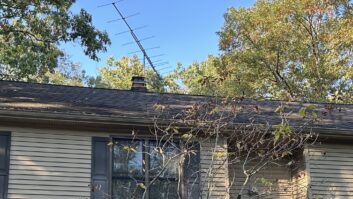
Currently, my main antenna is an APS-13 with an original Probe 9 as the phase antenna. For the past three months, though, I used one of those four-element Stellar Labs Yagis as a phase antenna. Yes, you will be able to phase, but your front-to-back ratio (F/B) will be degraded by using the Stellar Labs antenna. That’s why I put my SP9 back up last week. On 99.9 MHz, instead of phasing out WEZN(FM) and hearing WODE(FM) in Pennsylvania, I was hearing WKMI(FM) in Athol, Mass., coming in off the back of the Stellar Labs antenna. That’s just one example.
And the RSPDuo: It’s a good SDR, except for the overload I get when pointed west right at WAQY(FM) and the distorted phantom signals I see clearly on 87.5–88.1 MHz that move around if I change the center frequency of the spectrum just a little. That is something I live with until I get so annoyed that I switch over to the Airspy.
Many years ago, I would use phasing to cancel out my semi-locals. Now, instead, I phase out the HD Radio sidebands so I can hear the semi-locals that I used to phase out before.
And regarding the FM canceler on Airspy’s SDR# software: There are maybe four or five locals I can nuke with the canceler to hear more distant stations, but the canceler doesn’t work on HD sidebands, so that’s of limited use. There are about 34 HD sidebands I can wipe out using antenna phasing, so that’s of more use to me than the canceler is.
— Mike Bugaj, Enfield, Conn.
[Read the Signal Spot from Nick Langan for More DX-Related Stories]