New Hampshire-based broadcast engineer Stephanie Donnell welcomes the autumn months. After another summer of lightning, power outages and overtaxed HVAC equipment, it’s time for a break, at least until winter brings snow and ice to our antennas, dishes and access roads.
Stephanie calls spring and fall the “sweet seasons,” not too hot nor cold (though as I write, a tropical depression is approaching the Carolinas, and state governors in the region have declared an emergency).
Whether you live in the northern or southern hemisphere, your autumn is a good time to weatherproof.
Take a walk around your transmitter sites. Inspect the building structures, foundations, walls and roofs.
Make note of any potential entry points for unwanted visitors. Plug small entry points with stainless steel wool (rodents will eat right through expanding foam). Walk around the base of the tower, looking for hardware that might have fallen off — bolts, nuts, tie wraps, things that shouldn’t be on the ground.
Stephanie also shares a suggestion for cleaning slider controls like faders. She discovered this while repairing stereos and CBs years ago: Use GC Electronics Freeze Mist or a similar component cooler. It’s not perfect but will remove gunk. Worth trying in a pinch.

Be forewarned that some spray cleaners can dissolve plastic components. Stephanie recalled trying Radio Shack “Color TV Tuner Cleaner” and it completely ruined the slider.
What do you use on your studio components? Tell me at [email protected].
Stephanie also read our idea about using a heavy solenoid to slap the side of a misbehaving transmitter without making a visit to the site. She said it has crossed her mind, especially when confronting a three-hour drive that ends with a trip on a snow-tracked ATV just to reach a site to cycle the On/Off button on an APC UPS. She couldn’t even get the remote IP GUI to take a “power cycle” command!
Oh, the fun we have as engineers.
EMF paint
According to building biologist Ryan Blaser, who founded a company called Test My Home, EMF paint is a shielding product that creates a barrier to radiofrequency radiation. He says it contains conductive materials, typically carbon-based, that help block or reduce exposure to electromagnetic fields.
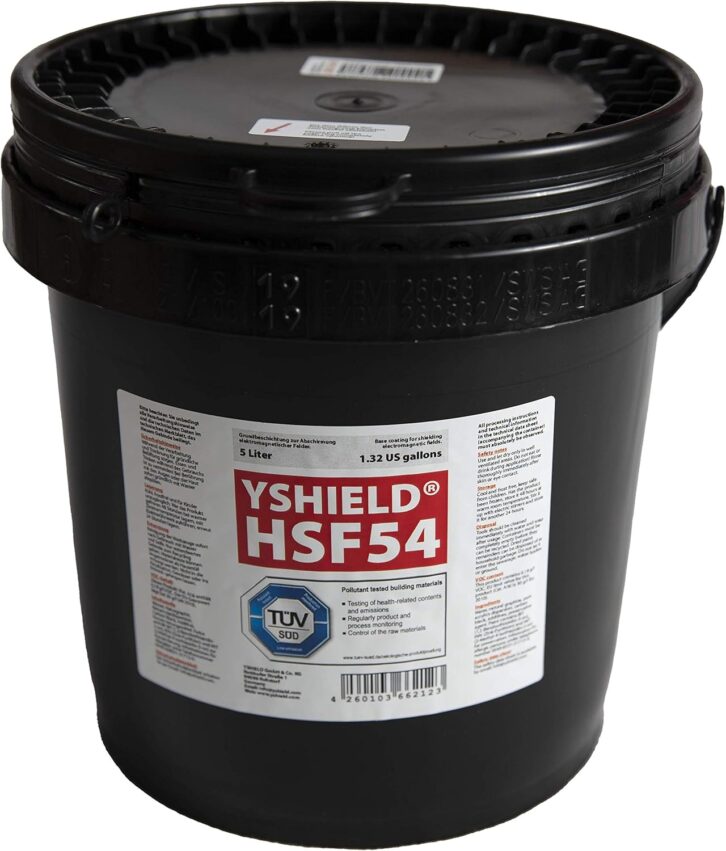
You will find brands being sold under names like YShield, ECOS and Woremor.
Although the idea of shielding yourself or your studios from electromagnetic fields may be tempting, the solution is accompanied by some concerns.
Blaser said there are pros and cons. He said EMF paint is more costly and involved than regular paint and that it will affect the performance of your cell and Wi-Fi devices. Most EMF paint is black or gray, though some can be painted over. And the painted surface must be grounded.
Have you used such products? Let me know.
There’s a lot of interesting discussion about EMF paint online. See here for example.
Bipolar supply
Ira Wilner, chief at Monadnock Media Group, read our tip about replacing a device’s original power supply.
He offers a caveat about replacing a bipolar supply with two independent units: You may lose some safety features. First is the balancing or tracking of both outputs in order to keep their difference the same; this feature is not available with separate supplies.
You also lose emergency shutdown upon overload, where one rail overloads and the other polarity also shuts down. Two independent supplies won’t provide such peace of mind. Should the condition occur, serious equipment damage may result.
Speed test
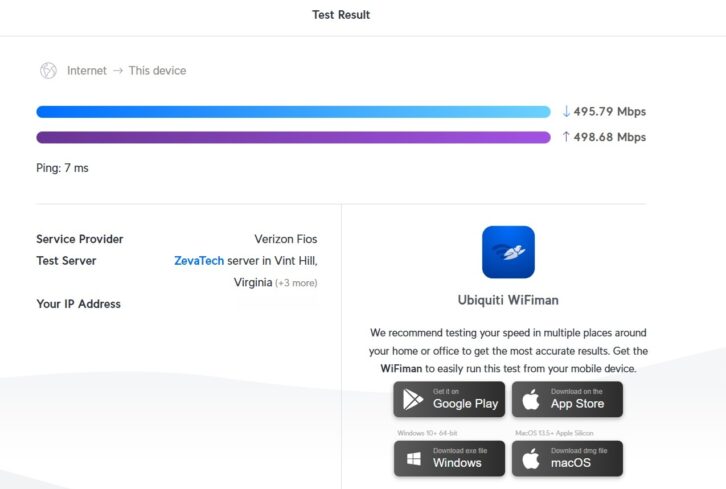
Paul Sagi, a regular tips contributor not daunted by being based in Malaysia 9,500 miles from RW headquarters, shares a free Wi-Fi speed test, available here.

Common benchmarks for home services are 100 Mbps or higher for download speed, and 20 Mbps for upload speed. However, large families and other heavy users may require 1000 Mbps (1 Gbps) or more, to support multiple devices and high bandwidth activity like 4K streaming and online gaming.
Workbench submissions are encouraged and qualify for SBE recertification credit. Email [email protected].