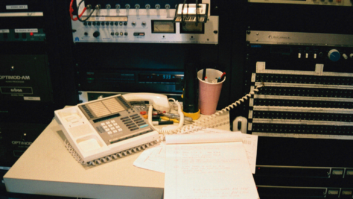
In this letter to the editor, the reader responds to Archie Stulc’s letter, “The Dilemma of WBT’s Site,” as our readers continue to weigh in on the future of the WBT south Charlotte, N.C., transmitter location. Radio World welcomes letters to the editor on this or any story. Email [email protected].
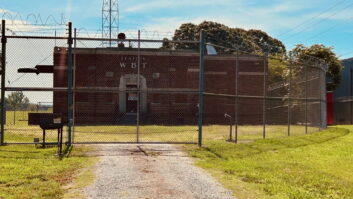
In Archie Stulc’s letter, he asked of the WBT(AM) transmitter site if it is allowed to remain as-is:
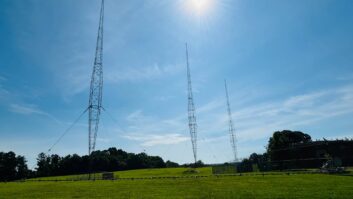
Who maintains the unused towers? What position will the FAA take regarding obstruction marking and lighting? And does the FCC have any standing or jurisdiction to intervene?
For the Federal Communications Commission’s involvement, it applies only to ensuring the station operates according to FCC rules and regulations.
Beyond that, the FCC has zero standing.
The towers obviously fall under FAA purview, and whoever takes ownership will be perpetually required to keep them lit and maintained.
Two of the three towers were replaced after Hurricane Hugo in 1989, while the remaining tower dates back to 1946. What would it cost to maintain them? Is the building even accessible?
Who would staff and care for it just for an extremely tiny handful of occasional visitors — most of whom are aging baby boomer radio enthusiasts like myself?
Finally, was that site ever actually a destination over the past 80 years?
Its history can easily be documented using today’s technology and made accessible to the world online. Interfering with a private property transaction for the sake of a tiny few is absurd.
Archie referenced in his letter when WDGY(AM) in the Twin Cities built a new tower complex with an array that covered the Minneapolis-St. Paul area with a much stronger signal:
“That was a story of things going right: the status quo was preserved, listeners benefited and everyone made money. Huzzah!”
True, but that was 40 years ago. Much has changed in these intervening years.
Back then, AM still owned close to half the radio audience. Other competing media, now growing at lightning speed, did not exist.
A return on such an investment made perfect sense.
In addition, the cost of rebuilding complex directional sites is vastly higher and the engineers around to design, build and maintain them diminishes with each passing year.
— Bob Biermann
[Check Out More Letters at Radio World’s Reader’s Forum Section]