In this letter to the editor, the reader responds to the story, “Saving a Slice of Carolina Radio History.” Radio World welcomes letters to the editor on this or any story. Email [email protected].
I read your recent article regarding WBT(AM) and the ongoing issues surrounding its land, preservation and ownership. I wanted to share a few thoughts, pontificate a bit and reminisce about the past.
When I was growing up in the Twin Cities, there was a powerhouse of a station: WDGY (1130 AM). It was mostly rock in its early days and later transitioned to sports. But what always fascinated me was their nine-tower directional array in Bloomington, south of Minneapolis, which was surrounded by cornfields.
By the early 1980s, urban sprawl reached the fringes of the WDGY transmitter site. Outlet malls, strip malls and business parks gradually replaced the cornfields, which were sold to developers at a substantial profit.
In the mid-to-late ’80s, WDGY sold its transmitter field and purchased land further south in Prior Lake. They built a new tower complex with an expanded array that covered the Twin Cities and surrounding area with a much stronger signal—and turned a profit in the process.
That was a story of things going right: the status quo was preserved, listeners benefited and everyone made money. Huzzah!
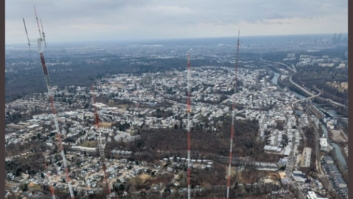
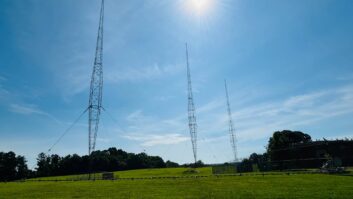
Unfortunately, that is not the case with WBT in North Carolina. They are no longer broadcasting from that site, and they no longer own the land. However, they still own the buildings and towers sitting on the property.
As article respondent Bob Biermann said, there may simply not be enough public nostalgia to preserve the site as it currently stands. I tend to agree.
However, this is a unique situation — and one that may become increasingly common as industry consolidation progresses. Here, we have two — and possibly three — distinct entities involved:
- The landowner
- The owner of the station building and towers
- The U.S. Government
Preservation of historic structures has a rich tradition in this country, but so do private property rights.
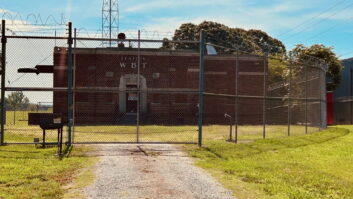
While the WBT building itself has been granted a form of historic protection, that designation may not cover the towers, nor does it address fair compensation for the property owners.
As Bob pointed out, there is nothing inherently unique about WBT’s tower array or the physical towers themselves. Removing the towers from the preservation equation could make negotiations between the landowners and site owners significantly easier.
On the other hand, the U.S. Government invested in these facilities not once, but twice, and maintains infrastructure on the property.
If the site is allowed to remain as-is, critical operational questions arise: Who maintains the unused towers? What position will the FAA take regarding obstruction marking and lighting? And does the FCC have any standing or jurisdiction to intervene?
Just a few thoughts from the field.
— Archie Stulc, former broadcast radio engineer
Radio World welcomes letters to the editor on this or any story. Email [email protected].