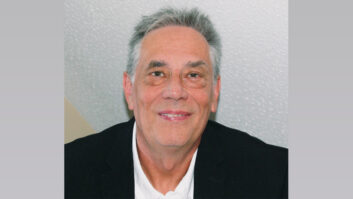
Dietmar Kopitz is CEO of the RDS Forum, based in Geneva, Switzerland.
Radio World: What is the RDS Forum?
Dietmar Kopitz: It is a non-for-profit industry association co-financed by its members. It maintains and further develops the worldwide RDS standard, which has been around for more than three decades now. In the United States, the RDS Forum cooperates with the NRSC and the NAB to achieve harmonization of the technical specifications for RDS, standardized by the IEC.
RW: What are key recent advancements for radio technology globally?
Kopitz: Digital radio technology is on the upswing, while analog is on a downswing. The reason may be that in comparison, digital is generally perceived as young and analog is old. But seen technically, analog FM radio remains a very attractive and mature technology, and with modern equipment it can be 100% digital.
FM radio is most widely used worldwide, and the transmission side offers an enormous choice of modern and energy efficient equipment. For the next 10 years FM radio will remain the most widely used broadcasting technology.
Comparisons between analog and digital radio often ignore some important facts: For FM radio reception, ICs use DSP, i.e. digital signal processing. This kind of digital demodulation delivers very high technical quality for audio and data, and it is very inexpensive.
For optimal automotive FM reception, multiple antennas are often used, for example on car rooftop in combination with the rear window. The system chooses the antenna that delivers the best signal, processed digitally, and this can be an integral part of the IC chip being used.
RW: We’ve seen Norway and Switzerland try to move away from FM broadcasting. Will this trend continue?
Kopitz: These are two cases that attracted a lot of criticism. In Switzerland the FM switch-off has since been identified as a big mistake, where the public broadcaster had lost over a half million listeners. For FM radio, public radio will come back in Switzerland during 2027 and continue until at least 2034. Also, commercial and local FM radio will from 2027 expand again in Switzerland.
RW: Why are hybrid delivery platforms important, and how are they changing the way broadcasters and listeners interact?
Kopitz: The young generation is used to the interactivity available on the internet. They expect the same for radio. Hybrid delivery platforms respond to this well and are on an upswing.
RW: Will broadcasting itself still be relevant in the long term?
Kopitz: Yes, for the foreseeable future. However, traditional radio listening will continue to decline, irrespective of the technology being used. Radio listening in cars will remain the most popular type.
RW: This obviously is a huge topic. Are there one or two other key points you’d like to make?
Kopitz: Yes, for FM radio RDS offered limited possibilities for metadata broadcasting. These possibilities have been much extended with the RDS2 option, and it’s easy to integrate new applications.
In the RDS Forum we are focused now on paving the way for a wide implementation for applications such as a universal alert system as well as a utility management channel for achieving green electrical energy distribution, reducing pressure on the grid — the existing infrastructure of FM radio can transfer information to millions of devices via data services, a system that is inexpensive, resilient and very efficient.
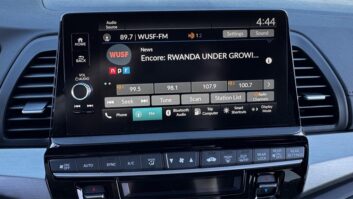
For automotive receivers, RDS2 can speed up RadioText, deliver station logos, music and cover art images, and link to the same radio program being streamed over IP.
The reason all this is not yet being used is that there are no chips yet that support the demodulation of the three additional RDS2 data streams. We are working on resolving this.
In addition, our wish is that FM radio reception would again be possible in mobile phones, as it was before smartphones arrived. That kind of an implementation can be achieved at almost no extra cost for a mobile phone. It would put an FM radio with RDS in the hands of almost everyone — very useful for informing the population through radio in cases of emergencies or electrical power outages.
Read more about global radio trends in the latest Radio World ebook.