The FM band is awfully crowded in northeastern Connecticut, and an area LPFM applicant used the lack of vacancy as its main argument to the FCC to let it use 87.75 MHz as the operating channel.
The organization “WHKA FM 87.7” incorporated in the state in 2023, just prior to the LPFM filing window that December. It currently operates as an online-only station.
It sought to spotlight the Tolland and Windham regions to serve what the organization described as an underserved population in the state’s “quiet corner,” broadcasting with 100 watts ERP from a transmitter site about six miles east of the University of Connecticut campus and licensed to Storrs–Mansfield.
But there was a lack of suitable FM channels to apply for, the organization said. So, WHKA sought a waiver to operate on the TV Channel 6 audio band, pointing to LPTV FM6 and Class D 87.9 FM circumstances.
However, after three separate attempts following the organization’s initial application, the commission remained unconvinced, denying its most recent application on May 19.
(Read the commission’s memo and order on the LPFM application.)
Following its denial of a WHKA petition last May, the Media Bureau minced no words: Claiming that LPFMs are equivalent to the other two classes would “effectively eviscerate the distinct regulatory regimes” applicable to different types of FM services, it said.
Patrick Boots, the station manager for WHKA, said in a release that its application was submitted in good faith and reflected a belief in the core purpose of the LPFM service.
“We respectfully disagree with the FCC’s reasoning and conclusion, and continue to believe that the value of broadcasting should not depend upon geography, FCC semantics or a fabricated ‘grandfathered’ status,” Boots said.
No vacancy
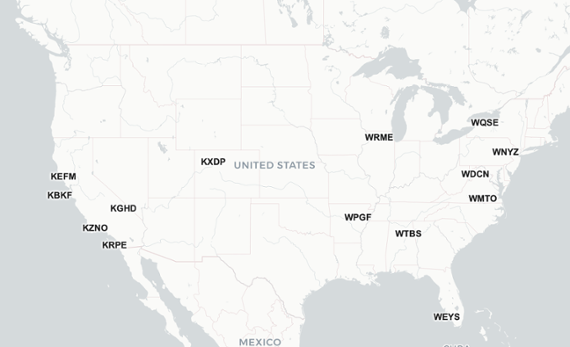
According to the Media Bureau’s account, in WHKA’s initial 2023 application, it included a waiver to operate on TV Channel 6, arguing there were no available FM frequencies in its local area, that the proposed station would not cause interference and that the operation of other “Franken FMs” is indicative that using the spectrum serves the public interest.
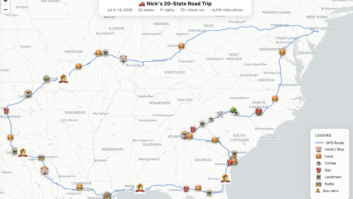
WHKA noted that the commission has previously authorized LPTV Channel 6 licenses that were already broadcasting on FM signals on 87.75 MHz to continue to do so, with certain restrictions — specifically, LPTV FM6 stations, also known as “Franken FMs,” with the 14 currently operating in the U.S. shown in our map above.
It also cited two Class D stations that were authorized in the U.S. on 87.9 FM — KSFH in Mountain View, Calif., whose license was cancelled in 2017, and K200AA(FX), a translator in Sun Valley, Nev., near Reno.
But the bureau dismissed WHKA’s application in March 2025 for failing to specify a valid FM broadcast channel, and it denied the organization’s waiver request.
It cited the fact that the lack of FM band frequencies and the public benefits of an LPFM are not specific to WHKA.
The organization filed a petition for reconsideration that April, reiterating its points. Its central argument was that an LPFM should be allowed on 87.75 MHz because it is functionally equivalent to the other allowed classes. But the commission denied that petition.
Finally, last June, WHKA filed another application for review, arguing that “the strict application of a rule would preclude service despite no technical barrier and where the public interest would be better served.”
WHKA contended that the bureau’s denial of its waiver request frustrated the “core purpose of the LPFM service to expand local, noncommercial voices in communities underserved by other media outlets.”
The Media Bureau determined in its most recent ruling this was not the time nor place for such discussion.
“An individual waiver request is not the proper forum to deliberate whether, generally speaking, LPFM operation in the TV6 Band is comparable to existing uses or would serve the public interest, and we decline to do so here,” the FCC said in its May 19 denial.
Boots said that WHKA remains committed to serving the Connecticut River valley community through noncommercial webcasting.
[Do you receive the Radio World SmartBrief newsletter each weekday morning? We invite you to sign up here.]