 SiriusXM backs the FCC’s proposal to allow Weird Space Stuff (“WSS”) operators to access the Satellite Digital Audio Radio Service band — where the satellite and streaming content provider operates its satellites and repeaters.
But SXM pushed back against adding new operators in the adjacent Wireless Communications Services C & D blocks, and it also rejected a proposal that advocated for secondary, non-interference-based SOS operations in the SDARS band without a lease.
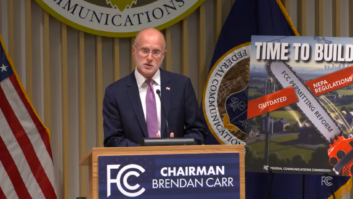
Chairman Brendan Carr is aggressively searching for new frontiers. In a proposal adopted last spring, the FCC expressed interest in leasing spectrum in the SDARS band where SiriusXM has successfully deployed and grown its nationwide platform.
SXM offered its feelings in a Nov. 11 ex parte filing.
(Read SiriusXM’s Nov. 11 filing.)
The commission’s proposal seemingly gives SiriusXM an opportunity to unlock new growth via regulatory changes that allow spectrum leasing and observers said that the potential spectrum monetization could help the satellite radio company expand its bottom line.
Weird Space Stuff
The FCC’s proposed rulemaking notice for what it’s calling “Spectrum Abundance for Weird Space Stuff” looks to bring “spectrum abundance for emergent space activities.” In it, the commission seeks to add secondary allocation and permit SiriusXM to lease its spectrum to earth station licensees to provide Space Operation Service for “emergent space operations.”
The proposal was adopted in April and the FCC has been seeking comment on the proposed changes.
SiriusXM wrote that it supports the commission’s proposal to allow new space operators to access the SDARS band “pursuant to a spectrum leasing framework” while also offering protection for the services SiriusXM provides in SDARS and the adjacent bands.
According to the commission, the aptly named WSS NPRM aims to address the acute shortage of readily accessible spectrum for telemetry, tracking and command. It will use existing allocations, explore new uses of the spectrum and consider market-based access mechanisms.
The NPRM, among other things, proposes to add a secondary allocation for the SOS in spectrum bands that could support emergent space activities, particularly in frequency bands allocated for non-Federal use that may be lightly used in certain geographic areas.
As the sole SDARS band licensee, which is a 25 MHz block of spectrum, SiriusXM currently uses it to serve approximately 33 million satellite radio customers. It operates a fleet of geostationary satellites and over 1,000 terrestrial repeaters across the United States to fill coverage gaps in urban canyons and areas blocked from satellite coverage, according to its comments.
The satellite radio provider in comments filed last week says the commission’s proposal offers a “reasonable approach” to enable new space operators to access the SDARS band — so long as it maintains the current spectrum leasing framework.
One reason the SDARS band (2320–2345 MHz) is attractive for expanded service, according to the FCC, is that SiriusXM — as the current licensee in the band — does not currently serve Hawaii, northern Alaska or the U.S. Pacific territories. That results in geographic areas where new operations could proceed with reduced interference risk.
Further comments
In its comments, SiriusXM urges the FCC to reject a proposal from Muon Space to allow secondary, non-interference-based SOS operations in the SDARS band without a lease.
SiriusXM contends that Muon’s “bare-bones proposal” approach fails to provide any details as to how its proposed secondary use would protect SiriusXM’s existing operations or how such spectrum access would be shared among stakeholders.
SiriusXM also argues that “de facto leasing” gives WSS operators reliable, contractually protected spectrum access while allowing SiriusXM to vet uses and prevent harmful interference.
SXM is also licensed to operate in the adjacent Wireless Communications Services (WCS) 2315–2320 MHz and 2345–2350 MHz bands (“C & D blocks”), spectrum that the satellite radio company uses to provide satellite emergency communications information to public safety entities.
But SiriusXM said it opposes adding any new SOS allocations in the adjacent WCS C & D blocks. The satellite radio broadcaster told the FCC that it believes adding secondary allocations would disrupt recent deployment progress and revive historical adjacent-band interference complexities.
“Deployment in these spectrum bands is on a sustainable path. Now is not the time to disrupt this long-awaited development of the WCS band,” SiriusXM wrote.
The satellite radio operator, which also held a meeting with Space Bureau staff earlier this month, concluded it most recent comments by saying the commission should permit leasing in the SDARS band to facilitate reliable spectrum access for space operation services.
“If the commission does proceed with creating a secondary SOS allocation in the SDARS band, it should do so only under a regime that relies on the de facto leasing framework for WSS operators and SiriusXM to allow access to the band.”