Hubbard Radio’s WTOP(FM) has been one of the top revenue-generating stations in the United States for more than a decade, according to BIA estimates. Although it is in Nielsen Market No. 8, it regularly beats out stations in the larger markets to pull off that feat.
WTOP’s over-the-air revenue in 2023, the most recent for which BIA published estimates, was $66.3 million. WTOP led the BIA list 13 times over the previous 14 years. It also pulls in consistently high ratings.
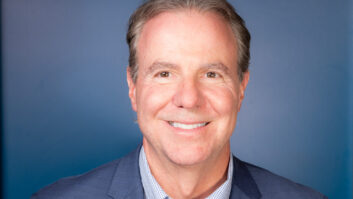
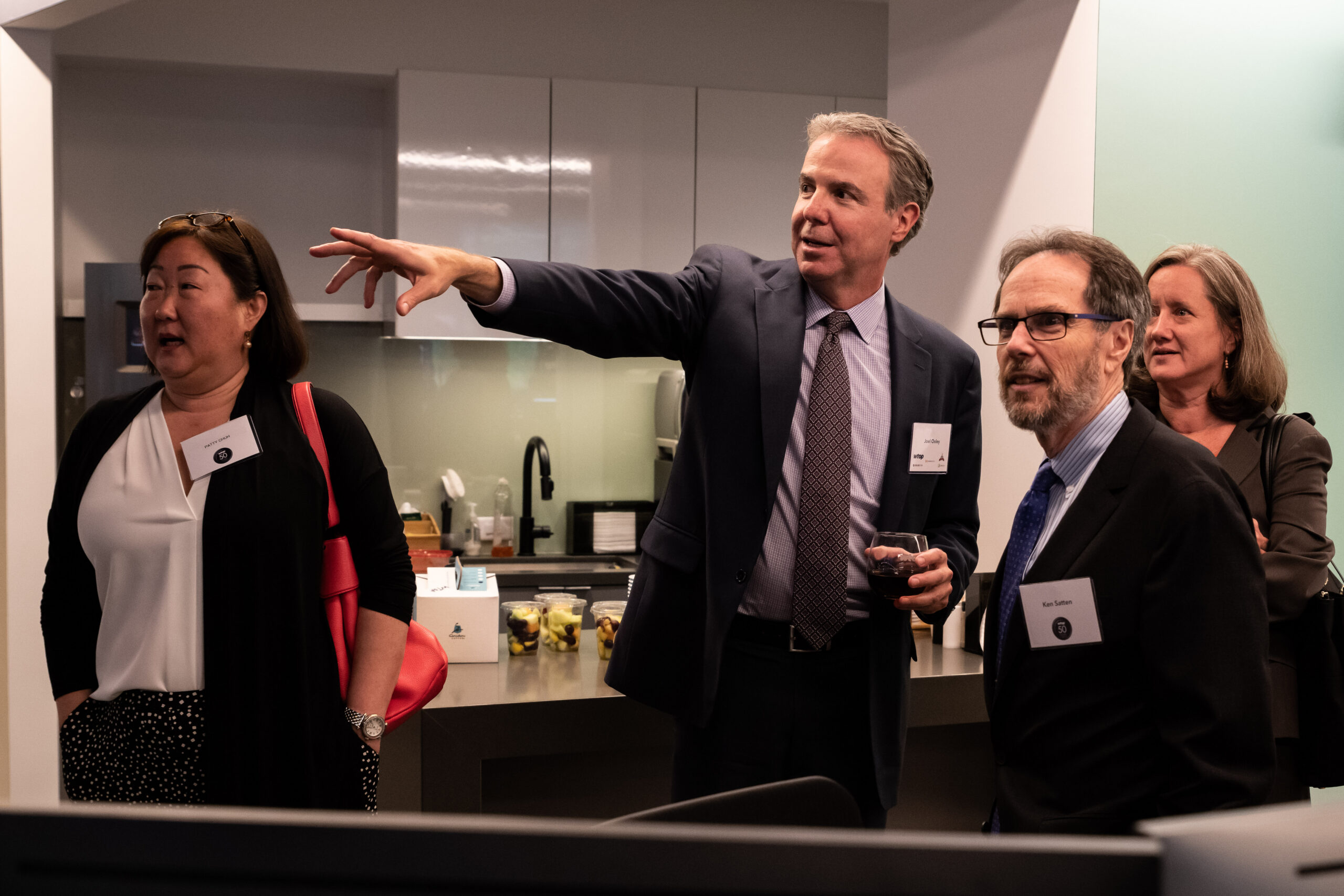
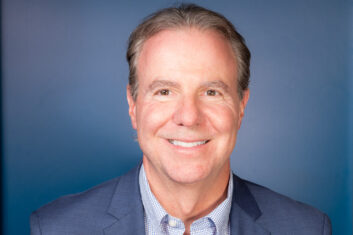
That remarkable streak occurred under the leadership of Joel Oxley, president/GM of WTOP, WFED(AM), the Federal News Network and the 2060 Digital Washington platform.
Oxley, who is about to retire, has been named to receive the 2026 NAB National Radio Award from the National Association of Broadcasters.
We asked him about the uniqueness of the Washington market, changes in newsroom workflows and his secret to generating revenue. Text has been edited for length and clarity.
Radio World: Are you optimistic about the radio broadcast business model going forward?
Joel Oxley: Yes, I think it can still work, but I think you’ve got to have great products, and you must have products that connect to people. You’ve also got to understand that radio is great distribution still. But you’ve got to be playing in all the platforms. As long as you do that, radio can be still a great part of the business.
But it’s not the 1990s anymore. You’ve got to be looking at the business model differently. You can’t be sitting around waiting for agency avails — I mean it’s great when you get agency avails, we love agencies when they call us and give us a bit of business. [But] you have to be incredibly proactive and make sure that you’re getting out and figuring out what you can do to help solve your clients’ needs.
Find solutions. It could be digital. It might not be over the air radio every time.
RW: Does AM have a future as the margins continue to shrink?
Oxley: That’s really going to be market-dependent, signal-dependent. It’s getting harder. I don’t think anybody would tell you that it’s an easy business. We have found some good uses for our AMs, and I think others can too.
Especially when AMs are paired with translators, especially smaller markets, they make a whole hell of a lot of sense.
We’ve experimented with AM digital. There are ways to make AM sound better. There can still be a place for it. But I’m not going to tell you that it’s an easy business.
RW: What makes the Washington radio market unique?
Oxley: I tell people: It’s always a good thing to be in the all-news business in the news capital of the world.
The market has really grown, too. It wasn’t that long ago, honestly, that it was a 2-million-person market. Now it’s over 6 million. If you throw in Baltimore, it’s like 9.
Also the growth of the federal government has meant a lot more jobs have come here. All kinds of government contractors. That’s what makes us unique.
Unlike most markets, there’s also a lot of political influence advertising here, and that’s a great advertising category for us. There’s more issue money spent here than anywhere.
Advocacy money used to be really big for us, but it’s a smaller part of what we do now.
However, the government contracting side has grown a ton, and we see that as an area that’s going to continue to grow.
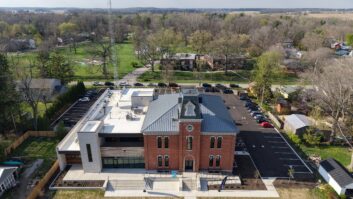
RW: Many radio companies are downsizing their physical footprint. You opened a large new facility seven years ago. Do you still need that much space now?
Oxley: No, we don’t. The reality is a lot more people work remotely now.
The tools are so much better. Our reporters, a lot of them do amazing things with just an iPhone with audio and video.
Our remote work has increased significantly. The workflows have changed. Salespeople can work from anywhere. Docking stations and good connectivity means that you can do your job from all over the place with a laptop, let alone your phone.
So if I had it to do over again, we wouldn’t need anywhere near as much space as we have.
RW: How is AI changing how work gets done in the WTOP newsroom?
Oxley: Lots of ways. But we’re being trying to be very careful and thoughtful about it. Certainly, being in the news business, we cannot afford mistakes. We can’t afford misinformation.
We insist that everything that we do has a pair of human eyes on it, and that people are reading it through, proofreading, fact-checking. We’ve got to make sure things are right. If you lose your credibility, you’ve lost.
RW: Do you worry about the future of all-news radio given the massive amount of instantly available information that Americans now have right on their phone?
Oxley: Sure. You’ve got to always be concerned about that. But we’re on the phone, too, for people to consume our products.
RW: There is great pressure to compete with digital platforms. You’ve gone through the digital transition. How do you choose which ones are successful without diluting the original value of the radio broadcast business?
Oxley: It’s a point a lot of people miss. It’s great to go into all kinds of different platforms and all kinds of different things, but you got to make sure you get ROI. You’ve got to make sure that there is a business plan. You can’t just go into it without making sure that you’re also supporting that with advertising.
I think that’s a missing piece for a lot of folks. They go into it and they’re getting tons of hits or tons of views, but they don’t do much because you can’t monetize.
RW: The Federal News Network airs on WFED(AM), which isn’t a highly rated station. Why is the network successful?
Oxley: So it’s not a ratings play. It’s about reaching the right people. It’s reaching government decisionmakers. CIOs for example, really high up in the government levels.
And while we really don’t see that necessarily in the ratings, we do see it in our streaming numbers and our podcast numbers, where we see the number of people who are consuming that product. It goes pretty deep.
These are things that really matter to the upper levels of government, and we know that we’re getting pretty good numbers there. But it’s a niche play for sure.
Sometimes it’s about getting the right thousand people. Sometimes about getting the right six people. Sometimes it’s about getting the right two people. So it’s a different play than broadcast in a sense, but it’s been going really well for us.
RW: You’ve supported the work done by Dave Kolesar with AM HD Radio at WSHE Frederick, Md., formerly WWFD. It’s a full digital-only station. What does the future look like for full-time digital AM and for that station specifically?
Oxley: I’ll tell you, it sounds so much better. I think that it’s something that if you can find the right format, it’s going to be a much better play than trying to just go with traditional AM. I don’t know that it’s necessarily been proven yet, that somebody can make a business out of that.
I still think it’s a viable way to go because it does make me forget that I’m on AM. It’s like I’m listening to FM.
RW: You play music but no commercials on that station. How long can that go on for?
Oxley: It’s more of a public service play right now. It’s more experimental. No, it’s not making a profit.
RW: What is your overall impression of HD Radio, including the extra FM channels? Is it all that you expected?
Oxley: I don’t think it is what anybody expected it to be. I think it also came out late. And adoption has not been maybe as strong as people like. But I’m not sure that everybody knows how to use it, so it’s still a bit of an uphill battle.
However, it is great added distribution, and we’ve found lots of different uses for it over time.
RW: Does Hubbard participate in DTS AutoStage?
Oxley: Yes, we’ve been involved in that. Have you seen some of those graphics on the data? They’re fascinating. The heat maps especially. This could be a cutting- edge tool. It shows a real good story exactly where people are listening. Mostly in the car. It’s pretty compelling, and there are some really heavy concentrations in certain places.
But it proves the point that people are out there in cars listening in a huge way to radio. That is a real plus for the industry.
RW: What has been your management philosophy?
Oxley: I have always felt that I work for the staff; they don’t work for me. I work with them. I am there to try to make things as easy as possible on the inside because they’re pretty tough on the outside.
And you always have to be getting better. You’ve got to be experimenting and figuring out how to get better. If your status quo, you’re losing.
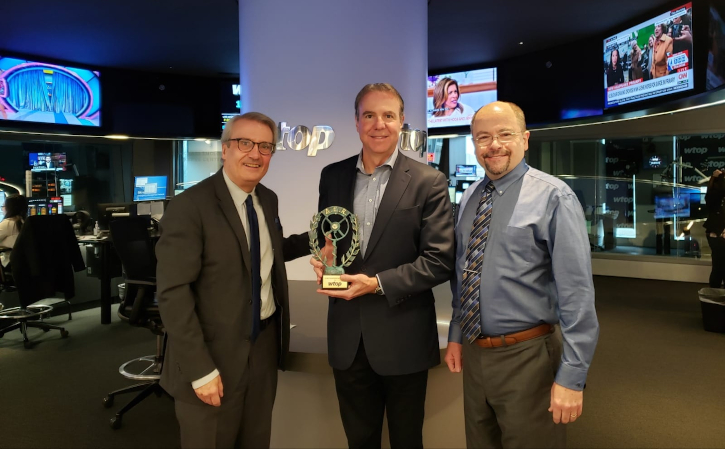
RW: WTOP has been the revenue king in U.S. radio throughout much of your time. What good lessons can people take from the success that you’ve seen?
Oxley: Radio is great distribution, but one way or another, you’re delivering a product, and you’ve got to make that product compelling as much of the time as you possibly can.
Then you’ve got to really be solution-based with your advertising. You can’t just go in and say, “Look how great we are. We’re number one.” You’ve got to go in and say, “Okay, so what are we going to do to you know figure out how to help your business? How are we going to address your needs?”
You also need to be honest with people. Sometimes you have an answer, maybe sometimes you don’t, but you’ve got to figure out how you’re going to solve their needs.
And now, like I said, with digital, there’s really almost always a path to a good solution for each advertiser.
[Do you receive the Radio World SmartBrief newsletter each weekday morning? We invite you to sign up here.]