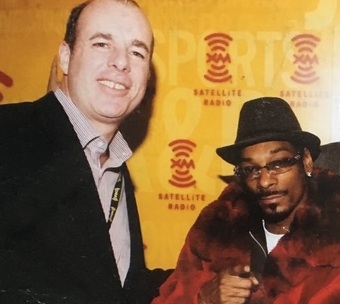
Dan Murphy is a former executive at XM Satellite Radio who was involved with the launch of the service.
With XM’s 25th anniversary coming up this month, he has released a book called “They Pay for Water,” which he describes as the first insider account of building the service.
According to the synopsis, Murphy left a VP job at Sony “to join 14 people in a rented basement office with bright orange walls, an $80 million FCC license and roughly 12 months of money left. The plan was to build a radio network in space and convince a country that had never paid a dime for radio to start paying ten dollars a month.”
Radio World: Dan, it sounds fascinating. How did you get involved in that ambitious project and what was your role there?
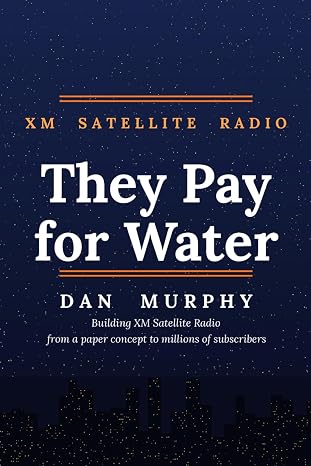
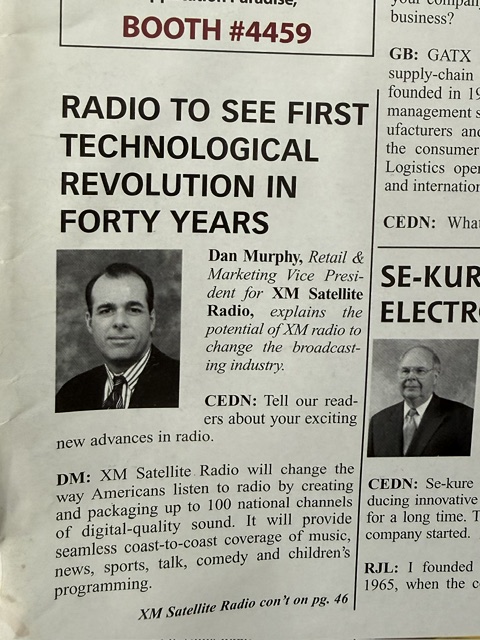
Dan Murphy: I joined the company in 1998 when it was called AMRC, or American Mobile Radio Company. As the VP and later EVP, I was responsible for the development of the XM Radio product line and the distribution channels. I worked with all the XM departments to make the final consumer product sellable to our distribution partners.
RW: The book is called “They Pay for Water.” Why that title?
Murphy: Many people said they would not pay for radio; it was free. My own mother said the same thing to me before I joined the company. I asked her if she paid for bottled water.
RW: How can our readers find it?
DM: It is self-published on Amazon and is available in hardcover, paperback and ebook.
RW: Your book covers a great deal of interesting ground, including building the network, getting the satellites up, breaking into the marketplace. Many of our readers are technical. What do you think they’ll find most interesting, and why?
Murphy: Much of the technology in the book is explained in simple terms and most people will understand it.
To quote others, I think they will be amazed that XM Satellite Radio had to develop it all from scratch.
Unlike the launch of MTV, which did not have to develop the TV broadcast towers for TV, the software to run TV programs, nor the actual TV that consumers had to use at home, we had to develop everything, including the satellites, the radios, the antennas, the software, the activation system, the studios and the content.
RW: You told me that the concepts of churn and SAC are an important part of the story. What are they, and what will we learn by reading the book?
Murphy: Churn is when a current customer/subscriber decides to discontinue the XM service and stop paying us. We had spent a lot of money to acquire that customer, and if a current customer leaves, we have to spend money to acquire a new customer just to replace this customer leaving. It is like running in place, and if churn is too high, you go out of business and run out of money.
SAC stands for subscriber acquisition costs. This is how much money you spent in marketing and so on to acquire a new subscriber. If you spent $360 to acquire a subscriber, it would take you at least 36 months to pay that back if you are only charging $10 a month for the subscription. That’s three years before you break even. Not a good number. You need to keep this number below 20 months or less and constantly find ways to reduce it.
RW: How do those factors play out today for satellite radio?
Murphy: Churn and SAC are still very important for satellite radio and any subscription-based business like cellphones, cable, etc. It is what drives a stock price and makes investors feel good or bad about the business.
RW: When did you leave the company and what do you do now?
Murphy: I left when we completed the merger, outlined in the last pages of the book, to go home and treat a new cancer challenge and be with my kids. Today, I work with a new robot startup company called Sparkoz Technology.

RW: How has today’s SiriusXM evolved from the company you knew?
Murphy: Not a great deal, and there was no reason for wholesale changes. There are some new layers added, such as greater use of podcasts, online distribution and a changing content lineup. But the basic foundation of the company is largely the same.
RW: What else should we know?
Murphy: Technology will continue to change the distribution landscape for content as it has for the past few decades. Another wave will arrive over the next five years, such as 6G cell service, and with it, new ways to distribute content.
[Do you receive the Radio World SmartBrief newsletter each weekday morning? We invite you to sign up here.]