This is one in a series about how stations are creating and managing audio from anywhere, thanks to virtualization, cloud, IP and other technologies.
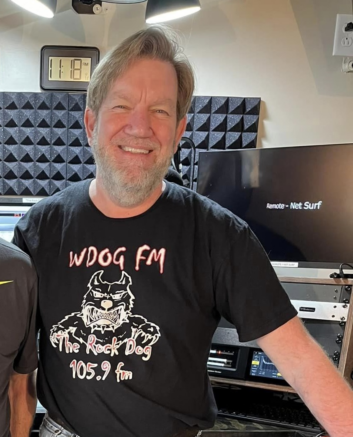
“Massive changes have really shifted the landscape since my first radio job in 1980,” said Dan Slentz, director of Blue Streak Media at John Carroll University. He’s an experienced radio/TV engineer and Radio World contributor who is also an advisor to LPFM station WDOG in New Philadelphia, Ohio.
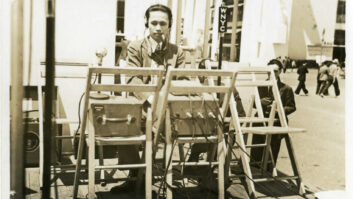
“A remote broadcast meant a Marti or phone line, then a board op and even a two-way or dedicated phone line at the site for communication between the studio and the remote.
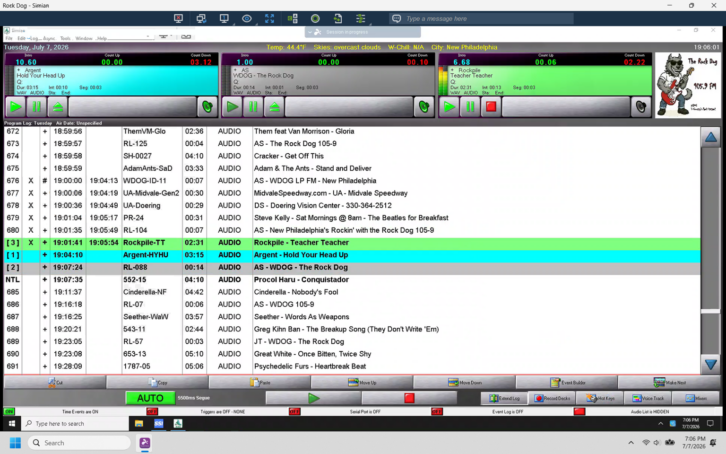
“Now, using services like AnyDesk, Splashtop and others, we can remote into our automation systems. And with 5G and services like Starlink, there is no limitation as to where you can pull an internet signal.”
He noted the rollout in recent years of “glass” consoles, friendly for remote applications and requiring no board op at the station.
“Then add in streaming boxes or service like CleanFeed, and you have broadcast audio to the station from the remote — broadcast-quality audio, remote control of automation and remote control of your audio board. Simply amazing.”
He likes “Splashtop for remoting into control gear at the station, and computer-based automation making contact closures and relays unnecessary. Added to this is our DMX remote for control of our new Wheatstone DMX-8 console, and one person can easily do remotes.” He added Starlink with a 10-hour battery in case of any 5G internet issues.
“What I’ve found is that limitations are now only based on what you know. More than ever, it’s critical to stay up on technology and changes. If there’s something missing, you simply may not have heard about it or considered what kind of tech can fill that void.”
What about doing broadcasts from anywhere with a laptop and a mic?
“There is a place for this, but the cost can be prohibitive to a smaller station. In some ways, I’m ‘old school’ and still prefer audio on-site, in-studio,” Slentz said.
“I’ve had twin fiber paths leaving my building at different locations by different providers and still have had failures that were ‘broadcast-catastrophic’ — though this was in TV and a far more technical environment.”
He said Murphy’s Law still often comes into play.
“So with on-site systems, I keep a running RAID backing up all audio and content, and a full (and tested) weekly backup. For radio, it’s relatively easy, as even wave files (and 20,000+ files) still don’t require more than 5 TB. In comparison, my 4K video systems had storage as high at 2.8 PB, or 2,800 TB.”
Read more about how technology is enabling radio flexibility in the free ebook “Audio Production (From Anywhere).”