In this “Future in Focus” series, we’re asking industry thought leaders, executives and engineers to comment on top trends of the past year and what they expect for radio in 2026.
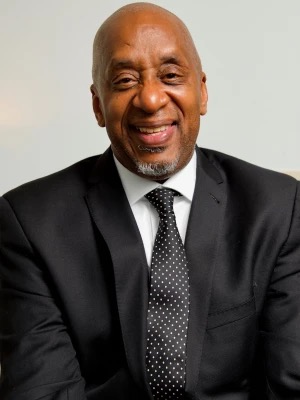
Steve Williams broke into radio growing up in Cincinnati at WAIF(AM). He programmed Detroit’s WJZZ(FM) in the mid-1980s and went on to lead successful smooth jazz stations such as New York’s WQCD(FM), San Francisco’s KKSF(FM) and Denver’s KJCD(FM), as well as heritage R&B station WDAS(FM) in Philadelphia.
Williams also has several years of experience in public radio, first at Detroit’s WDET(FM) in the 80s, and more recently at WAMU(FM) in Washington, D.C., and KUOW(FM) in Seattle, before becoming president and CEO of Newark Public Radio’s 88.3 WBGO(FM) in 2021.
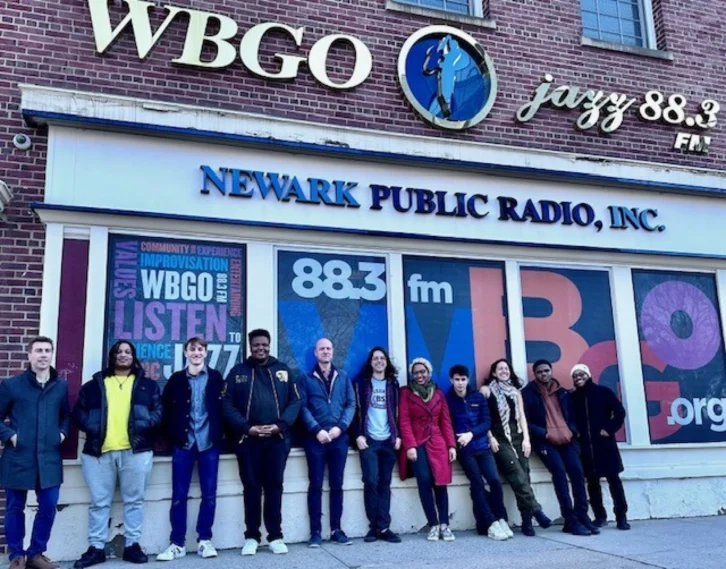
WBGO is the only full-time jazz station in the New York City tri-state area.
In this wide-ranging conversation, we explore with Williams the current state of public radio, what WBGO is about to unveil in 2026, and why he believes jazz music on the radio is thriving.
Radio World: Did 2025 change public radio as we know it forever?
Steve Williams: If you’re thinking about the loss of federal funding earlier this year and dismantling of the Corporation of Public Broadcasting — yes — 2025 is the year when public media began to move into a new state of maturity and institutional awareness, which will undoubtedly — and I believe positively — influence the way forward from here.
It’s worth noting that the seeds of what we’re seeing now were sown in 2016 — the year that I believe truly changed the course of public media. Back then, there were few, if any, that could see or accept the “handwriting on the wall” — the inevitability of 2025.
It’s the result of what happened after the beginning of President Trump’s first term, when public media’s relationship with the federal government became more adversarial.
RW: How is WBGO’s future looking, from a funding perspective?
Williams: The loss of federal funding has been a terrific source of positive energy for the “mother” of WBGO’s reinvention. Not only are our listeners stepping up in record numbers to fill the gap, but we are also prioritizing and energizing more diverse revenue streams. When I think about what losing federal funding means for BGO, I equate what happened to a “kick in the head” to truly realize our positive potential. We’re compelled to explore open doors to revenue opportunities that will provide long-term solutions to near-term challenges.
Annually, WBGO receives more than $2.5 million in direct contributions from thousands of new and recurrent listeners — for decades running.
WBGO is sui generis among modern-day media organizations — indefatigable longevity, brand exclusivity, a high degree of constituent loyalty, exceptional demography and geography and technological adaptability.
[Related: “WBGO Brings Programmatic Ads to Its Internet Stream”]
And out of necessity, we’re leveraging those qualities to build stability and prosperity. The possibilities are unique and exhilarating. And to some degree, we have the rescission of federal funding to thank for instigating a fresh approach to thinking about our future, and the here and now.
RW: What will be your main professional goal or project with WBGO in the coming 12 months?
Williams: Here’s a scoop: In response to listener demand, in 2026 we’ll launch a multi-channel, multi-formatted bespoke music streaming service that will encompass the entire spectrum of jazz music and journalism. We’re expecting it to launch in Q1.
Our annual Jazz Appreciation Month celebration, meanwhile, will feature a dozen major colleges and universities performing in our studio this April.
We’re in the midst of a multi-million dollar new studio construction project, with a scheduled completion in early 2028.
Finally, we have our eye on our 50th anniversary celebration planning, which happens in 2029.
RW: What trend in terms of technology do you think is going to have the greatest impact in radio in 2026?
Williams: Sophisticated AI-generated content will continue to have a significant impact on the radio industry, not as a replacement for human integrity and ingenuity but more as an augmentation and elevation for the “gray matter” that drives our world.
At BGO, we’re finding an appetite for streaming audio and custom content curation to be the strongest point of engagement for the people we serve.
The other phenomenon that will take hold in our industry during the coming year will be collaboration, or cross-functional partnerships between organizations that were once considered competitors — such as the recent coming together of iHeartMedia and Netflix — which I believe is a bellwether.
On a smaller scale, but no less significant, is the landmark collaboration between the music-formatted New York City area public radio stations – WBGO, WQXR, WFUV and WSHU, which we initiated more than two years ago.
RW: While it affects commercial broadcasters, is the potential removal of caps on local ownership limits something you will be paying attention to this year?
Williams: The recurring ownership caps issue is of no immediate concern for public media, in my estimation. Although it could, in the future, present sustainability solutions for smaller station owners/operators not affiliated with one of the larger companies or an academic institution.
As an aside, if you’re in radio, you’re in the business of content distribution. The trends suggest the long-term benefit of investing time and development resources into the surging 21st century non-broadcast, digital platforms for content, instead of 20th century terrestrial broadcasting assets.
RW: Are there any other regulatory/FCC trends you are watching?
Williams: The FCC’s “delete, delete, delete” approach to deregulation is something to watch, although the stated intent of that initiative — to remove outdated rules and regulations — contradicts the recent reinstitution and emphasis on the formerly obsolete and nearly 80-year old News Distortion Policy — which is cause for some concern because of implications related to the possibility of censorship and political retribution.
I’m hoping that one day that the restrictions to revenue generation that prevent noncommercial radio stations from competing in the general marketplace will be restructured and/or reduced, if not lifted altogether, to give the noncom operators room to “breathe,” financially speaking.
RW: You’ve had more than four decades programming highly successful stations on the commercial side of the radio ledger, in big markets. What’s been the biggest adjustment operating a station like WBGO?
Williams: Wow — has it been four decades? In many ways it seems like it was only a few days ago … For me, the learning curve has been about harnessing the creative application of exceedingly limited resources, and gaining an comprehensive understanding of the principles of fundraising for a nonprofit organization.
RW: Is the appetite for jazz music still thriving?
Williams: The hunger for jazz and the menu of choices has never been richer, more robust or varied in the entire time of its existence.
Jazz is very alive, thriving and in constant state of renewal — which is what you would expect of something — an art form — that has retained its significance in our society for more than a century.
And the excitement and intellectual curiosity that jazz inspires is eternal.
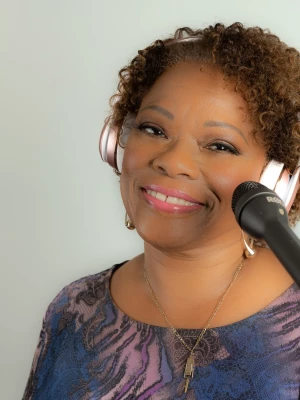
RW: You programmed “CD 101.9” in New York during its most successful years in the 1990s. Working contemporary jazz on a “traditional” station like WBGO can be difficult. Have you been able to tap into some of WQCD’s former audience and through a voice like the legendary Pat Prescott, who is heard regularly on WBGO?
Williams: The balancing act to which you’re referring is easy for us – it is core to our mission to provide a completely diverse, inclusive and truthful experience for our followers, who come from all walks of life and entry points. It’s our obligation to tell the whole story.
In fact, BGO fans include many who listened to CD 101.9 during its heyday (1992–1999), and they recognize and respond favorably to a richness they remember from back in the day. It’s a familiar sensation to hear former CD 101.9 hosts like Prescott and Paul Cavalconte on our air because of the programming similarities between the two stations.
RW: How will our industry be different in 10 years?
Williams: Will radio be different in 2036? Most certainly — but what will be different is anybody’s guess.
If I had to hazard a guess, it would be to look for more video integration and connectivity — “radio TV” or “TV radio?” Connected TV’s and telephones, connected, self-driving automobiles and programmatic, geo-targeted content. Everything can and will have a readily available and easily accessible video component.
In fact, it’s already happening — the news of WQHT(FM) host Ebro moving his popular national radio show from broadcast to YouTube — is a bellwether for the future of radio — or maybe for some a “canary in a coal mine”.
[Do you receive the Radio World SmartBrief newsletter each weekday morning? We invite you to sign up here.]