Experiencing nitrogen leaks? Steve Tuzeneu, CPBE, recommends that before you call riggers to climb your tower, take a bottle of diluted liquid soap and spray around the air inlet (Fig. 1) and all the gas fittings on the manifold (Fig. 2).
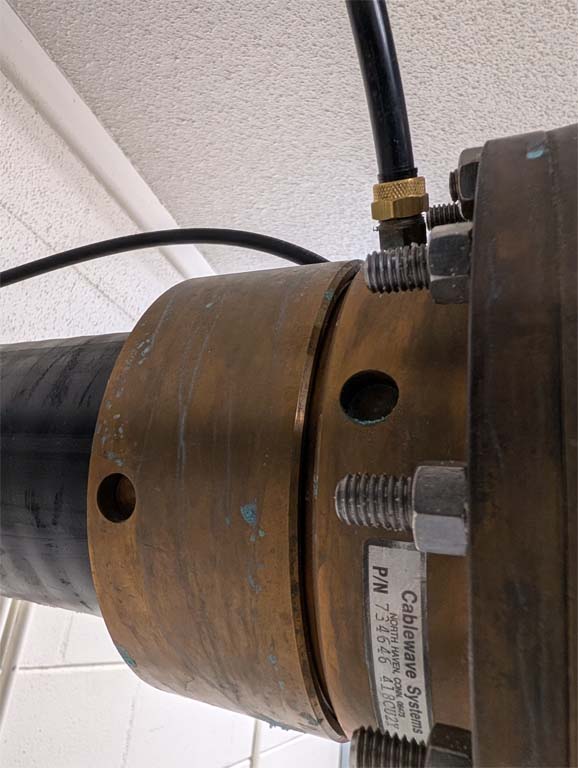
This will clean off grunge, but more importantly it will reveal leaks. Any bubbles — even tiny ones — will demonstrate nitrogen escaping at that junction.
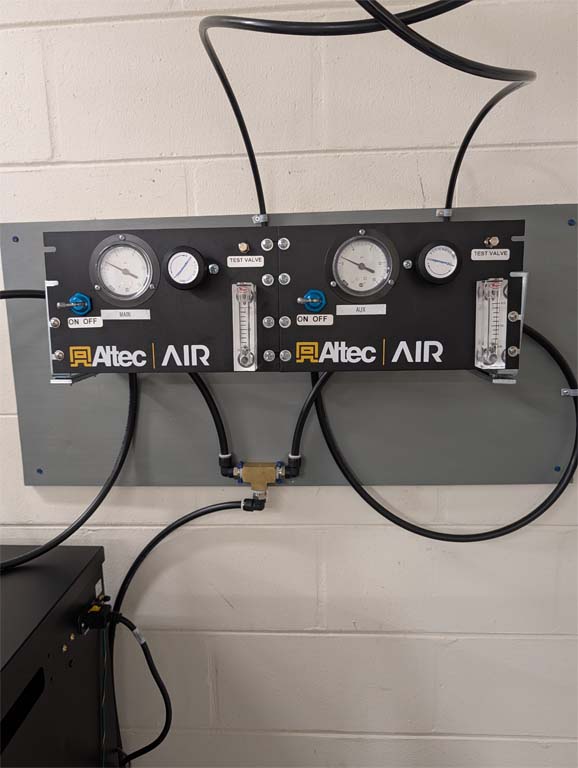
Tighten or replace any leaking fittings. And then you’ve saved yourself the money for a tower climb.
Protect ground strap
Copper thieves are at it again. Over the last month, I’ve spoken with two stations that had copper strap stolen.
If you haven’t “painted” or otherwise concealed your ground strap, do so now. That shiny strap seems to draw thieves like moths to flame.

Slather a coating of Gardner’s Wet-R-Dri sealant on the copper strap. Metal reclaimers will not accept copper that’s covered with this asphalt compound. It’s a roofing cement made from asphalt. (Steer clear of rubber-based “equivalents.”) This stuff won’t peel off. It’s available at Home Depot or direct from the manufacturer.
M-Disc lifespan
A reader asked our editor if the M-Disc archival optical disc format can really save and protect recorded material for 1,000 years, as claimed.
After some research, it looks like this is true, based on accelerated longevity tests and the inorganic, stone-like recording layer construction. The layer is not affected by sunlight, humidity or temperature.
Do you have experience with particular media formats for very long-term storage? Share it with us.
Backup audio
Long-time engineer Steve Ordinetz in Littleton, N.H., commented on our tip about repurposing an old CD player as an emergency backup at the transmitter site.
“It’s a good idea, but even in the best-case scenario, the CD only gives a little over an hour’s worth of programming,” he notes.
There are sophisticated backup options now available through various platforms including cloud-based automation systems. But for some applications, you might need a basic fix.
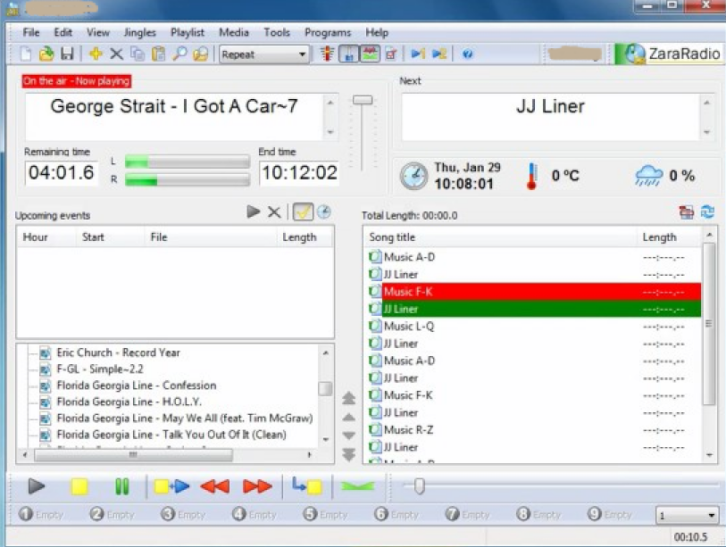
Back in the ’00s, Steve discovered a freeware automation program called Zara Radio (Fig. 4). He uses it for audio backup at his transmitter sites because it’s versatile and will run on pretty much any PC.
Steve set up a library of a couple of hundred songs, grouped into rotator files such as “Artist A–C, Artist D–F,” etc.). All have similar but not exact sizes so songs don’t come up in the same order all the time.
Steve will set it up to play a couple songs, a liner, a couple more songs, etc. The program has a timed event feature so you can create a window for a legal ID to play. It also allows you to set precise end-of-message marks so every segue is tight. The program runs 24/7 so audio’s always available for as long as it’s needed.
Steve used a silence sensor to trigger it, but set to about 45 seconds to prevent loose programming from starting the backup.
This goes into an audio switcher in the air chain. When studio audio returns, it automatically switches back. Steve says it works great, and you can’t beat the price.
Workbench submissions are encouraged and qualify for SBE recertification credit. Email [email protected].