Rob Bertrand is CEO of Inrush Broadcast Services. He gave a talk at the Public Radio Engineering Conference this spring about the Nielsen PPM and its impact on spoken-word stations.
Radio World: Rob how did this talk come about?
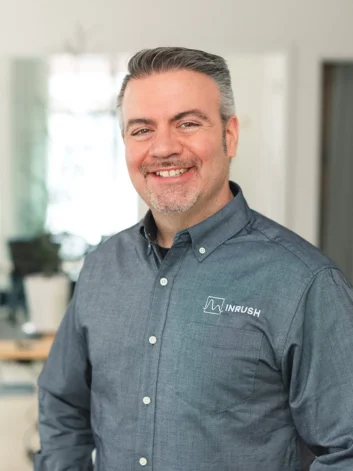
Rob Bertrand: I’ve spent 12 years or so focused on ratings watermarking as it pertains to spoken word. My work began with the primitive tools we had available not long after Arbitron released their new methodology in 2008 and continued to evolve as I noted patterns in failure alarms, audio distortion and ratings spikes and dips in the early days.
It so fascinating to me that the audio chain had such a direct impact on our ratings. I loved partnering with folks around the industry to help improve this situation for my favorite radio format: all-news.
RW: What did you do to perfect encodability at WAMU?
Bertrand: Essentially, I took all I learned about ratings watermarking for all-news and sports at CBS and I brought it to WAMU. It made a big difference in ratings performance — for a number of years, consistently besting the ratings powerhouse of WTOP.
For sure, this included adding supplemental audio processing like the 25-Seven Voltair, but it involved efforts that extended well beyond adding a single piece of hardware.
I spent a great deal of time testing and modifying air chain designs and processing approaches for our spoken-word formats in New York. When I arrived at WAMU in 2016, that was still fresh in my mind.
When I asked my new boss at WAMU, “Hey does public radio care about ratings?” he enthusiastically said “Yes!”
I spent time analyzing our performance using a box that I may have been the only one to buy: the “Voltair M,” a monitor-only version of the Voltair that was a precursor to the TVC-15 analyzer.
It confirmed my suspicion that public radio content, with its wide-open dynamics and frequent periods of silence, watermarks very poorly.
Gaining that visibility into encoding performance via the Voltair-M and the TVC-15 was a game-changer in thinking about spoken-word watermarking performance.
We spent several years working through multiple iterations of improvement. Ultimately the “productized” technology caught up, and we wound up with the “gold standard” of using the insert point on an Omnia.11 processor, Voltair and TVC-15 to tame the Voltair and help the audio during passages where it needed help the most.
I am proud of the fact that we received so many unsolicited compliments on the audio quality of WAMU. A lot of folks have spent too much time focused on audible distortion induced by misusing the Voltair without taking the time to understand how it can be used responsibly. It really is possible to make a big ratings impact for spoken-word audio without making it sound harsh.
A big takeaway here is that the PPM system works. Spoken-word just needs a bit more help to ensure consistency. Attention to this issue really matters for this format, especially.
RW: You’re now a partner and CEO at Inrush. How does this work carry over?
Bertrand: I’m able to take all that I’ve learned over the course of my career and share it with so many people, regardless of whether they are commercial or public, large or small.
I’ve been working at this so long. I built a “watermarking analysis lab” in my basement when I began to forge my path as a consultant.
The biggest operators have internal resources and substantial leverage with Nielsen to ensure their ratings encoding operates at peak performance. For small operators and public operators, there isn’t anyone teaching about these issues. I’m able to play an educational role and deliver hands-on technical expertise.
I work with exceptional people at Inrush who are smart about so many things. I’ve been glad to contribute this piece of unique technical expertise to our already strong repertoire.
RW: What does your experience say about how people are consuming public radio?
Bertrand: I started down this renewed PPM analysis path during COVID because I noticed an interesting trend. After the initial shock of the shutdown and everything, WAMU saw gradual audience loss over time. Other public stations were seeing far steeper audience losses than we were. For sure, the nature of the Washington, D.C., market is unique; but I suspected there was something more going on.
For a long time after finishing those encoding experiments and subsequent improvements, WAMU was No. 1 in Washington. This ranking was achievable because of the highly educated residents of the D.C. metro area and how one’s level of education generally correlates with a likelihood to listen to public radio.
[Related: “TPR Adopts Inrush Shared Support Model”]
When I looked across the industry and saw other public stations suffering far greater losses after COVID — or consistently ranking outside the top 10 — I became curious.
We know that radio audiences are shifting on the whole. But public radio listeners really, really love public radio. I found it hard to believe that all these die-hard fans had just started to fall away. It didn’t make sense.
At WAMU we had optimized our stream for PPM encoding in the same way we did for FM. So I knew that as people shifted to from listening to FM to the stream, they were still likely to be measured as strongly via PPM as they were for FM. This was despite the reality that listening to a stream at home would generally be at a lower audio level — i.e., harder for a PPM meter to “hear” than in the car.
So I wanted to know how stations that optimize watermarking on the stream vs. those who don’t were performing. There was a problem, though, in that I couldn’t find another station to compare to. So I had a data set of only one station until very recently; and that’s hardly enough to prove a theory.
RW: What else should we know?
Bertrand: I’m proud to say that we’ve helped another station achieve results similar to WAMU. They gained nearly a 50% cume increase within the first weeks following our processing work.
They were a centerpiece of my talk at PREC. We will need to follow them over the course of time to watch the interplay between FM listening, streaming shifts and ratings impact. I’m hoping to build a bigger cohort for this long-term study as well.
My hope is that as more leaders across public media become aware of these success stories, they’ll call us for help.
This effort is as much an educational process as anything — trying to get engineers to look beyond the bad rap that PPM enhancement developed 10 years ago and understand how critical it is to help ensure their audiences are fully counted. In public media, especially, this has never mattered more.
As much energy as we are putting into our digital evolution, we still need the fuel of our linear broadcast and streaming audiences to propel us forward. Ensuring that we can continue to tell a strong sponsorship and fundraising story is critical to being able to secure the funding we need to survive in this pivotal moment.
This story is part of the free ebook “Optimize Your Air Chain.”