This is one in a series about global radio trends.
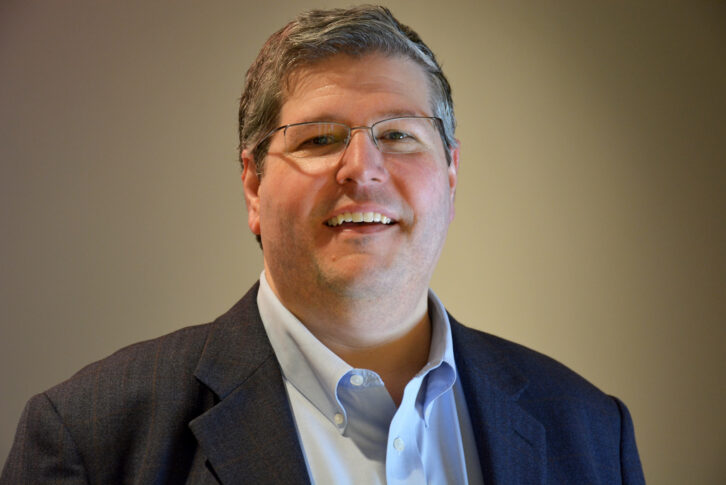
Broadcast Electronics recently was acquired by a new ownership group led by The Alzana Group. Rich Redmond is president, CEO and a member of the ownership. He has 30 years of global expertise running technology product and systems businesses, including as president of GatesAir. He is founder of Strativa Advisors.
Radio World: Rich, in this age of proliferating alternatives, is broadcast going to remain relevant in the long term across global markets?
Rich Redmond: Radio continues to offer a strong value proposition to listeners, being local, mobile and free. Receivers are ubiquitous, with no data plans and no subscriptions. Stations offer local content and in many cases play a key part in the community. Globally there are many places where radio is the only form of mass communication — not TV, not streaming.
Today there are certainly more methods of delivering audio than in the past. But radio is one of the most used, and many of the most popular streams and podcasts originate as radio station content.
RW: What would you consider the most important macro changes in transmission and technology platforms?
Redmond: In transmission, the focus on energy cost, efficiency and total cost of ownership clearly is growing. Energy costs are rising globally and are projected to continue. This affects everything from operating costs to logistics and maintenance costs.
Coupled with the fact that more technology-minded people are working in IT-based segments versus RF and hardware segments, this puts pressure on the number of skilled engineers who can provide maintenance.
These changes create demand for solutions that are smaller, energy-efficient and simpler to maintain, helping positively impact the bottom line for radio stations.
RW: You recently introduced a new AM transmitter. What drove this, and is there indeed a future for AM?
Redmond: We saw an opportunity to provide the first new AM transmitters in 20 years. The technology has evolved to really deliver significant reductions in costs for broadcasters.
Our unique SiCore technology, built around silicon carbide devices, delivers super-efficient amplifiers — greater than 98% efficient — that provide significant reduction in operating costs.
The ultra-compact footprint — 5 kW in five rack spaces — not only makes delivery less costly, but is ideal in addressing the market trend of combined AM transmitter sites. As land values increase, there’s more pressure and opportunities for an owner to sell a transmitter site. Many decide to combine two, three or more stations on a single site.
The AMX is uniquely positioned to allow for such consolidation without costly expansion and construction of transmitter buildings, saving even more money.
With BE’s SiCore technology and the significant savings on energy, logistics, installation and maintenance, AMX can provide for a positive monthly cash flow over an old transmitter when it’s purchased using an equipment lease. And another source of income is always of interest — AMX is “the transmitter that pays you back.”
RW: A few countries have tried to move away from FM broadcasting. Do you feel this will accelerate?
Redmond: I was personally involved in the deployment of DAB in Norway, the world’s largest DAB network. There were specific financial dynamics that aren’t present in other parts of the world.
All the public-service broadcast infrastructure and many of the national commercial broadcasters had multiple FM networks, operated by a third-party service, with equipment that had reached its end of life. They were facing a significant investment to replace thousands of FM transmitters.
Consolidating these to two DAB multiplexes per transmitter site for about 40 channels of radio was a cost-effective alternative. Some estimates put the savings at over 10 million Euros annually.
While there are some countries with similar dynamics, I think that in general we’ll see slower national conversions in most countries. Globally, FM radio remains the most dominate and cost-effective audio delivery platform.
RW: With non-broadcast platforms having so much penetration now, how much more growth is realistic for OTA digital radio broadcasting?
Redmond: It really depends on what part of the world is being discussed.
In Europe, for many national operators the same dynamics mentioned in Norway provide for positive ROI for operators to transition to digital as being more cost-effective. And the availability of digital radios makes this simpler than even five years ago.
In fact we see this even on smaller scales, as with the proliferation of small-scale DAB in the U.K., offering more than 590 new individual programs.
In the U.S., every year there are more cars on the road with built-in HD Radios. There are reportedly more than 100 million on the road, with 8 to 9 million new cars each year. This is impressive.
In addition to targeting digital radios, HD Radio deployed in tandem with analog FM translators provides the ability to reach listeners on conventional radios as well, often with niche programming.
The majority of FM radio transmitter discussions today include some consideration of HD Radio either as a need or at least to plan an upgrade path. But the mass adoptions and deployments of 15 years ago have slowed down a lot.
RW: We’ve seen attempts in Europe and the United States to mandate the inclusion of radio reception, in one form or another, in vehicles. What’s your prognosis on these efforts?
Redmond: The EU mandated digital radio in new cars a few years ago, and for sure there is interest in the U.S. in a requirement for at least AM radio. I can’t predict any particular adoption of government regulations. But for a number of years there have been requirements for digital TV receivers in screens of a certain size, to ensure access to free over-the-air TV. It would seem radio should have the same priority to ensure access to free OTA broadcasting.
RW: What should radio know about evolving technologies like ATSC 3.0 and 5G Broadcast?
Redmond: These technologies both provide cost-effective delivery of content, especially to devices that are mobile, and should be monitored for adoption.
The difficulty in both cases comes back to uptake of receivers. Both require users to change their behavior and purchase and use new receivers to access these delivery technologies. That’s a big ask of consumers.
That said, radio should work to have its content available where consumers want to listen. That includes all platforms beyond AM/FM.
RW: BE recently changed ownership again. Your new CTO recently called the company “reinvigorated.” Briefly, what benefit does new ownership bring?
Redmond: The change here is very meaningful. This is not simply a distant financial owner who is not familiar with the business, but a growth-focused group with real industry experience. It’s U.S.-based, with no foreign ownership.
In addition to my ownership role as well as being the CEO, I brought in John Danner and Andy Freedman, formerly with the GatesAir ownership team, where we’d worked together in the past.
The team we have in place and continue to build brings more experience and a proven track record of providing game-changing products and services to help our customers simplify their operation and deliver real ROI to their radio stations.
As you noted, Dave Sparano has joined as chief technology officer. At GatesAir he was responsible for developing the majority of the radio product portfolio and much of the TV portfolio.
Tim Hardy, who was head of development for many years at Nautel, is the driving force behind our groundbreaking AMX AM transmitter, which delivers more upfront value, lower operating costs and much simplified operation.
We have visionary technologists and experienced broadcast technology ownership, all focused on delivering disruptive solutions that make our customer money. If you haven’t checked out the new BE, come see what you’re missing. We’re just getting started.
This is excerpted from the free ebook “Global Radio Update.”
Read more stories like this in our News Makers section.