It’s just different in Philadelphia.
That could be said for many things, from the die-hard passion for its sports teams to the iconic news theme that everyone in the Delaware Valley knows.
This same spirit applies to the city’s broadcast engineering tradition, a legacy carried on by respected names.
The history of broadcast innovation runs deep here, going all the way back to Philo Farnsworth’s groundbreaking television demonstration at the Franklin Institute in 1934.
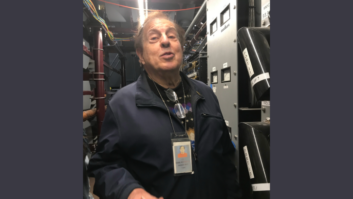
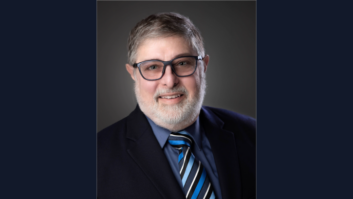
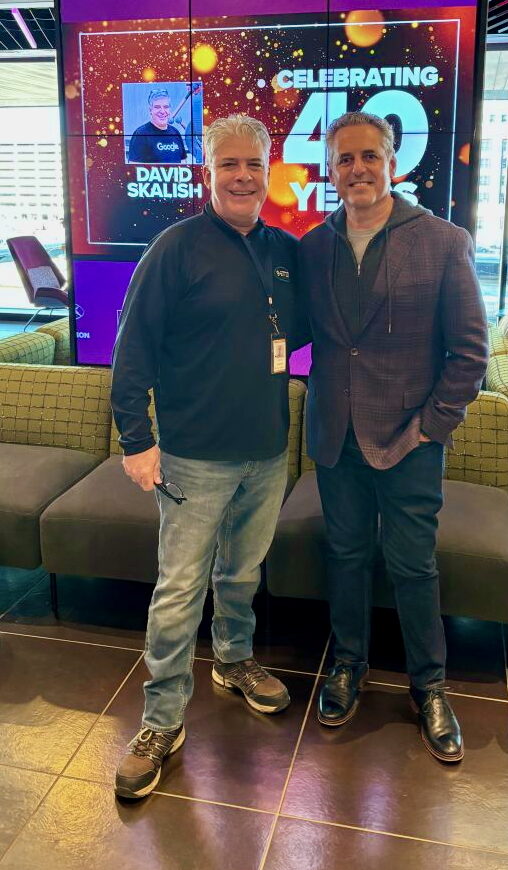
One of the engineers carrying the torch is Audacy’s Dave Skalish, a new member of the Broadcast Pioneers of Philadelphia Hall of Fame.
His career in radio here spans five decades. He has seen the industry’s immense evolution from a Philadelphia perspective — from corporate consolidation to multiple facility moves.
“The only constant is change,” he said.
Roots
Skalish, 63, grew up in nearby Delaware County. His father ran Leon’s Electronics Service of Glenolden, which repaired radios, TVs and two-way equipment. A willing teacher, Leon planted the seeds for his son’s technical career.
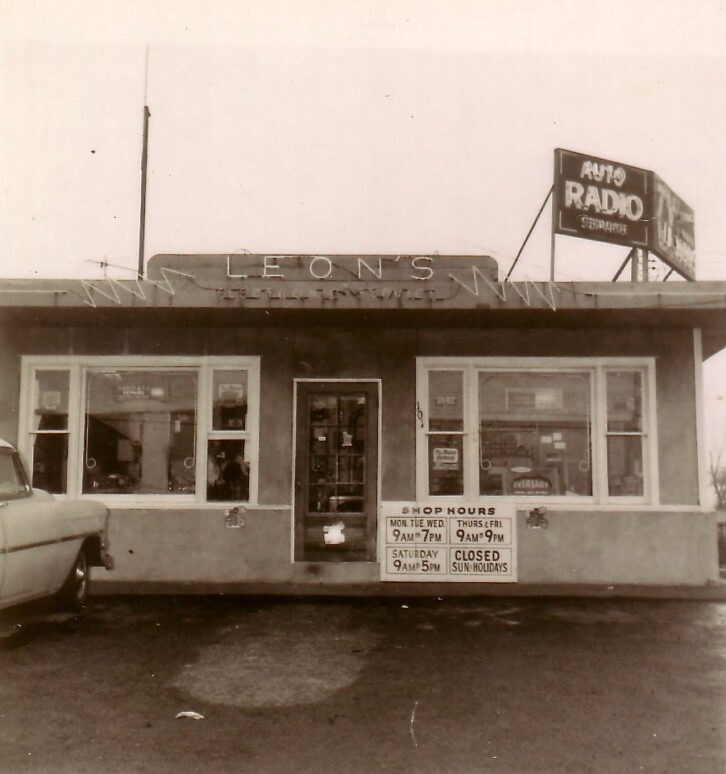
“Philadelphia radio and TV were always around in the repair shop,” Skalish said. “I felt like it was a front-row seat to the region.”
He attended Philadelphia Wireless, where he got hands-on experience at the school’s 250-watt station, WPWT(FM). After graduation, he landed a job at 1060 KYW(AM) in July 1982, beginning a 40-year relationship with that legendary news station.
Skalish credits Glynn Walden, its chief engineer at the time, with teaching him how to navigate a corporate environment as a young professional.
[Related: “Walden: SDRs Proved Naysayers Wrong”]
“It was his lessons on how to function within a corporate workplace — even beyond anything technical — that still resonate with me today,” he said.
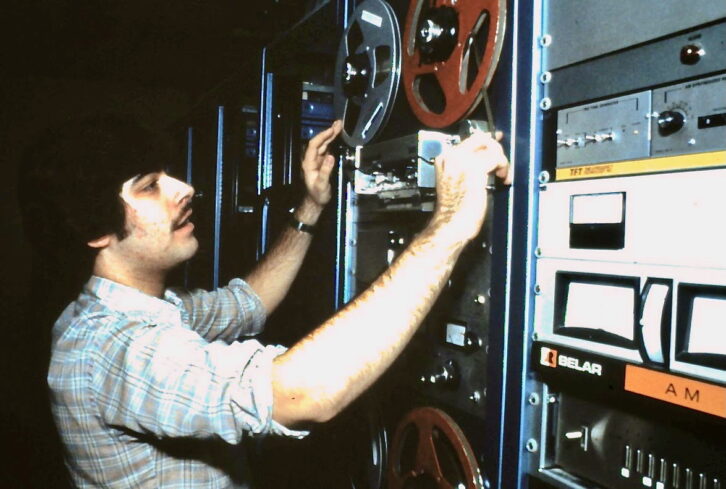
Skalish started in studio operations, editing tape and recording various news feeds. He worked alongside well-known figures in the newsroom at the station, which was owned by Westinghouse/Group W.
“Maybe ‘living out a dream’ is too strong,” Skalish said, “but I felt that it’s exactly where I wanted to be.”
Yet he left KYW in 1987. After a year and a half at Matsushita-Panasonic’s Northeast Philadelphia-based service center, servicing consumer and professional electronics, he went on to Radio Systems, working on studio installation projects for Dan Braverman.
Those jobs expanded his knowledge and prepared him for handling even more expansive broadcast setups.
Skalish returned to KYW in 1990 as production director. He’d eventually be introduced to the station’s maintenance shop, leading to hands-on work with studio and transmitter technologies. He also performed part-time engineering services for several suburban AM stations, including 1590 WPWA(AM), licensed to Chester.
During that time, 1590 briefly changed its call letters to WAWA in 1994, reflecting the nearby unincorporated Delaware County community.
That drew great interest from a certain convenience store chain. Wawa filed a suit claiming that the calls violated trademark laws. The chain won the case, and 1590 changed its calls back to WPWA. Skalish calls it “an only-in-Philadelphia kind of story.”
Consolidation
His career continued to evolve as KYW’s owner, Westinghouse, became Infinity Broadcasting and, after the Telecom Act of 1996, expand its Philadelphia cluster. With stations scattered across the city, it could be difficult to manage them all.
Stations 94.1 WYSP(FM), 98.1 WOGL(FM) and 1210 WPHT(AM) would become part of the cluster, as would 610 WIP(AM) eventually.
He and his Infinity colleagues would make many trips from suburban Bala Cynwyd — home to the studios of WOGL and WPHT — to Center City and then back again.
“We played hopscotch with studios and broadcast gear,” Skalish said.
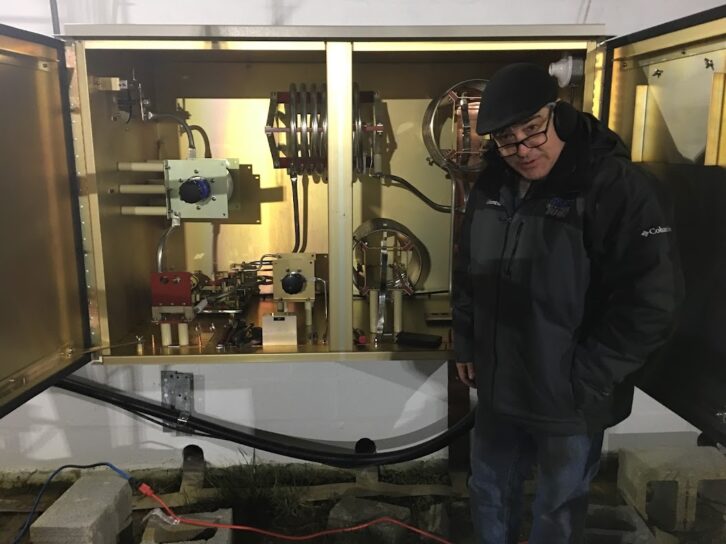
At the time, Skalish’s focus was still at KYW, which broadcast from its iconic studios at Fifth and Market Streets.
But in 2000, Skalish took a chance. A technical supervisor position opened at WPHT, and he decided to leave his familiar role for the leadership opportunity.
The station needed some technical love. And another of his mentors, Jan Kowalczyk, WPHT’s chief engineer, was supportive in the transition.
Skalish recalls the moment with pride. “Sometimes, you have to make the difficult choices in life to help yourself grow.”
His work was a success, and in 2007, he was promoted to chief engineer for both WOGL and WPHT.
Multistation managing
Today Skalish is technical director of the Audacy Philadelphia cluster of stations, including 94.1 WIP(FM), 96.5 WTDY(FM), 98.1 WOGL(FM), 101.1 WBEB(FM), 1210 WPHT(AM) and KYW(AM/FM). He has seen changes in parent companies and names from CBS, to Entercom, to Audacy.
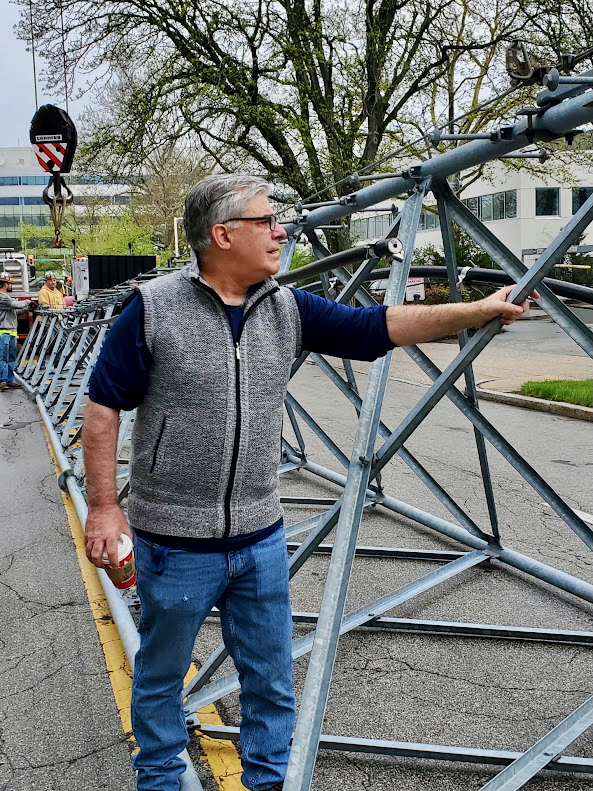
Skalish works along with Vice Presidents of Engineering Paul Donovan and John Kennedy at Audacy’s futuristic 2400 Market St. headquarters overlooking the Schuylkill River.
Today, he says, the job of a broadcast engineer is perhaps best described as that of a problem-solver. It is no longer simply overseeing studio operations or the on-air signal from the transmitter. As Skalish puts it, “you’ve got to keep the ATM machine going.”
Skalish mentions the advice of his mother Cecelia “to always be kind.” That spirit has helped him earn a strong reputation with his peers.
“One of the all-time great radio engineers and outstanding people,” KYW morning sports anchor Dave Uram wrote on Instagram in January.
View this post on Instagram
“A great engineer and gentleman,” wrote veteran engineer David Bialik in an email to Radio World.
Career achievements
Skalish has managed broadcast logistics for some of Philadelphia’s biggest moments, from celebratory sports parades after Eagles and Phillies championships to live coverage from the White House, the Pentagon and city mayoral campaign headquarters.
He is particularly proud of two assignments.
In 2004, Skalish coordinated a weeklong WPHT broadcast from Guantanamo Bay, Cuba. U.S. Southern Command provided just three POTS lines. Skalish shipped down what he called a “kitchen sink” of gear, including a three-line Comrex unit, to make it work.
Five years later, WPHT’s Michael Smerconish conducted President Barack Obama’s first live radio interview from the White House. Skalish was on-site working with White House press staff to establish the local audio pool feed and the direct feed back to WPHT, where the show’s distribution originated.
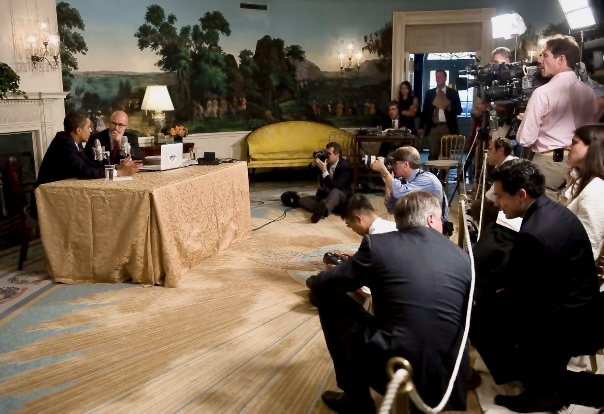
“Truly memorable,” Skalish said, adding that clips of the interview were featured worldwide.
He has plenty of projects keeping him busy today.
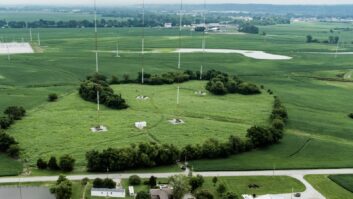
One of them is an updated 13.2 kV switchgear system at the KYW’s AM transmitter facility in Whitemarsh. Audacy is working with FEMA to establish the 50 kW AM as a National Public Warning System (or Primary Entry Point) station.
KYW’s role in emergency preparedness is something Skalish takes seriously.
“There is this sacred bond we have with our listeners,” he said. “They are our customers, and our lifeline.”
Despite evolving technology, Skalish tries to make time for the basics, responding personally to every call or email — whether it’s about a reception problem during a Phillies game or trouble with the Audacy mobile app on a user’s device.
Keep tradition going
Part of Skalish’s Philadelphia broadcast legacy is paying it forward. He recognizes the importance of mentoring. He points to young, technically proficient engineers he’s helped guide, like K.J. Legrand, now a broadcast maintenance technician for WCAU(TV), and Austen Yim, a technical engineer with Audacy who leads its Eagles’ radio broadcasts.
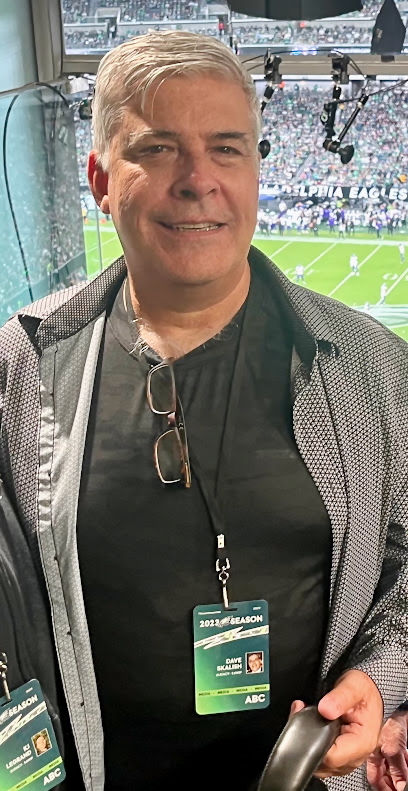
He also urges up-and-comers to have interests beyond engineering. For him it’s working on classic cars like his 1967 Plymouth Fury VIP and 1991 Volvo V70.
“There are long hours involved with this job. But in pitching this profession to young people, you have to add the blend of life-work balance with the dedication of being accessible, service-oriented, technical professionals.”
Skalish looks back on his time in Philadelphia radio proudly. But he’d like to see the radio industry tell its story better. Over the decades he has met countless dedicated listeners — people who, like his wife Diane’s grandmother, Myrtle, kept KYW on around the clock.
“Granny,” as they’d affectionately refer to her, would keep the all-news station playing atop a radio on her kitchen refrigerator at her home in the Delaware County borough of Norwood, often while she baked icebox cookies. “Made with a little lard and a lot of love,” Skalish remembered.
That type of listening may have evolved to mobile apps or smart speakers, but the bond with the listener, he says, is the same.
Among others being inducted into the Broadcast Pioneers of Philadelphia Hall of Fame this month is his longtime friend and boss, David Yadgaroff, Audacy’s Philadelphia senior vice president and general manager.
And Skalish is nowhere near finished; he says he’ll keep working proudly in the City of Brotherly Love.
“This is not New York, not Chicago, not Los Angeles,” he said. “Those places certainly have their history. But there is something uniquely Philadelphia about our broadcast story.”