To borrow a sports analogy, it feels like a slam dunk that Connoisseur Media will be an aggressive consolidator of broadcast stations when and if the FCC relaxes the local ownership caps.
CEO Jeff Warshaw has been campaigning for the elimination of the caps, even meeting in person with FCC Chairman Brendan Carr in Washington in June. Warshaw believes the time for ownership reform is now.
He says the FCC’s sub-caps and local ownership rules are “crippling” an industry that now must compete with less-regulated global tech giants.
In the Q&A below, Warshaw discusses his outlook for the industry.
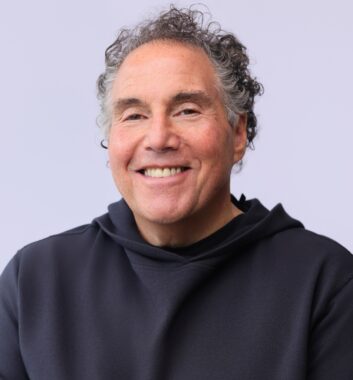
Warshaw, 62, is a lifelong broadcaster. He launched Connoisseur Communications in 1993 while a student at the Wharton School of Business, and sold the 39-station group to Cumulus for $258 million in 2000, according to reports at the time.
He founded Connoisseur Media in 2004 and has built the group through acquisitions. He also serves on the Super Hi-Fi board of directors. Connoisseur this year agreed to re-platform some of its stations using Super Hi-Fi’s cloud-based operating system.
Warshaw has been in the headlines often of late, from his broadcast acquisitions (including the former Bonneville stations in San Francisco) to his ongoing lawsuit against Audacy over a failed business deal. He also led a $1.2 billion consortium bid in 2022 in a failed attempt to acquire Cumulus Media before scooping up Alpha Media in 2025.
Connoisseur Media today operates more than 200 radio stations, though it has been shutting down radio signals in smaller markets that no longer fit in its portfolio.
The Q&A has been edited for clarity.
Radio World: If the FCC eliminates or relaxes the local ownership rules, would Connoisseur Media immediately be in acquisition mode?
Jeff Warshaw: I think we’ve been aggressive. We are business-aggressive because we think the rules are silly, make no sense and are restrictive. The current chairman, I believe, ultimately sees that radio having these archaic rules that were put in place before the internet doesn’t make sense anymore.
We’ve been proceeding as if the rules are going to change. We applied for waivers (to go over the current cap) and we’ve had two waivers approved, and we’re awaiting our third. We are going to continue to make deals that make sense for us and ask for waivers, which we think are reasonable and should be granted.
RW: You’ve asked for a waiver in Lincoln, Neb., to control seven FM signals after acquiring the NRG Media stations there. That’s addition to two AMs and two FM translators. That’s a vast majority of radio stations in that market. Do you see that as the new blueprint for mid-market radio survival?
Warshaw: Everybody has a different strategy. If you are local and you want to have a big local presence, have good facilities and you’re willing to invest in separate products and air staffs, then having more stations makes a lot of sense.
There are a number of companies that don’t ascribe to that strategy. They have a different philosophy. I can’t speak to them.
We believe in markets that we want to be in, and we want to have as a large presence as we can, so that we can provide the maximum service and get the economies of having a larger cluster.
RW: If the caps are relaxed, would you expect a lot of station swapping to consolidate markets?
Warshaw: We’ve looked at it. I’ve done swaps in my career. I’ve swapped with Cumulus. I’ve swapped with iHeart.
I think swaps make a lot of sense, but then every potential swap has its pitfalls. People don’t want to trade more cash flow for less cash flow. They may not want to trade from a bigger market to a smaller market.
A bunch of the large companies may not be in a position to swap, when it comes to it. Certainly, iHeart is not looking to trade out of any of their larger markets. Townsquare may not want to trade out of their digital positions they’ve gained. Cumulus, right now, is not doing anything because of their bankruptcy.
Other companies have significant restrictions on what they can do from a financial standpoint. Their lenders may not let them swap out cash flow for something that has more possible upside.
RW: You’ve turned off some signals in more rural markets. What’s the thinking there?
Warshaw: We inherited a bunch of stations that, for a number of reasons, we could not figure out how to not lose hundreds of thousands of dollars with them a year — in some cases millions.
So we undertook a very aggressive campaign to sell these stations to local operators who we thought could make money with them.
After we exhausted every effort, including trying to give them away, we ultimately were forced to shut them down because we are not in a position to subsidize money-losing operations indefinitely.
Doing so jeopardizes our company, which jeopardizes much more than just a handful of operations. As a fiduciary we couldn’t continue to subsidize some of those operations.
RW: Following the acquisition of Alpha Media, you talked about how radio had to stop cutting and start hiring with the philosophy that you’re going to keep local staff in place. How do you sustain the higher overhead, compared to an iHeart that’s been cutting staff, when national spot revenue remains so volatile?
Warshaw: First, national spot revenue is a relatively small percentage of our company’s revenue. Before we went into San Francisco, it was something around 11% of our revenue. Now it’s a bit higher, because San Francisco is higher, but national is not our focus.
We have a different model than iHeart. A big part of our model is having local talent, having endorsements, doing events, being out in the community. That’s what we do, and we need people to do that.
We have invested in our products locally, and maybe we’re dinosaurs. Maybe we won’t be successful, but this is our strategy.
RW: Why buy the Bonneville operations in San Francisco, a very large market compared to your others?
Warshaw: We think what we do is a value in any size market, but in particular, San Francisco was strategic. We have a presence in San Jose. We saw the opportunity to buy some fantastic stations with tremendous heritage and wonderful operations, so we made that deal.
RW: What do you make of all the industry layoffs by iHeart in June?
Warshaw: They have their strategy. They have a tremendously impressive company. They have the fantastic network, and they have done a great job in so many areas, but their strategy is different than ours.
They have to do what they need to do and what they think is best to support their business. We all have constraints on us based on our leverage and our what parameters we can operate within.
I’m not going to second guess what they’ve done.
RW: Are you committed to maintaining physical studios in each of your local markets?
Warshaw: First of all, we have studios everywhere. Yeah, they’re not going to disappear. We have local talent everywhere, so that’s not going to disappear.
However, we are constantly looking at the best ways for us to operate, and in certain situations we can provide programming to smaller markets with efficiency using Super Hi-Fi. We can be efficient and provide a better product, perhaps, than we might be able to do locally.
However, without local talent, we think that we are just another commodity.
RW: You announced a partnership with Audio Space this year and you talked about digital integration of 240 some platforms, including new radio station websites, and mobile apps. Is this an indication of more of a shift toward a “digital-first” distribution for Connoisseur?
Warshaw: We are not digital-first. I don’t even know what that means. We have our broadcast signals. Our local presence is what we do.
We believe that the value of our local broadcast and the stream that goes along with it is one, and that our advertisers and our listeners want to be able to enjoy the best product possible.
I’m not trying to sell stock, so I don’t deal with terms like digital first, platforms or silos or any of that stuff. Those things are talking points that some people use as ways of showing that they’re some fast-growing business.
RW: Are you embracing AI either in certain departments or across all operations?
Warshaw: Yeah, so I’m on the board of Super Hi-Fi, and we’ve been working closely with them for a while now. We use their product in a number of our markets, and I expect we’ll use it in more of our markets over time.
It provides an opportunity for our local people to spend less time messing with the music logs and writing liners, and more time being out in the community and coming up with ideas for sellers and doing things that are higher value. We don’t have robots on the air, but we do use technology where appropriate.
You know we’re not using cart machines any longer. We’re not playing CDs. This is another evolution of using technology to become more efficient and hopefully provide a better product.
There’s nothing inherently evil about using AI. We love our relationship with Super Hi-Fi, and we think that there’s more that we can do.
RW: Connoisseur owns AM stations. How important is the effort in Washington to keep AM in the dashboard?
Warshaw: I think it’s very important. And that’s not just us being self-serving AM owners. I think it’s important for our country.
And we have to remember that if AM isn’t protected, then FM won’t be protected. If there’s a disaster and that the internet doesn’t work and people don’t have power, radio is the only lifeline.
Of course GM and Tesla are looking for ways to monetize their captive drivers and passengers, but that shouldn’t be driving the dialogue.
RW: Why do you believe in radio in the long term when so many others do not?
Warshaw: It’s all about the effectiveness of local radio, and the effectiveness, in particular, of advertisements for our clients.
We are free, we’re ubiquitous, we are the only ones providing local service. We think there’s a need for that. And we think that radio is vital to our communities.
If radio got its fair share of ad dollars, we’d be doing much more than we are. I believe the ability to measure has somehow been conflated with the effectiveness, and because radio isn’t as easy to measure, as easy to buy as some other media are, it has taken a back seat.
A 27-year-old media buyer who doesn’t listen to the radio is making some of these decisions, and is more interested about showing metrics rather than actual results.
At the end of the day, when you have clients that get results and you have listeners who love what we’re putting out over the air, we have a viable business. When we cease to be vital to our communities and provide compelling content and get great results to our clients, then I’ll agree with the naysayers.
Sidebar
Jeff Warshaw, 62, is a lifelong broadcaster. He launched Connoisseur Communications in 1993 while a student at the Wharton School of Business, and sold the 39-station group to Cumulus for $258 million in 2000, according to reports at the time.
Warshaw founded Connoisseur Media in 2004 and has built the group through acquisitions, including the purchase of Alpha Media in 2025.
He serves on the NAB Board of Directors and chairs the Nielsen Audio Advisory Council. He is former chair of the Radio Advertising Bureau.
Warshaw also serves on the Super Hi-Fi board of directors. Connoisseur Media earlier this year agreed to re-platform some of its stations using Super Hi-Fi’s cloud-based operating system, built around its AI-powered “Program Director” technology.
He resides in Westport, Conn.
[Do you receive the Radio World SmartBrief newsletter each weekday morning? We invite you to sign up here.]