The author is owner of Neversink Media Group in Orange County, N.Y.
Local radio is not a business for the weak of heart. There — I said it!
As many readers of this publication are aware, the industry has been faced with mounting challenges that seem to increase every year, from new forms of digital media skimming ad dollars out of local markets to actions taken by the auto industry to reduce the presence of the traditional AM/FM tuner on the dashboard.
The new business model is to embrace other revenue-generating methods in order to monetize the in-vehicle entertainment experience. Large, well-financed digital marketing companies have heavily campaigned against legacy terrestrial radio, luring important local businesses away from local broadcasters with promises of highly effective targeted ad campaigns, visible audience metrics and seemingly instantaneous ROI.
For the local operator, these challenges can be overwhelming and defeating.
As owner/operators of multiple stations in the Hudson Valley market, my wife Juli and I have had a front-row seat to this transition.
Traditional suburban markets have always been a challenging environment for local radio stations, especially in the shadow of a major market like New York City.
Advertisers and listeners expect you to be able to offer content, reach, delivery and marketing opportunities that are standard operations for the much larger consolidated competitors they hear. At the same time, local businesses cannot afford the rates that a major market would demand.
This creates a complicated operating scenario. You have the capital expenses and expectations of a major-market station, but with an advertising base generating a fraction of the revenue.
Looking past the usual list of grievances posted by armchair warriors on radio message boards and in Facebook groups, I believe that there may be a path forward for the local operator, using an approach that, while unusual, has existed in the broadcast industry for decades.
What is “classic hits”?
As chairman of Chapter 15 of the Society of Broadcast Engineers, I am no stranger to collaboration, teamwork and mentorship.
Broadcast engineers, by nature, are always looking for solutions to problems and are often at the forefront of new technology and industrial trends. Engineers have a time-honored tradition working together to solve problems, even if it involves helping a colleague at a competing broadcast organization.
A true engineer is an educator at heart. He or she respects the trade, craft and nature of broadcasting. I would be hard-pressed to think of a scenario where a member of an SBE local chapter would be unwilling to assist another engineer in need of a solution.
In July, I found myself in a unique situation as a station owner, one that required a creative solution.
One of my station brands, WALL Radio, is a legacy classic hits station, with a rich legacy serving the Hudson Valley and with a focus on Orange, Dutchess and Ulster Counties.
WALL has a loyal audience and strong following but it has been limited within the parameters of the traditional classic hits operating model.
We play tested chart hits with local favorites thrown in, as many classic hits stations do. We have high-end imaging, deliver engaging contests and provide incredible value and results to our advertising partners.
However, I recognize as the audience ages and our music moves into Y2K hits, WALL is going to need to provide an interactive media experience that the younger classic hits listener is expecting.
This is a tricky situation for the classic hits format, because as a radio station moves musically past the 1990s, the definition of “classic hits” widens considerably.
Mainstream radio hits of the late 1990s and beyond were driven by video content and crossover television shows. They relied less on the disc jockey for delivery and more on cable channels like MTV and VH1 and “digital media” influencers. In this era, video did indeed kill the radio star.
Y2K hits are further complicated by the fact that alt-rock, metal, rap and hip-hop remixes were populating the charts, which means the traditional “feel good” classic hits format shifts into genres that may not be as familiar or welcomed by legacy listeners.
I knew I was going to need to find a solution if the WALL brand was going to remain a leader in the format and the market and stay connected to the next tier of classic hits listeners.
Music discovery
One night while surfing the web, I stumbled across “The Low Darts,” a band of 19- and 20-year-old college students from Fairfield, Conn., on my YouTube feed. I immediately took to these college-aged musicians playing off-the-record cover versions of 1970s and ’80s music.
This got me thinking: Is there a younger audience interested in the music that my classic hits station is playing?
I asked to meet the band. In speaking with them I immediately recognized their passion and talent for executing note-for-note recreations of rock and pop songs that are now retro. I also recognized that they had a large number of social media followers, many of them college-aged.
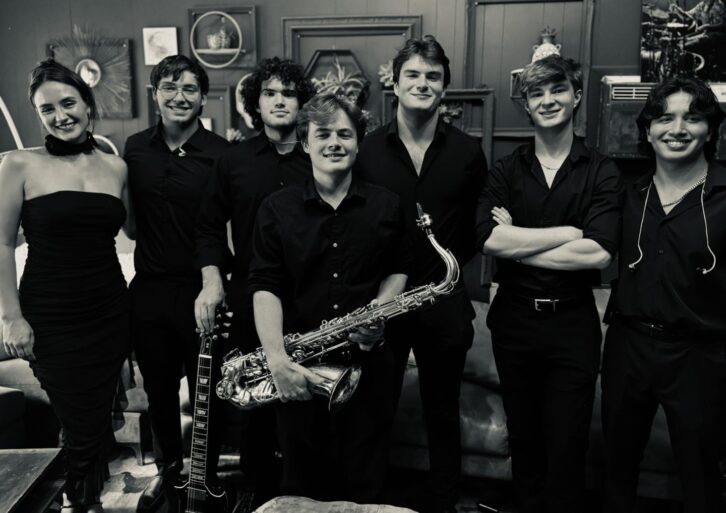
I thought, “Hey, wouldn’t it be cool if we could present this group to the WALL Radio audience?” If I could build a bridge between the WALL radio listener and the Gen-Z audience using a group of 20-year-old musicians playing hit music, this could be a novel way to extend an olive branch to the “GEN-2” listener and bring new ears and eyes to the station without diluting the WALL music library.
The idea was excellent in theory, but I didn’t know how to execute it. This is when my engineering senses kicked in. I knew that if I ran this by someone who understood the other side of the audience and had the experience that I was looking for, I could find the solution. Enter the collaboration element, and the spirit of engineers helping each other.
My good friend Dr. Andy Gladding is vice chair of SBE-15. He had the pieces I was missing.
Andy is an experienced live audio engineer, college educator and recent entrant into the market as the owner-operator of WKZE(FM), also in the Hudson Valley.
Andy saw what I was trying to accomplish and offered to help, using his recently renovated station studios in Red Hook.
He knew that to execute my vision, we would have to find a way to get the band to broadcast live over the air. We would also need to shoot video to maximize the crossover between the WALL Radio audience, the successful social media content created by “The Low Darts” and the digital marketing platform that Andy and his wife and KZE co-owner Katie Berghorn had recently deployed.
According to Andy, there would need to be a way to link the music, the FM, the story and the performance, to engage all parties and maximize our exposure.
So maximize we did.
On July 10, “The Low Darts” prepared for their first “radio blitz.” At 8 a.m., lead singer and band leader Colman Connolly appeared as a guest with morning host Kate Brannan on WALL Radio. Kate and Colman spoke for almost 45 minutes, playing a number of the band’s recordings of “WALL-centric” covers, including Toto’s “Rosanna” and Player’s “Baby Come Back.”
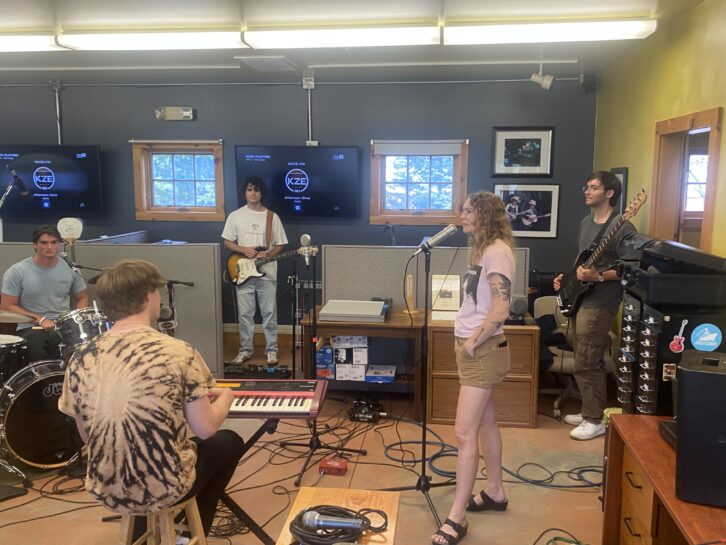
Then at 11:30 a.m, the band arrived at WKZE’s studios in Red Hook and set up in the office area.
Andy’s production team, which consisted of station staff and mix engineer David Chapman of Sturgeon Records and Bobby Master, the band’s sound engineer and saxophone player, wired the band for sound and video and conducted a broadcast dress rehearsal.
I had asked Andy if there was a way to increase the value of the day and reward the band for making the trip to the Hudson Valley, so tours were arranged at Dreamland Studios in Hurley and Utopia Sound Stages in Woodstock. Dreamland and Utopia are two of the top studios in the area; the musicians got a chance to speak with industry veterans Jerry Marotta, who has worked with Peter Gabriel and Hall & Oates, and with Pete Caigan, who has worked with The Wood Brothers and Simone Felice.
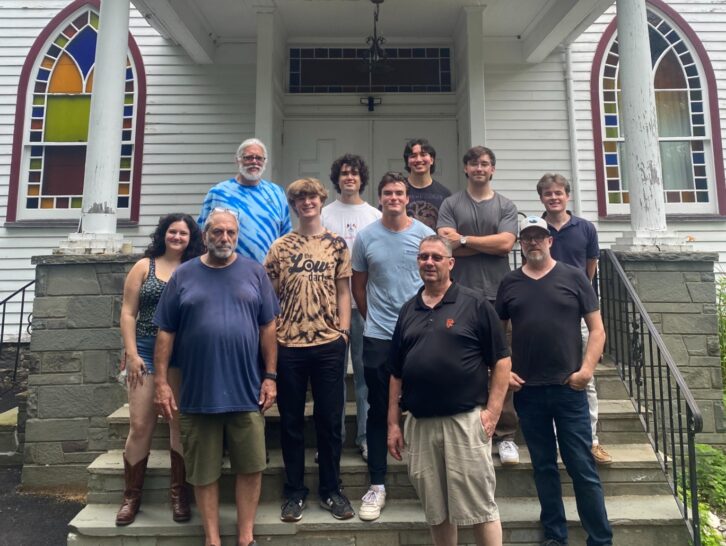
Andy believed that bringing the band (and me) to these two historic spaces would help “inspire” the overall presentation. It must have done the trick, because there were a lot of smiling faces that afternoon leading up to the FM broadcast.
On the air
At 5 p.m., KZE’s afternoon DJ MK Scully kicked off the live set from the station’s broadcast center. The band performed five songs, including the Steely Dan favorite “Kid Charlemagne” from the 1976 album “The Royal Scam.”
In addition to the program and FM aircheck recordings that were captured, Sturgeon Records ran a multi-track recording using Pro Tools and Telos Axia. The multitrack was then mixed down to get a better studio mix, and the audio was synced to the video cut and uploaded to YouTube.
Reactions to the broadcast and video content were extremely positive. I believe that our efforts brought new listeners to WALL and created a unique partnership between my brands and WKZE. Now we have the framework and model to collaborate on future projects and work together to synchronize our audiences.
My takeaway as a local operator is that instead of viewing crosstown operators as competitors, find ways to work together to deliver maximum results using airtime, staff, hardware and other resources you can share.
Working together, two hyper-local stations were able to generate content that fit the listener profiles of both audiences, bring a young, up-and-coming group of musicians to the forefront of the market using FM, generate digital content that could be used and shared through the social sites of both stations, and create a unique audio and video experience for the listener.
As a bonus, the Low Darts had a show the following day at Daryl’s House Live Music Club in Pawling, N.Y. As part of the promotion, WALL Radio and KZE received tickets to give away, allowing the stations to support the venue, reward the audience and strengthen existing advertising partnerships. The house was packed.
This was a shining example of how collaboration, not competition, can help bring FM radio to the next generation of listeners.
Oh, and where did Colman first hear these songs from the ’70s and ’80s that the band perfected? He listened to a local classic rock FM station while growing up.