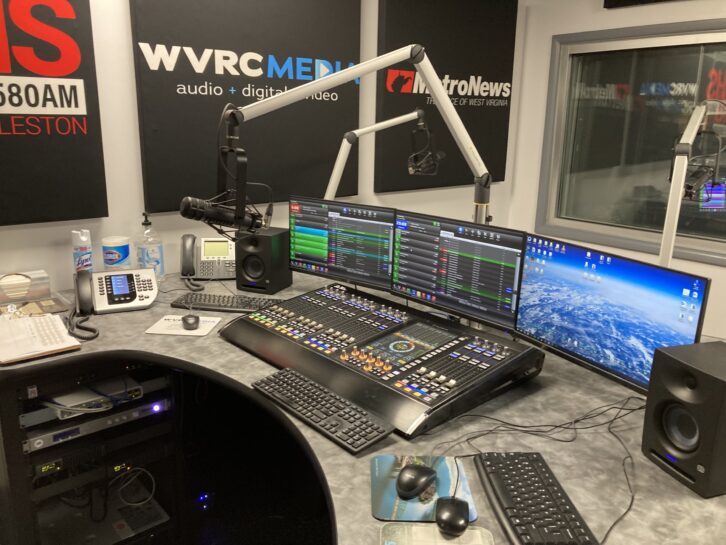
In the Mountaineer State’s capital city, the West Virginia Radio Corporation has nearly completed the largest project in the company’s history, transforming an analog facility into an AoIP command center — while managing to keep seven radio stations and a statewide network on the air.
The project centers on the Charleston, W.V., division of WVRC Media. Headquartered in Morgantown under parent company Greer Industries, WVRC operates 31 stations across West Virginia and Maryland.
The Charleston facility, located near the State Capitol, houses a cluster of seven stations. They are 580 WCHS(AM), 680 WKAZ(AM), 1490 WSWW(AM), 96.1 WKWS(FM), 98.7 WCST(FM), 99.9 WRVF(FM) and 107.3 WKAZ(FM), with associated FM translators for the AM outlets.
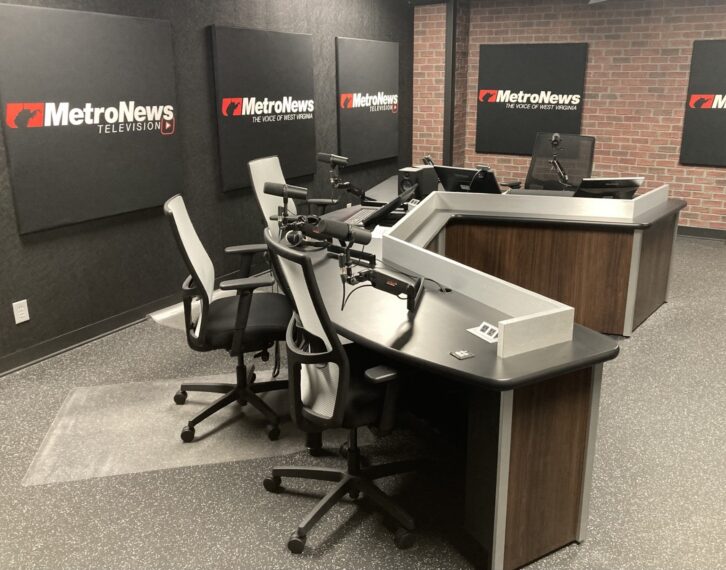
The building also serves as the nerve center for West Virginia Metro News. The statewide satellite network provides news, sports and talk programming to 61 affiliates, alongside a newly renovated TV/video studio for Metro News TV.
A change of plans
Originally, the vision was to move the Charleston operations to an entirely new facility.
But the COVID-19 pandemic and shifting external factors led WVRC’s executive team to pivot to a comprehensive renovation of their existing, historic location — the Frankenberger Mansion. It is composed of sections dating back 125 years, the 1950s and the 1980s.
“The majority of the existing Charleston facility was legacy analog,” said Kenneth Tennant, the director of engineering for WVRC Media, explained. “The renovation plan included converting entirely to AoIP.”
The scope was significant: nine studio renovations, new wall and floor finishes, LED lighting and the conversion of an underutilized space into a news gathering “bullpen” featuring four recording cubicles.
Furniture scramble
While the technical team — led internally by WVRC’s own engineering and IT staff — had a handle on the project’s wiring, a hurdle emerged regarding the furniture.
For nearly two decades, WVRC had relied on Omnirax for furniture designs. The Charleston plans were set, and orders were weeks away from being placed when Omnirax abruptly announced it was going out of business, as Radio World reported in 2023.
“After a short panic phase of ‘what do we do now,’ we all regrouped,” Tennant said. Relying on industry relationships, Tennant connected with Vince Fiola, owner of Studio Technology.
Fiola took the two-hour trip down Interstate 79 from Morgantown and offered to supply furniture designs and floor plans to rescue the Charleston project.
“He is a true professional that helped us out of a very precarious situation,” Tennant said of Fiola.
Studio Technology ultimately supplied the furniture for all the WVRC Charleston radio and video studios.
The Starship Enterprise
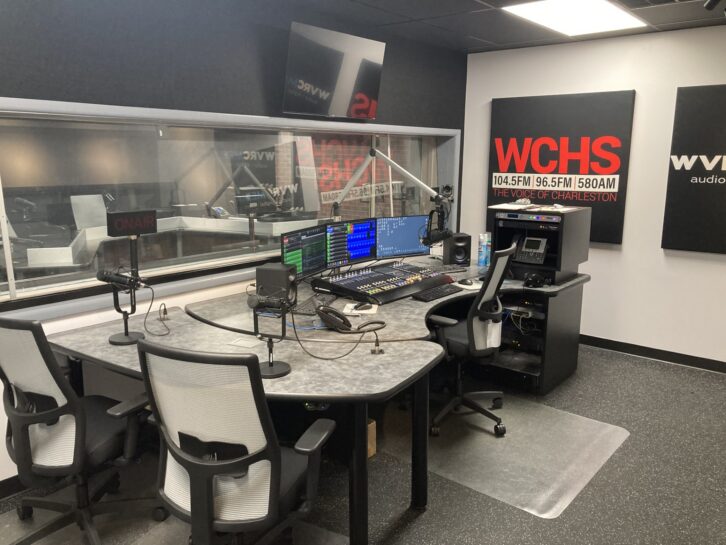
The technical overhaul was a leap from the early 1990s directly into the future. The facility was previously a fortress of analog reliability — hundreds of 25-pair cables and punch blocks that had served the station well for 40 years.
To modernize, WVRC leaned on a longstanding relationship with the Telos Alliance’s Axia line.
“WVRC Media was an early adopter of AoIP,” Tennant explained, citing a strong relationship with Telos’ Jim Armstrong.
Working with vendor Broadcasters General Store, the team outfitted the flagship stations with Axia Quasar SR consoles. Smaller stations and Metro News studios received a mix of Axia Radius, IQ, DeskQ and RackQ consoles.
WVRC chose WideOrbit 2023 for automation, replacing its existing WideOrbit 3.7.
“There are senior on-air personalities working in Charleston that used the same PR+E console for 35 years. Moving to an Axia Quasar was like asking them to pilot the Starship Enterprise,” Tennant joked. “Once past the learning curve, they realize AoIP consoles are similar to what they’ve always been accustomed to, just a million times more powerful.”
But, as evidence of the collaboration involved, Tennant said WVRC’s programming staff chose a combination of EV RE-20 and Shure SM-7 mics for the project.
Downright spooky
Perhaps the most impressive feat of the renovation was the continuity of service. The facility houses a large routing operation, handled by Pathfinder Core Pro, which manages the complex routing for the local stations and the Metro News satellite network.
Despite the demolition and the rewiring of a facility that runs 24/7, there were no significant outages.
“The other thing that makes this special is that we were able to keep seven radio stations and a statewide satellite network on the air during all the renovations,” Tennant said. “During the demolition phases, only a POTS fax line, a dry pair for a church service and two air monitors were accidentally cut.”
Every historic broadcast building has its quirks, but the Charleston facility might have actual spirits. Staff have long claimed the Frankenberger Mansion building is haunted, and it is even a stop on a local Halloween walking tour.
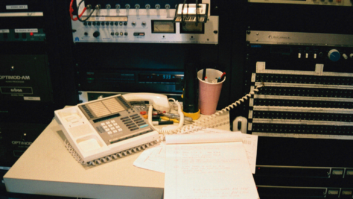
During the renovation of a new video producer studio, the team encountered a relic of the past: an old red “hotline” phone mounted to a rack.
Following the advice of a former employee who warned, “if that phone should happen to ring, do not answer it under any circumstances,” Tennant decided to leave the phone mounted and wired exactly as found — a nod to the building’s history, and perhaps, its spectral residents.
Looking ahead
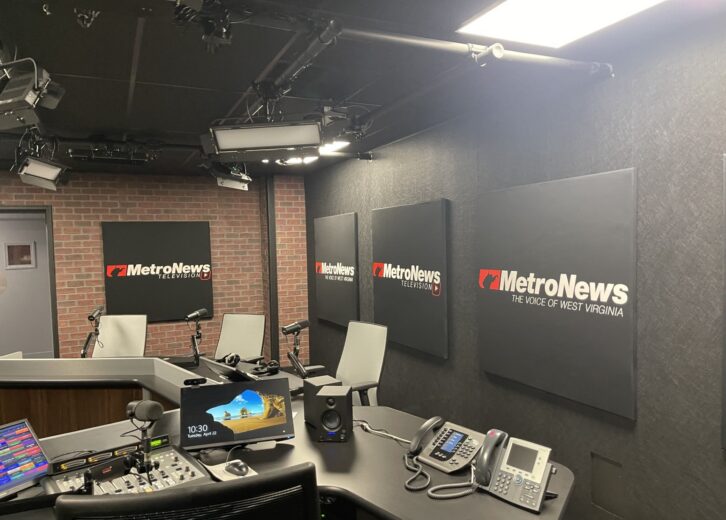
The project is currently 95% complete, with final touches being applied this year. Tennant said that WVRC remains committed to a physical, people-first approach.
“At the end of the day, WVRC Media is a people-driven company,” Tennant said. “We still produce live and local content in all of our markets.
“There’s a reason our company tagline is: ‘We’re proud to live here too.'”