This is one in a series about best practices for streaming for radio stations.
Karl Lind is chief engineer with Northwestern Media, servicing approximately 30 full-time FM stations and translators as well as one AM daytime station in Iowa and Missouri.
Radio World: Karl, what would you identify as the most important trend in how audio streaming technology or workflows have evolved for radio companies?
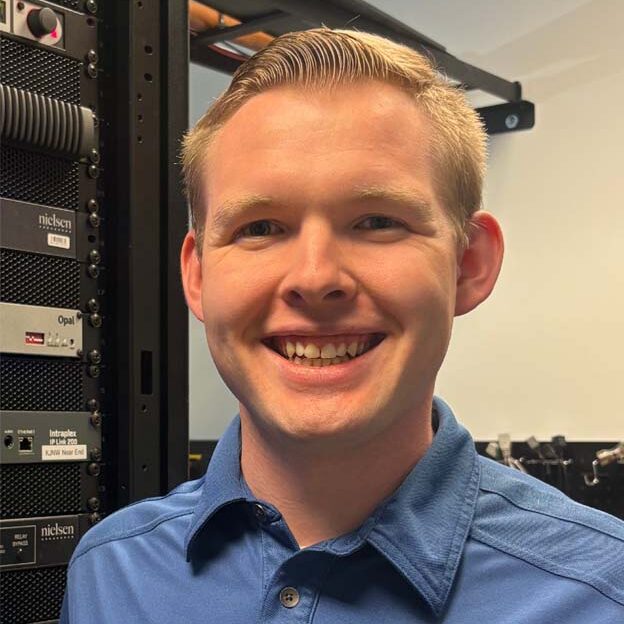
Karl Lind: In recent years, this industry has seen a decline in traditional over-the-air broadcast reception in homes, coupled with an exponential increase in the number of smart home devices natively capable of internet-based streaming. Fewer individuals and families leverage traditional broadcast in their homes; in many cases, homes will be found without a radio.
As the demand for over-the-air broadcast continues to decline outside of the motor vehicle, radio broadcasters need to acknowledge the decline and prepare to leverage online content delivery as the next generation of home radio listening.
RW: What kind of processing do you use, and is it different from your on-air?
Lind: Within Northwestern Media, we utilize a few different processors for our webstream encoding.
In all cases, the device handling the stream encoding is responsible for the audio processing. As an organization that employs Telos Omnia.9 at many of our flagship stations, we use either the Omnia.9’s internal stream processor and encoder or Claesson Edwards’ BreakawayOne audio software processor and encoder.
While the processing on our streams is remarkably like the sound of our FMs, the stream’s density is reduced to compensate for lossy compression algorithms. The result: Omnia quality processing on both FM and webstream. The webstream audience is growing, so we are making sure we prioritize the listener experience just as we would our FM signals.
RW: What techniques would you recommend for maintaining audio quality for streaming audio and podcasting?
Lind: Take care of your listener’s ears.
Broadcasters need to carefully balance compression algorithms, bitrates and processing. For streaming audio, stations need to consider their bandwidth capacity, billing for CDNs (as applicable), and revenue potential. For a highly profitable webstream, you may want to consider a higher bitrate and a more standard algorithm. The higher your bitrate, the better your sound, but the higher your streaming provider bill.
Carefully balance all three points and remember to prioritize your listener’s experience over your profit margin.
Speaking to specific recommendations for streaming, I always set a hard deck in compression method of 96 kbps HE-AACv1. I have found anything below that bitrate and algorithm (even utilizing HE-AACv2) to possess noticeably poorer fidelity, especially once you introduce processing.
There is a vast number of combinations you can use to deliver your content, but the aforementioned configuration should get you started in the right direction if you’re trying to get your stream off the ground.
RW: How can broadcasters monitor all their streams efficiently?
Lind: Being able to monitor and alarm on stream issues is becoming increasingly more important as stations’ streaming audiences grow and engineering forces shrink. Inovonics recently developed its 611 Streaming Monitor, which can monitor and alarm up to 30 different streams in stream rotation. The 611 is compatible with SSL, Icecast and HLS, making it versatile in all modern and legacy stream deployments. With consideration toward simplicity and reliability, we’ve found the 611 to be the best choice for monitoring our audio streams.
Read more on this topic in the ebook “Streaming Best Practices.”