Radio World’s “Guest Commentaries” section provides a platform for industry thought leaders and other readers to share their perspective on radio news, technological trends and more. If you’d like to contribute a commentary, or reply to an already published piece, send a submission to [email protected].
The author is an award-winning youth advocate. He is the co-founder of a number of community initiatives including the Youth Congress, a premier youth-led organization in Kenya.
Toepista Nabusoba is a seasoned, now-retired broadcast journalist who spent decades with the state-owned Kenya Broadcasting Corporation (KBC). Combining traditional broadcast training with modern media communication, she brings more than three decades of experience to the evolving media landscape. She spoke with Raphael Obonyo for Radio World about the historical transformation of radio in Kenya.
Radio World: How is radio today different from what it was generations ago?
Toepista Nabusoba: Radio today is so different from what we knew growing up. It has grown in leaps and bounds in ways we never imagined in the early 1950s when radio first came to Kenya. Technology has changed ownership from what was once for a select few and mostly patriarchal; today almost everyone in Kenya owns a radio.

Growing up in the 1970s and ’80s, we did not own a radio at all in our village. When I visited our city home, we had one radio that was controlled by my mother, who was the head of our home. She decided when it was to be switched on and when it was to be switched off. It was mostly on during news broadcasts, and she would order it switched off to save on batteries, saying, “The radio is tired, let it rest.”
RW: Does the Kenyan experience of radio reflect its transformation around the world?
Nabusoba: Beyond domestic patriarchal control, radio was the first mass medium controlled by the state. After Kenya’s independence in 1963, African leaders inherited control over radio. The state owned the channels and controlled the content, using it to inform citizens on government developments and educate them on health, agriculture, and whatever government deemed necessary.
Radio was an essential factor for political power. In years of dissent, it was used to spread propaganda against perceived opposition, using peak news times to scold the opposition during prime news broadcasts on the two national channels: the English Service and Idhaa ya Taifa, broadcasting in English and Kiswahili respectively.
This control was also reflected in the kind of music viewed as “patriotic” that sang praises to the sitting president, such as Fimbo ya Nyayo, in praise of the wooden stick President Moi carried as a symbol of power.
For almost 40 years Kenya had only two presidents from the Kenya African National Union (KANU) party: Jomo Kenyatta, who ruled for about 14 years, and Daniel arap Moi, who took over after Kenyatta died in 1978 and ruled for over 24 years. During these years there was only one broadcast media house for both radio and television: state-owned KBC, previously Voice of Kenya (VoK).
In all these years, the news broadcast signature tune was KANU YAJENGA NCHI (“KANU builds the nation”), played in all prime news broadcasts on national and regional vernacular stations. The 1 p.m. news bulletin was used to hire and sack government officials as the head of state desired, making it the most listened-to hour of radio back in the day.
RW: What was the vision for radio from the onset, and how did it change?
Nabusoba: The transformation of radio in Kenya was not very different from most African countries; it mirrored the political situation. The 1960s, ’70s, ’80s and early ’90s were characterized by one-party rule seeking to control the masses to support the status quo. This could not survive the democratic change that started in the early ’90s when the demand for multipartyism took hold in Kenya.
In 1991, media in Kenya was liberalized and private media ownership was allowed. Today there are more than 250 radio stations, most of which are vernacular language stations, leading to stiff competition.
RW: How has radio technology evolved over your career?
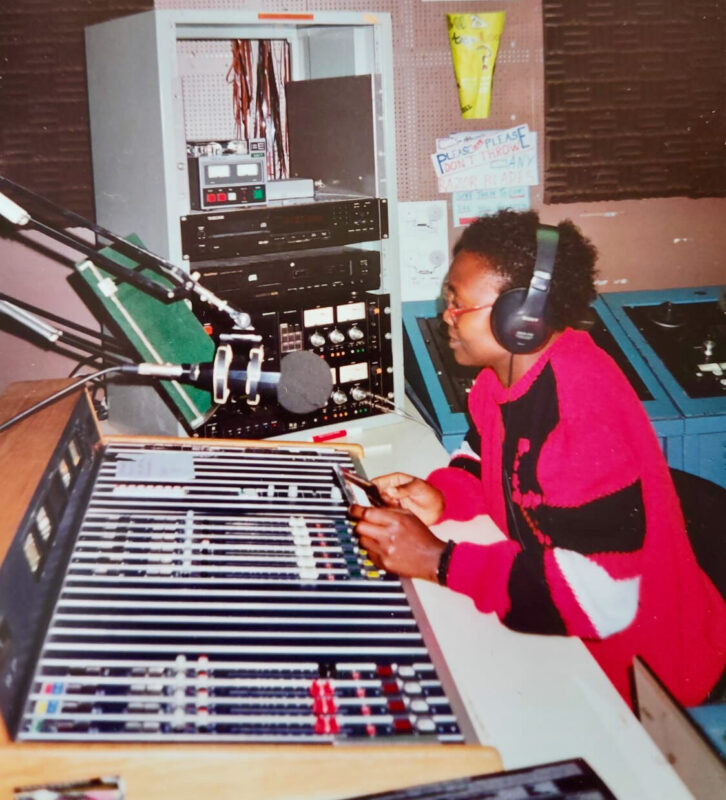
Nabusoba: The infrastructure up to the early ’90s was very much analog compared to the digital systems of today. As a radio producer in the radio department of KBC, production work was laborious and time-consuming. Starting with scriptwriting, we had no computers in the department, and typewriters were few and reserved for the newsroom and administrative copy typists. Radio producers had to write out scripts in carbon copy — three copies: one each for the producer, the presenter and the technician for every production.
Research for every program was equally painstaking, involving reading library books, research materials and old newspapers. When the KBC library was not sufficient, you had to pay a subscription to outside physical libraries to gain access. Then we reached out to resource people for interviews through office phones to book appointments.
In the event that a resource person preferred to be interviewed in their office, I had to book a portable recorder. The Sony or Nagra recorder machines were heavy — over 12 kilograms (26 pounds) — and you had to check that you had all the separate recording accessories: the tape, spools, batteries and microphone.
Editing and cleaning up material was equally involved. Editing was done either by physically cutting tape or by dubbing from one heavy Studer machine to another. Then came final compilation, where script narration was recorded by presenters in the production studio with the technician including pre-recorded interviews, music, sound effects and the signature tune. All this would take close to three days for a feature program, or longer.
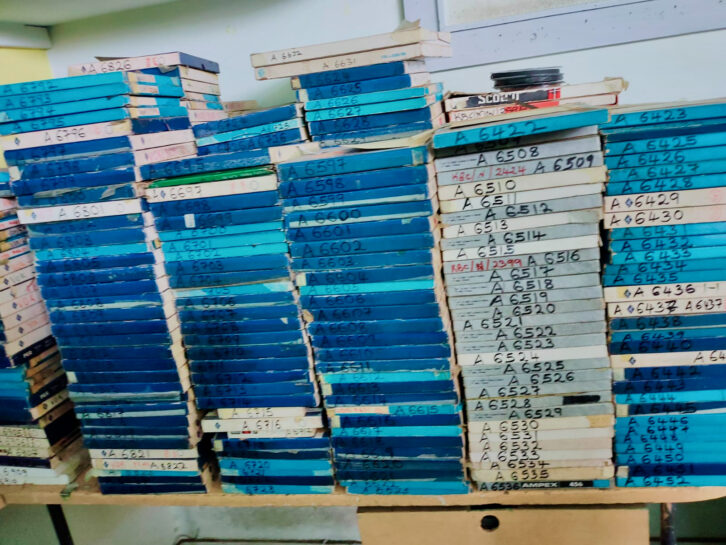
Technology has eased that production workload. KBC bought computers for all departments, and some staff have even been issued laptops to enable them to beat deadlines. Recorders have evolved from very heavy analog machines to digital recorders with built-in accessories that are weightless and portable. Research for scripts has been simplified with internet access, where information is only a click of a button away in one sitting. Editing software on computers has also reduced crowding in the scarce production studios.
The huge recorder machines and speakers that occupied so much space in studios have been replaced with computers. Outside broadcasting (OB) previously required booking an OB van complete with a heavy recorder, mixer, microphones, stands and technicians. All this has changed with smaller digital recording gadgets where material can be sent via phone or laptop for instant transmission, rather than being rushed by courier to the broadcasting house.

Technology has also made the work of continuity announcers and presenters easy. They can access content shared by producers at the click of a button — no more threading of huge tapes in a machine for transmission. Presenters can prepare playlists at a click of a button as opposed to going to the audio library to search through catalogues and giving requisition forms to the librarian a day in advance.
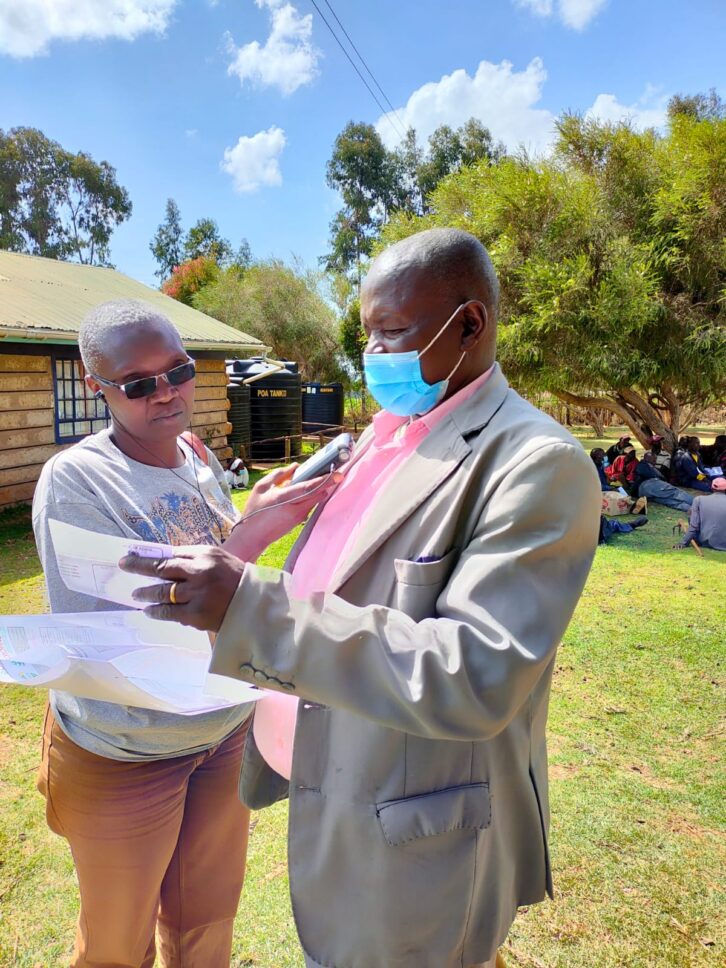
Streaming services now allow a listener to access any station from anywhere in the world, and music streaming has given stations and audiences unprecedented control over what they want to hear and when. Late-night or weekend radio shows are even televised now — Spice FM, for instance, streams its morning show The Situation Room on KTN television every morning.
RW: How has radio survived the disruption of new technology, and how do you see AI impacting the industry?
Nabusoba: Radio in Kenya has been able to survive disruptive technology by adopting it and moving with the times, including maintaining a significant presence on social media platforms to engage with audiences.
As for the future, it would seem that innovators have refused to sleep, using their continuous creativity to unlock the power of radio. AI is likely to cause another disruption in the broadcast industry. Already, there are roles that technology has replaced or made easier, a far cry from the manual tasks production personnel used to undertake.

AI voice generators are being used for continuity announcements and basic commercial tasks that previously required stations to hire freelancers. Other tasks engaging AI include transcription, audio editing, summaries, research and the organization of information.
[Also by this author: “Radio Plays a Pivotal Role in Music Discovery and Promotion“]