This is one in a series about trends in audio processing.
There are broadcast engineers, program directors, DJs and station owners who are musicians, but I’m sure there are even more who are not particularly musically gifted. (Don’t worry, I’m not talking about you, it’s those other folks you work with that I’m addressing here.)
I believe most of us in the broadcast industry are self-proclaimed music aficionados but may not be asked to sing the National Anthem at the next local football game.

Musicians and recording engineers spend months, sometimes years and a ton of cash producing a record that not only accurately captures the sonic perfection of the performance, but also the emotions or “soul” of the performance.
A large portion of that process involves getting the dynamics of the song perfected.
I know, no one needs another sermon about not using too much compression, but hear me out. I’m a real-life musician who plays music, records music and works in the industry. Here’s my point: Music is fragile, so handle it with care.
I have been recording music since I was about 7 years old (remember the Panasonic cassette recorder with the built-in speaker and the cool chrome slide-out handle?).
I’ve recorded on everything from TEAC reel-to-reel machines with walnut side panels to the current Mac-based DAWs like Digital Performer, Cubase and Logic. Now, I’m no rock star or virtuoso, but I do play piano and guitar and I have a great ear.
When I took music theory in college, my professor would sit behind the upright piano that faced the class (so we could not see his hands) and he would play random chords and ask, “What type of chord is this?”
He was looking for answers like “Major, Minor or Minor 7th.” When I would blurt out the keys of the chords also, he stopped the lesson and asked, “How are you doing that,” like it was some sort of magic trick. Obviously, it was not magic, I’d just been playing piano for a long time, and I could hear the difference between a C minor and a D minor.
Ok, way too much self-talk. Here is what every music listener (who is also a musician) would like to hear coming through the speakers in their 2015 Honda Accord: clean, clear music that still has plenty of dynamics.
We all know this, but I wonder how many of us take the time to really listen to the pre-processed compared to the post-processed sound. If you are in charge of setting up the “Signature Sound” for your station, consider some of these tips:
- If you know you are not particularly blessed with a great ear for music, find someone who is, and get them to listen with you while setting EQ and compression for your music programming. It takes a little humility, but it’s for the greater good. Remember that “louder” always tricks the ear into thinking it sounds “better.” When doing A/B tests the volume knob will have to be adjusted to create equal listening levels while comparing.
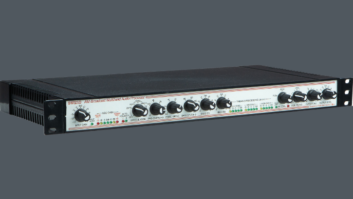
- If you are not already dayparting or using different presets for your spoken word vs. music programming time slots, figure out a way to have unique compression and EQ settings for each. (Shameless plug: The Inovonics NOVIA 272 provides 20 presets for dayparting, as do many of the processors on the market.)
- Take your smartphone out to your car and use your phone’s web browser to log into your web-enabled processor and make your adjustments while listening in the real world. Do the same in multiple vehicles if you can. I recommend that you have the car’s engine running, as this usually adds some low-end rumble to the interior of the car and will affect your decisions.
- Resist the urge to make the overall volume the only important metric. Sure, we need a lot of signal and our stations need to stand out when channel surfers are scanning the dial. But consider this: Restoring some of your missing dynamics will provide a more authentic representation of those million-dollar recordings. Personally, I have stations that I listen to because of their song choices and how dynamic they sound, not how much louder they sound compared to the next station on the dial. I don’t mind a little manual volume adjusting.
- When it comes to EQ adjustments there are thousands of opinions. This is where I think it’s important to listen in as many environments as possible (and multiple cars if you can). Keep fine-tuning and compare to other stations until your station has the sound that is the most musical and true to the original recordings. Again, use dayparting for your EQ to optimize for spoken-word vs. music whenever possible.
I realize there are exceptions, like classical music which sometimes has up to a minute of very low volume in a composition, but if your station is cranking out rock, pop, AC, metal or jazz etc. consider placing a higher priority on making those recordings shine. Your listeners will love you for it!