The author is technology coordinator for KUT in Austin, Texas.
KUT, Austin’s NPR affiliate, has taken major strides in modernizing its broadcast infrastructure by integrating with hybrid radio platforms including RadioDNS, DTS AutoStage and RadioPlayer.
These efforts are designed to enhance the listener experience across FM, connected vehicles and digital platforms.
Metadata on the move

KUT’s RDS deployment ensures that FM listeners receive real-time metadata such as station ID, song title, artist name and weather alerts.
The station uses Media Realm MetaRadio and Broadcast Electronics Radio TRE as middleware solutions, which ingest data from the automation system, Metapub and a station-owned Radio Display Song Information Push program.
These systems work together to deliver metadata to various output sources, requiring careful synchronization between software and transmission hardware to maintain accuracy and reliability.
Bridging broadcast and IP
KUT’s hybrid radio strategy centers on RadioDNS, which links FM broadcasts to IP-based services.
The idea first sparked after a conversation with Nick Piggott, RadioDNS project director, at the 2023 NAB Show. With support from the RadioDNS team, KUT implemented the system by hosting and maintaining Service Information (SI) XML files that define its broadcast parameters and associated online resources. These files allow hybrid-capable receivers to fetch logos, program guides, and streaming links automatically.
KUT’s SI file is publicly available here.
From metadata to dashboard
In November 2024, KUT began integrating with DTS AutoStage, a global hybrid radio platform developed by Xperi and used by major automotive manufacturers. The goal was to ensure KUT’s content would appear in connected car dashboards with rich visuals, real-time metadata and interactive features.
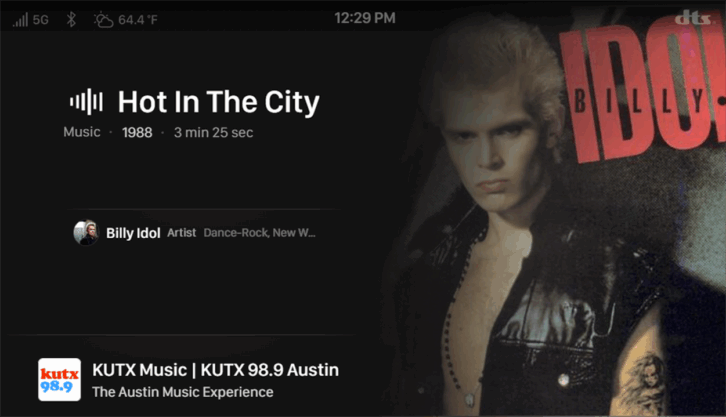
The integration was completed in early 2025, with invaluable support from Juan Galdamez, senior director of broadcast strategy at Xperi. KUT used a combination of MetaRadio, Radio TRE and custom batch scripts to format and push metadata — including song information — to AutoStage’s ingestion endpoints.
This was a major step in making our station more discoverable in the car. DTS AutoStage allows us to present our content in a visually engaging way, which is increasingly important for listener retention.
One of the standout features of AutoStage is its analytics dashboard, which provides insights into listener behavior, platform engagement and geographic reach. We’re able to see how our content performs in connected vehicles and identify trends. The analytics are incredibly useful, and we’re excited to see what future updates will bring.
Expanding Reach
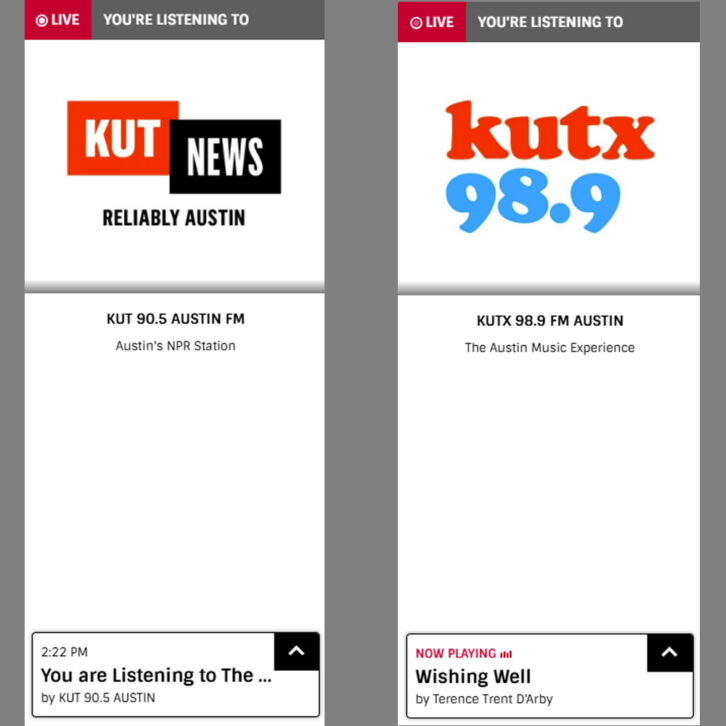
KUT also registered with RadioPlayer after meeting Lawrence Galkoff at this year’s NAB Show.
RadioPlayer aggregates radio stations for mobile apps, smart speakers and infotainment systems. KUT provided stream URLs, fallback options and branding assets to ensure consistent presentation across devices.
We’re especially excited and hopeful about the expansion of RadioPlayer in the U.S. It’s a powerful platform that can help public radio stations like ours reach new audiences in a consistent and user-friendly way.
Challenges and lessons
The journey to hybrid radio wasn’t without its challenges.
One of the biggest hurdles was ensuring metadata consistency across multiple platforms, each with its own formatting requirements and ingestion protocols.
Hosting and maintaining XML files for RadioDNS demanded careful version control and uptime monitoring. Automating metadata delivery to DTS AutoStage and RadioPlayer required scripting and rigorous testing to ensure reliability and accuracy.
The experience reinforced the importance of modular workflows, clear documentation and strong vendor relationships when navigating complex integrations.
One of the biggest challenges we faced during the hybrid radio rollout was creating the Service Information (SI) file for RadioDNS. It was a completely new concept for our team, and understanding the structure and requirements took time.
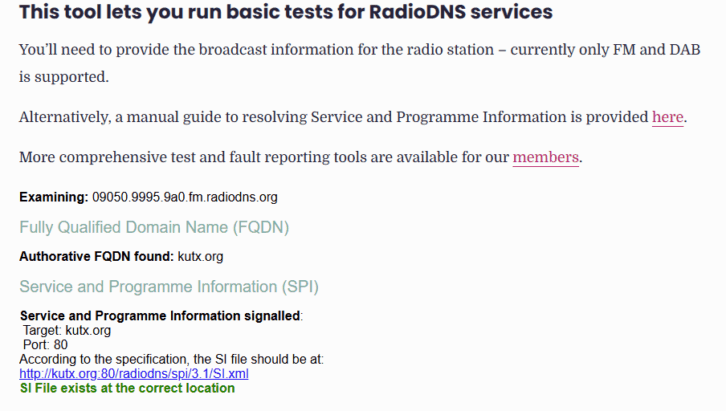
Fortunately, the RadioDNS documentation and community support were invaluable. We used the RadioDNS Testing Tools to validate our SI file and ensure it was correctly formatted and accessible.
Maintaining metadata consistency was another major hurdle, especially when playing tracks from external sources like turntables, CD players and pre-recorded shows.
These sources don’t automatically generate metadata, so we had to find a way to manually inject track information into our middleware. To solve this, we developed an in-house tool called Radio Display Song Information Push, built using Excel and VBScript.
This tool allows studio hosts to manually enter song details, which are then pushed to MetaRadio and Radio TRE, ultimately reaching RDS and hybrid platforms. However, this solution required the host to be physically present in the studio.
For recorded shows, we took a more automated approach using Microsoft Power Automate cloud flows combined with Excel. This setup allowed us to schedule and send metadata to the middleware without manual intervention, effectively bridging the metadata gap for our music station, KUTX 98.9.
On our news station, KUT 90.5, where most content is syndicated via NPR’s Content Depot, we used Metapub as the primary metadata source. Metapub provided reliable and structured metadata for NPR programming, which integrated smoothly with our existing systems.
Sending now-playing metadata to DTS AutoStage and RadioPlayer was another challenge, especially for our music stations.
While our news stations (KUT HD1 and HD2) used middleware software that supported direct integration with both platforms, our music stations had limited options. During troubleshooting, we realized that our in-house parser system, originally designed to convert XML output from the middleware into a format compatible with NPR Composer, could be repurposed.
Since the parser already created a local database from the XML, we wrote a script that connected to this database, extracted the song information and sent it to DTS AutoStage and RadioPlayer using their respective HTTP POST APIs. With guidance from Galdamez and Galkoff, who provided credentials and setup instructions, we refined the script through trial and error until it reliably pushed metadata to both platforms.
These experiences taught us the importance of automation, modularity and collaboration. By building flexible tools, documenting workflows and working closely with vendors and platform teams, we were able to overcome technical barriers and create a scalable metadata infrastructure that supports both live and syndicated content.
KUT’s hybrid radio rollout reflects a broader commitment to innovation in public broadcasting. By embracing platforms like RadioDNS, DTS AutoStage and RadioPlayer, the station is not only enhancing the listener experience but also positioning itself for the future of connected audio. With powerful analytics, growing platform sup
port and expanding reach, KUT is excited about what’s next — and ready to help shape the next chapter of radio.
If a reader has questions or needs help, they can reach out to me at [email protected] and our team at [email protected].