Like many heritage AM stations, the call letters meant something. WSM stood for “We Shield Millions,” because it was owned by an insurance company back in the day. They started broadcasting on another frequency in October 1925 but began serving the nation on 650 kHz in 1932.
A trip to Nashville made it possible for my wife Paula and me to visit this transmitter site that goes way back in radio broadcasting. The WSM(AM) transmitter is located just off Interstate 65, some 13 miles south of downtown Nashville. Chief Engineer Jason Cooper was there to show us around.
This station is a powerhouse of 50,000 watts, on the low end of the AM dial at 650 kHz, for great nondirectional coverage day and night. I enjoy listening to the “Grand Ole Opry” in Minnesota at night. There was a time when WSM was broadcasting with AM stereo. I remember driving along and listening to the C-QUAM stereo as entertainers joked, played and sang at microphones on stage, live on this, the most well-known country station. Stereo encoding has since been turned off due to lack of AM stereo receivers, but the country music continues.
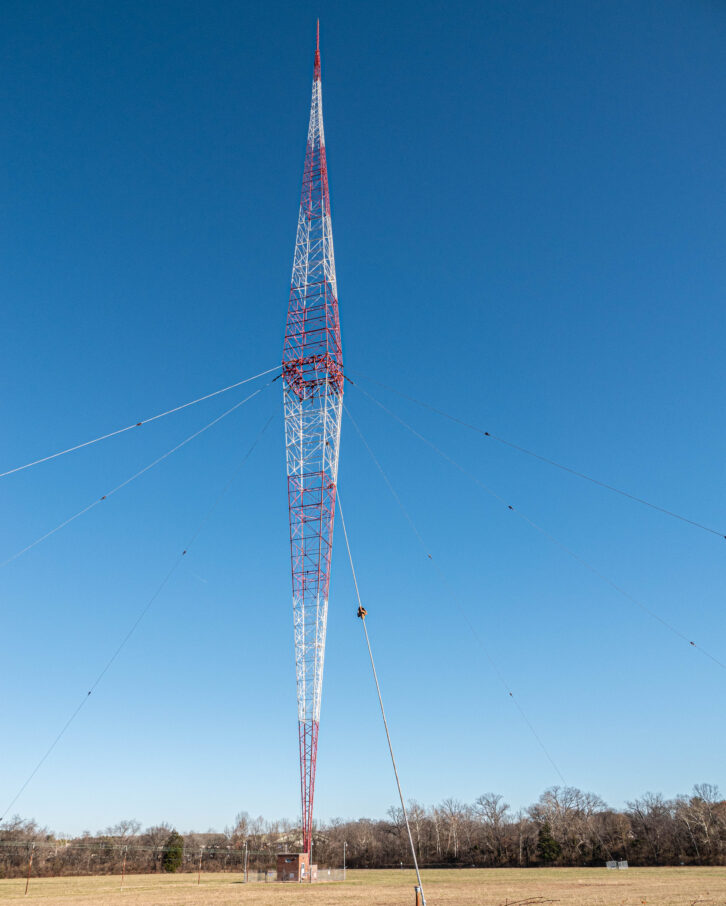
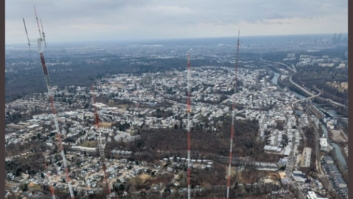
Immediately apparent was Fig. 1, the 878-foot Blaw-Knox tower with its large center, which tapers to a point at the top and bottom. It was built during the Great Depression in 1932 when radio was taking hold as an entertainment medium.
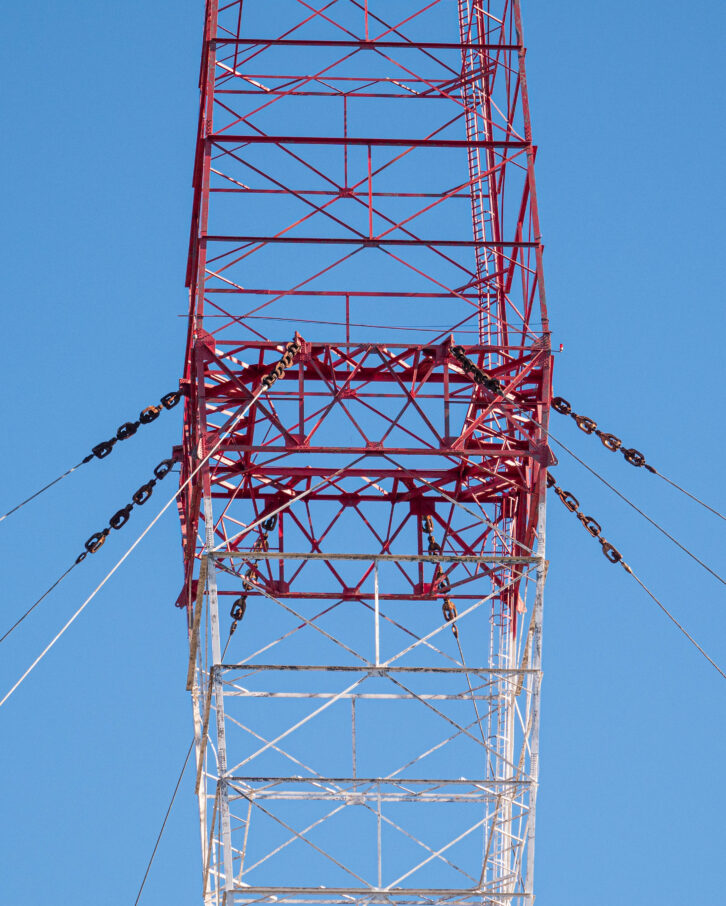
Of interest in Fig. 2 is the center, where eight guy lines hold the tower. There are no guy lines above or below. Tower height was adjusted a bit with a pole at the top to push the self-interference zone out past 100 miles at night. As you know, groundwaves and skywave signals can arrive at a receiver out of phase because of the length of the path they take. The result is audio distortion at times. Beyond that zone, the WSM signal goes out 1,000 miles or more at night.
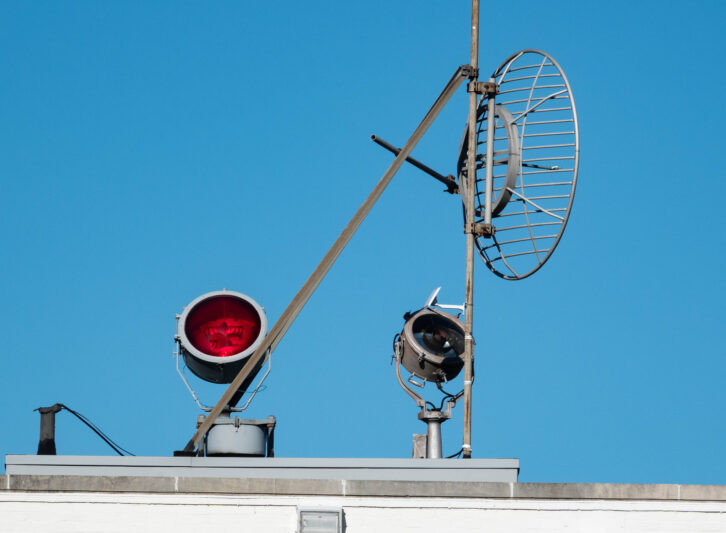
Fig. 3: The building roof has an STL dish and a 1930s rotating beacon light to warn aircraft. Standard red tower lighting replaced it, then strobes. At this writing, they are planning on returning to red lighting to keep with the heritage look.
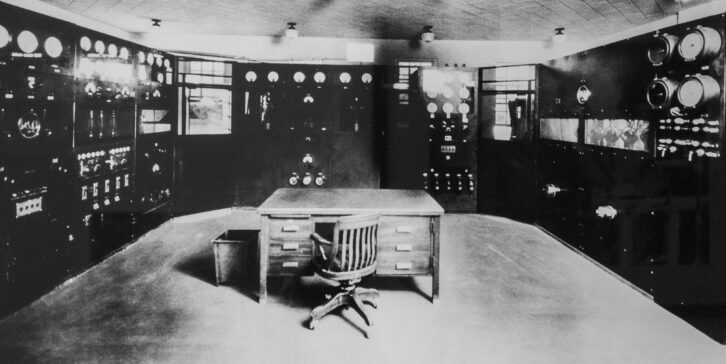
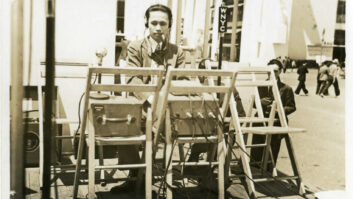
There were 20 engineers on staff to keep the place running in the 1930s and 1940s. Fig. 4 shows the original transmitter, custom-built into the building.
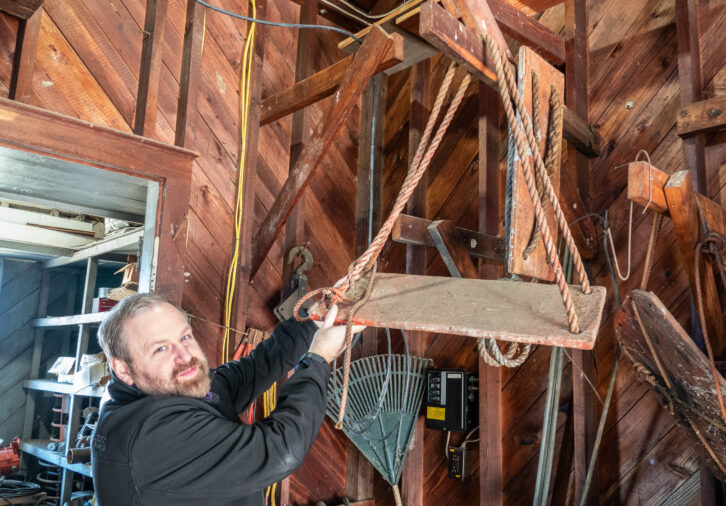
Fig. 5: Jason showed off a bosun’s chair used for tower work from the years before today’s OSHA-compliant climbing harnesses were developed. It was an exciting world. The 50,000-watt transmitters of the day were water-cooled utilizing a pond outside, now converted to grassland. I am guessing the overall efficiency of power-line input to RF output was less than 20%. Today, 85% to 90% is normal.
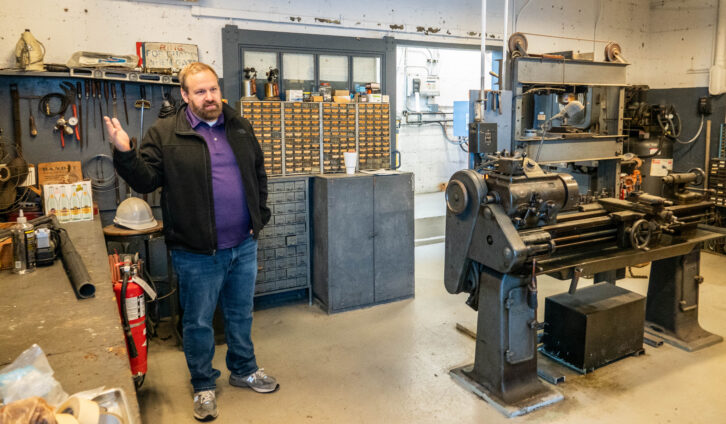
Fig. 6: There is a machine shop where repair parts and components were built for the original transmitters. In addition, engineers experimented with low-baud-rate data communications during World War II at the request of our government. In addition, there was a detachment of four soldiers guarding the facility day and night during the war because it was that important.
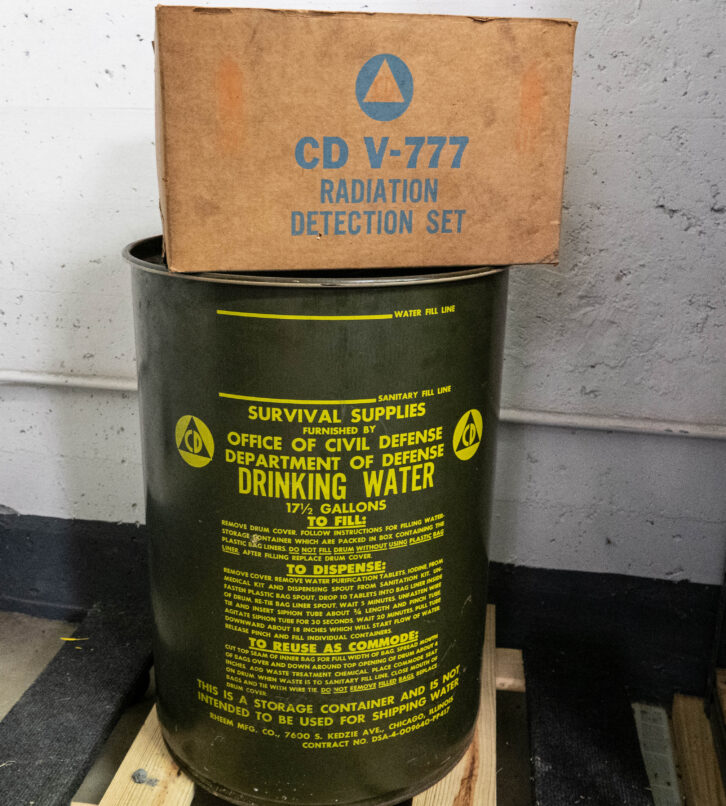
The WSM transmitter site is a treasure trove of history. Fig. 7: Civil Defense supplies from the government were there to keep engineers working in the event of disaster during the Cold War.
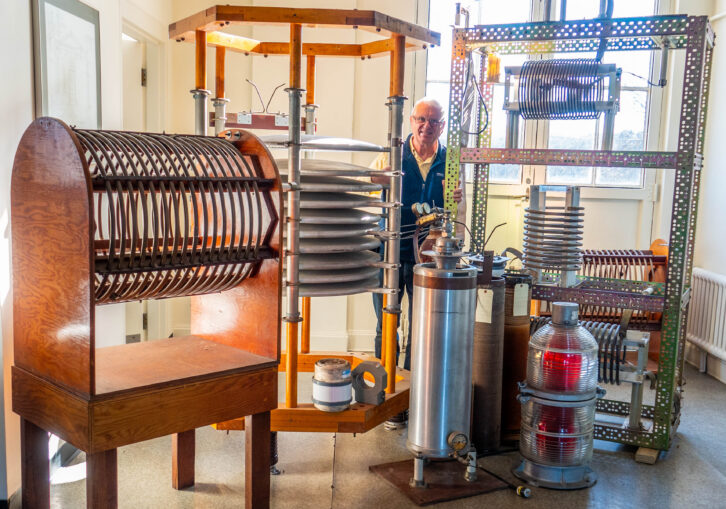
Fig. 8: Lots of hand-built parts are on display, although the site is not open to the public.
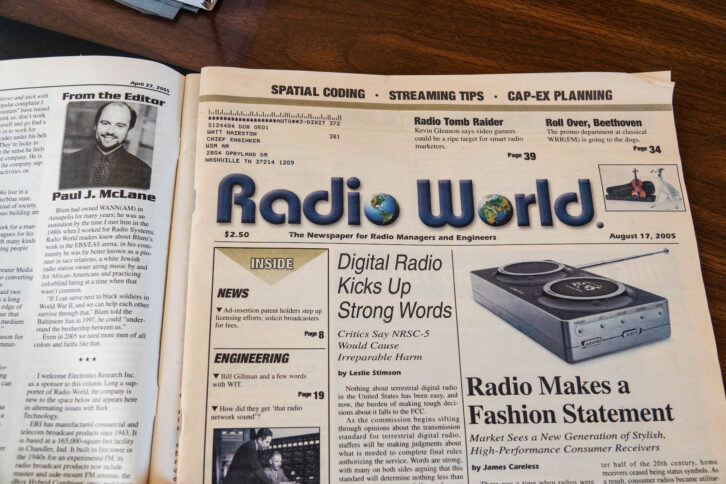
Fig. 9: The chief engineer’s office desk had copies of Radio World. No, we didn’t stage that for the shot. RW was, and still is, reading material at this place. Then there was a portable remote broadcast transmitter, which operated in the 1700 kHz range, to send audio from a remote location to the studio for rebroadcast.
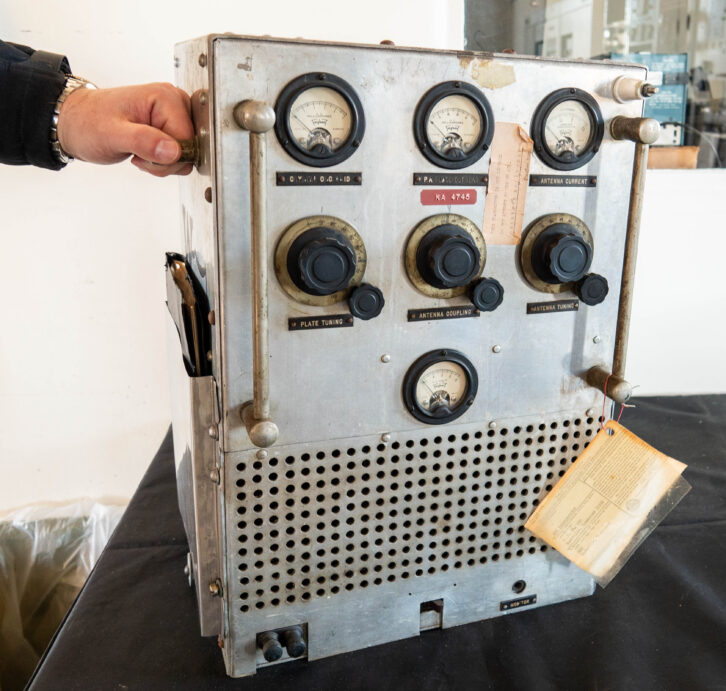
Fig. 10: This one is thought to be the first of its kind. It was likely a fun project as all broadcast engineers back then were radio amateurs who knew how to build transmitters from scratch.
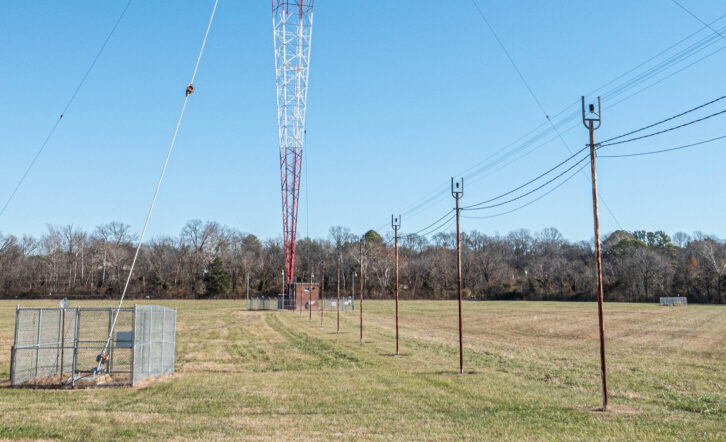
Fig. 11: The original RF feed to the tower was a balanced open-wire arrangement with a cage of four surrounding ground wires. Keep your fingers away from that one! The feed has since been replaced by a buried 50-ohm line.
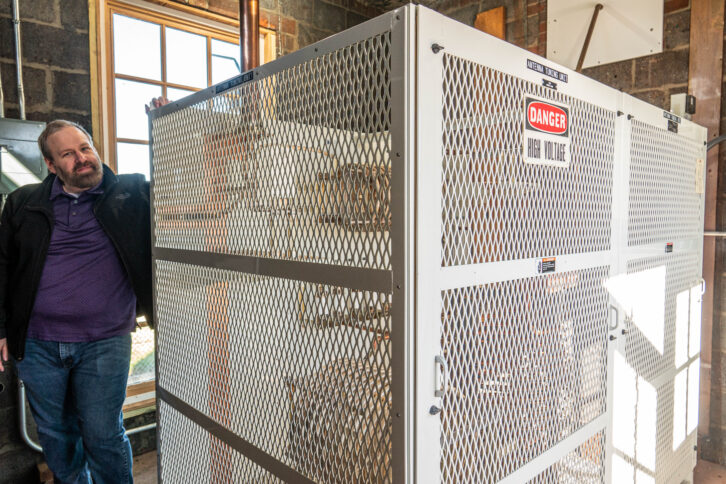
Fig. 12: Jason showed off the Kintronic Labs antenna coupling unit near the tower.
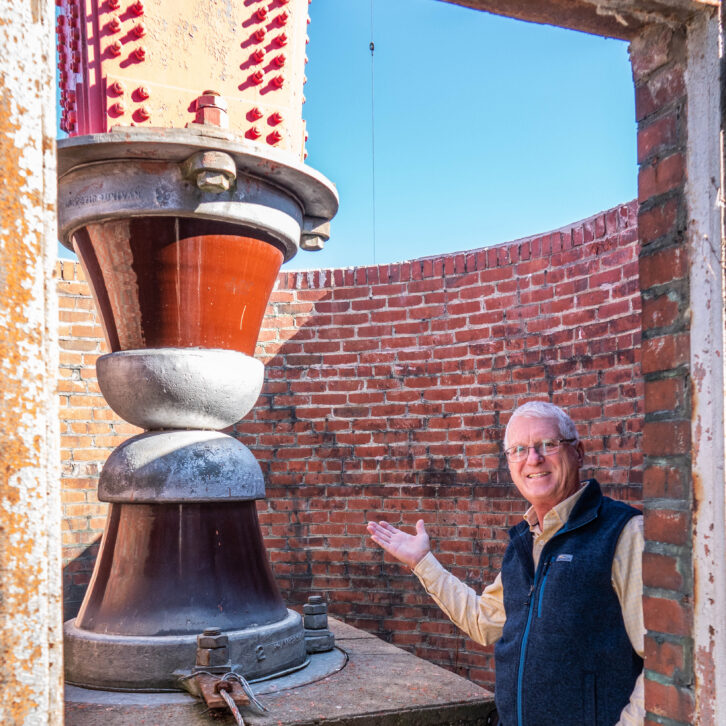
Fig. 13: Big stuff, there I was, just a few feet from 50,000 watts of RF at the base of the tower. Yes, there is a safety fence outside the brick wall to keep people away.
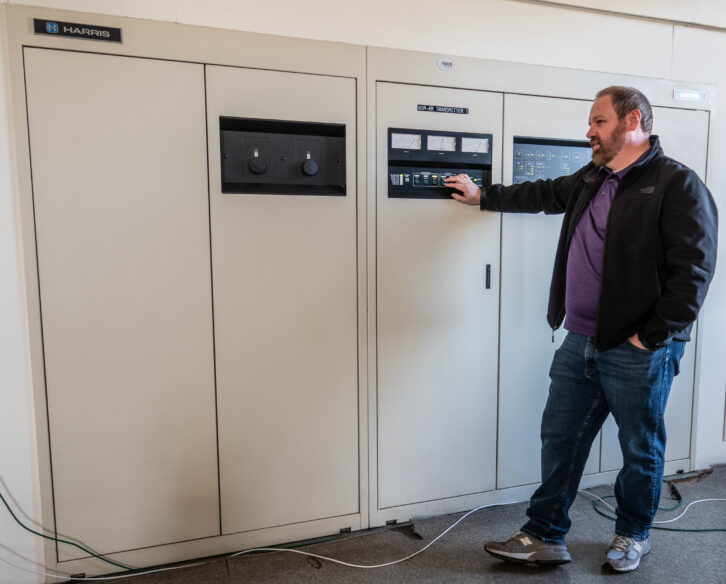
Fig. 14: There are two main transmitters. One is a Harris DX-50 and the other is a Harris 3DX-50. Then there is a BE AM-5A transmitter that runs when work is being done on the main tower. It feeds a 160-foot backup tower, which is only 38 degrees of electrical height at 650 kHz. Two wires go west from the top toward the property line providing top loading, thus making an easier match to a 50-ohm line.
This was a trip down memory lane recalling the glory days of AM radio broadcasting. On the plus side, WSM is still alive and well after more than 90 years.
[Do you receive the Radio World SmartBrief newsletter each weekday morning? We invite you to sign up here.]