The long-standing Shukhov Radio Tower in Moscow is slated to be dismantled.
According to a report by independent Russian news outlet Meduza, the structure’s owner, the Russian Television and Radio Network, plans to dismantle nearly the entire tower this fall and replace most of its original steel components by 2028.
The 470-foot free-standing steel diagrid — diagonally intersecting — structure was completed in 1922 during the Russian Civil War. It stood as Moscow’s tallest structure until 1953, according to Meduza.
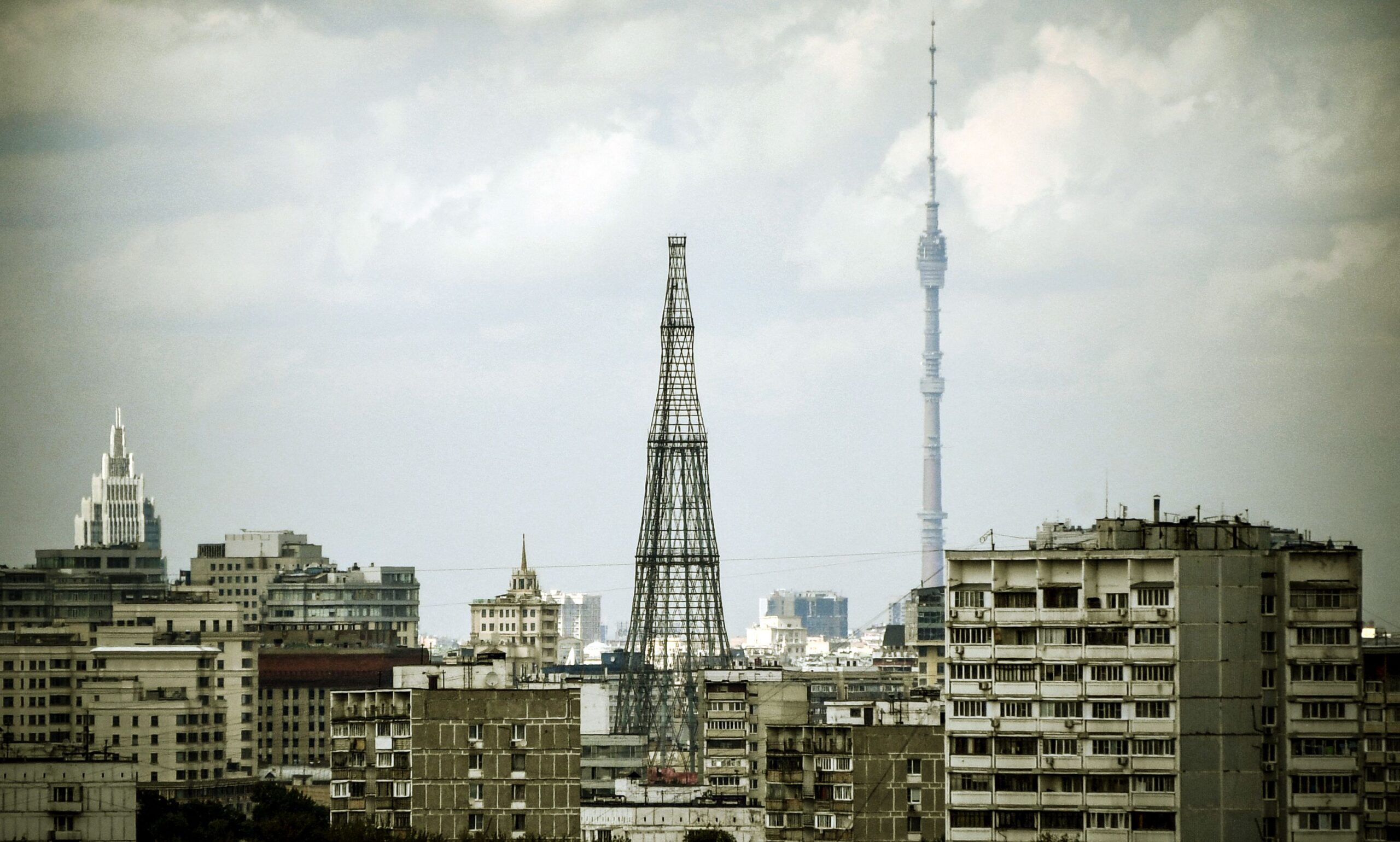
According to Meduza’s architectural journalist Asya Zolnikova, the tower became the country’s first and main radio transmitter. It served as the Soviet Union’s primary television tower until the Ostankino Tower was completed in 1967.
The tower was erected using a method known as telescopic assembly, where all six sections were built at ground level and raised sequentially into place. Broadcast operations at the site were terminated in 2002.
Russia’s Main State Expert Review Board approved the reconstruction project in April, according to reporting by Russian business newspaper Kommersant.
Under the approved plan, sections of the tower will be dismantled, restored where possible and reassembled. But the project also calls for replacing the majority of degraded metal components with new structural steel, raising concerns among by several individuals interviewed by Kommersant who warned the structure could lose its status as a federal cultural heritage site.
According to the Meduza report, Stanislav Belyavsky, deputy director general for construction and major repairs at RTRS, stated that “it will be exactly the same tower.”
The Meduza report disputes Belyavsky’s assessment, arguing that replacing the century-old steel turns the historic monument into a replica. Officials maintain that work cannot be delayed, as the structure has suffered from corrosion for decades.
The tower is named after its designer, engineer Vladimir Shukhov.
“Shukhov discovered that you can use straight iron or steel structural members to produce an inward curving column, broad at the base and top, and narrow in the middle, which could support much more weight with less material than a conventional straight structure,” the Linda Hall Science Library & Arboretum wrote of his hyperboloid design.
He would patent the the world’s first hyperboloid structure in 1890.
The Shukhov Tower was originally designed to stand 1,150 feet tall, roughly 50 feet higher than the Eiffel Tower. Material shortages during the Civil War forced Shukhov to revise the project down to its current height.
Russian Prime Minister Vladimir Putin previously approved a Ministry of Communications initiative to begin reconstruction in 2009, though major work was repeatedly delayed.
[Do you receive the Radio World SmartBrief newsletter each weekday morning? We invite you to sign up here.]