Creeping insurance costs for liability and property coverage have more broadcasters facing increasing financial strain.
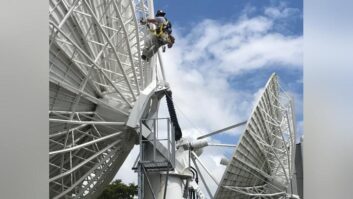
Radio and television broadcasters face a wide range of risk. There are towers, antenna equipment, buildings and their contents, broadcast media software, broadcasting vehicles, business interruption, special events, workers’ compensation and more, according to people in the insurance industry.
Whether it’s an ice storm in Tennessee, flooding in Louisiana or a California wildfire, remote broadcast infrastructure is often in harm’s way, and the costs to insure against loss are mounting for broadcasters, they say.
Broadcasters also face liabilities that are unique to the industry. High risks like defamation, copyright infringement and regulatory fines, combined with strict underwriting for specialized productions, drive up premiums for broadcasters. Companies face the threat of vandalism or even domestic terrorism.
Incidents of copper theft are on the rise, which can lead to significant business interruption.
For example, Payne Media Group’s KITX(FM) in Hugo, Okla., suffered catastrophic damage to its tower in 2024 when copper thieves brought the tower down to steal 3-inch copper coax and sell it to a scrapyard.
President Will Payne said the incident took the station off the air and caused significant financial pain even though the transmitter site was insured.
“Insurance is expensive and yet won’t cover everything. Maybe 80%. Then once a claim is paid, expect to be cancelled and next policy to be double the cost,” he said.
“Also, be prepared to be able to purchase replacement gear and wait up to 10 months or more to be reimbursed.”
Protection comes at a cost, according to experts. The National Association of Broadcasters has several endorsed partners for property and casualty insurance, including Axis and Amwins, which offer NAB members tailored insurance coverage. Both are underwriters that wholesale specialty insurance products and services.
Laurie McKenzie, associate director-broadcasters program at Amwins, said broadcasters don’t need extra insurance to protect property, but they do need the right coverage, with accurate limits and appropriate protection.
Cost control is about risk clarity, McKenzie said, not simply shopping for the lowest price.
Stations can consider higher deductibles where appropriate and look for efficiencies by bundling coverages such as property, general liability, auto and umbrella policies.
“Accurate documentation is also essential. Insurers routinely request information such as year built, updates to roofing, HVAC and plumbing, square footage, construction type, and protective features,” she said.
“Where losses have occurred, carriers will want to know what steps were taken to reduce the likelihood of similar losses in the future.”
What’s behind rising insurance premiums for broadcasters?
Increasing weather volatility and rising rebuilding costs continue to affect property insurance pricing, McKenzie said.
Even auto insurance premiums continue to rise, making proactive driver screening, training and fleet safety practices more important than ever.
In addition, she said that from a liability standpoint, insurers expect strong risk‑transfer practices, including written contracts with contractors that include additional insured and hold‑harmless provisions when outside vendors are engaged.
What’s said on the air can create legal exposure, and standard general liability policies typically do not cover content‑based claims.
“Broadcasters should discuss media liability or broadcasters’ liability coverage with their insurance advisor, as that protection is generally provided through a separate professional liability policy,” McKenzie told Radio World.
“Typically, Standard General Liability policies contain exclusions specifically related to content-based claims for those in the business of broadcasting.”
Any time equipment is added to a site, the station’s insurance program should be reviewed and updated accordingly. And don’t forget that carriers want to see reasonable protective measures in place, such as lighting, cameras, fencing, alarms and inventory controls.
Failure to take appropriate precautions, she said, can result in higher deductibles or theft‑related exclusions, particularly at remote tower sites.
“It’s a good idea to review the addresses where towers are listed on the policy carefully, because coverage is usually location specific. Provide geo-coordinates for all tower sites to ensure accurate listing on the policy so coverage responds as expected.”
Some states, like California, offer special insurance programs for residential and commercial property owners. The state’s FAIR Plan can offer basic fire insurance coverage for high-risk properties when traditional insurance companies will not, according to its website. However, broadcasters are excluded from participating, according to the California Broadcasters Association, so check with your own state association.
Greg Lawrence is a commercial lines advisor with Ansay & Associates, an insurance agency that writes business insurance policies in Wisconsin, Minnesota, upper Michigan and Florida.
He says property exposure, especially at tower sites, is high for broadcasters. Towers increasingly are viewed by insurers as high‑severity risks.
“Broadcast towers are specialized structures and often make up one of the most significant property exposures a station has. Towers are highly susceptible to lightning strikes and electrical surges. Stations should make sure their property insurance specifically includes towers, antennas and transmission equipment with limits high enough to reflect today’s construction and steel costs,” he says.
Also consider extended business interruption coverage, Lawrence said, since rebuilding a tower can take months. Most business interruption coverage lasts 12 months; a more comprehensive policy can cover up to 24 months.
Lawrence describes a “tightening of the insurance market” in 2026 with multiple factors contributing to higher premiums or tighter underwriting requirements.
“Insurers are paying closer attention to catastrophic weather exposures and the rising cost of rebuilding towers and transmission infrastructure. Steel prices, labor costs and supply chain issues have all increased replacement values,” he said.
“In addition, cyber risk and equipment breakdown exposures are getting more scrutiny as broadcast systems become more technologically complex.” Also, some carriers are no longer able to provide Cyber Liability Coverage for broadcasters, he said.
Broadcasters can improve their insurability by focusing on risk management, according to Lawrence. Regular tower inspections, strong grounding and lightning protection systems, site security and documented maintenance help reduce loss potential.
He says radio stations should review their property values and business interruption limits annually to make sure they are accurate.
“A good question to ask an insurance advisor is whether the station has the right mix of property, business income and specialty coverages to restore operations quickly after a major loss.”