The National Association of Broadcasters and other prominent players are celebrating Tuesday’s House vote in favor of the AM Radio for Every Vehicle Act. But the passage of the bill did involve some compromises.
The radio industry admits it didn’t get everything it wanted when the original bill when it was first introduced. The bill includes a sunset provision of eight years instead of the 10 years originally proposed.
In addition, the House’s Energy and Commerce Committee last fall added a requirement for the Department of Transportation to study any potential safety and innovation issues in regard to AM reception in new vehicles that feature autonomous driving systems, according to the text of the bill that you can view here.
NAB acknowledged that changes were made to the final version of the bill.
“Broadcasters have been open to hearing from lawmakers who had some concerns about the bill’s potential impact on automakers,” Carrie Healey, chief spokesperson for NAB, told Radio World. “The final legislation addresses those concerns, and we think that’s reflected in the overwhelming bipartisan support it received on the House floor (Tuesday).”
The legislation requires the DOT to issue a rule within one year requiring AM radio capabilities to be standard in all new passenger vehicles sold in the United States.
Next up, it will head to the Senate for its consideration.
Sunset provision contingent on AM radio’s value
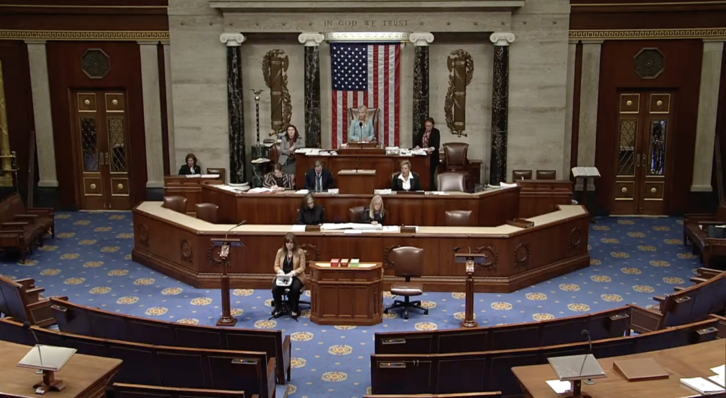
After 40 minutes of debate on the House floor Tuesday, the amended bill passed by voice vote.
U.S. Congresswoman Debbie Dingell used her time on the floor to speak about the compromises she gained for her constituency. The Democrat from Michigan is typically aligned with the auto industry on many issues.
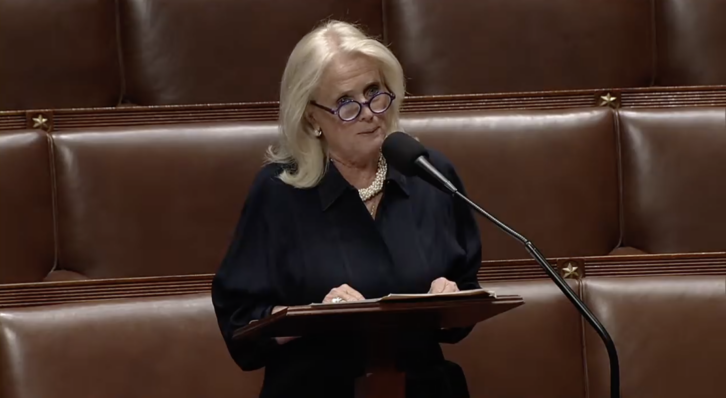
As first reported by Inside Radio, Dingell called the bill a “strong compromise” after lengthy discussions with broadcasters, carmakers and lawmakers.
“This bill mandates AM radio in every new car, but it also includes a sunset provision recognizing that Congress should reassess the mandates as technology evolves,” Dingell said on the floor.
“If AM radio continues to provide value in the future, Congress can and should act again,” she continued.
But Dingell also told lawmakers that 99% of the 286 million vehicles currently on U.S. roads have AM and approximately 90% of new vehicles continue to include it.
Pittman: Finish the job
The biggest U.S. radio company, iHeartMedia, welcomed Tuesday’s development. In a statement, the company’s chairman and CEO Bob Pittman called it a significant victory for public safety, local communities and the millions of Americans who depend on AM radio.
He said the industry also realizes it still needs to push the bill across the finish line.
“We look forward to working with the Senate leadership and lead sponsors Sens. Markey and Cruz, to finish the job, send this legislation to the president’s desk and ensure AM radio remains available to listeners and communities across America,” Pittman said in the release.
On Capitol Hill, Senator Edward J. Markey (D-Mass.), member of the Commerce, Science, and Transportation Committee, and Senator Ted Cruz (R-Texas), Chairman of the Commerce Committee, issued a joint statement on the House passage of the bill. They believe the vote sends a clear message to car manufacturers.
“It is now time for the Senate to pass the AM Radio for Every Vehicle Act and for this legislation to become law so AM radio remains a trusted and essential resource for commuters and communities across the country,” the senators said in the statement.
Sens. Markey and Cruz secured a filibuster-proof 60 Senate cosponsors for the Senate version of the AM Radio for Every Vehicle Act. The legislation passed through the Senate Commerce Committee in February 2025.
[Do you receive the Radio World SmartBrief newsletter each weekday morning? We invite you to sign up here.]