If you are a regular shortwave radio listener, the synchronized beats might be etched in your mind.
This is the shortwave time signal from CHU, operated by the National Research Council of Canada. As a kid, CHU was one of the first SW signals I heard on my WWII surplus receiver. It mesmerized my young brain.
The shortwave CHU signal will go off-air on 22 June 2026.
@swradiogram.bsky.social
— Dave Burnett (@gdaveb.bsky.social) May 22, 2026 at 1:28 PM
Perhaps it’s the voice announcements — in both English, with the voice of former CBC announcer Harry Mannis, and in French, with the voice of Radio-Canada’s Simon Durivage.
But on June 22, that time signal will be shut down forever.
Last month, the National Research Council of Canada revealed its decision to silence shortwave station CHU.
CHU uses three shortwave frequencies, via upper single sideband, to provide time signal service.
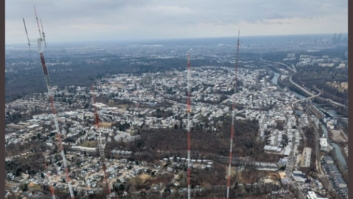
The trio of 3330, 7850 and 14670 kHz originate from one of three atomic clocks located at the transmitter site operated by the NRC, about nine miles southwest of Ottawa, Ontario.
But, with shortwave signals traveling well beyond nationwide borders, the station received listener reports from around the world.
Millions of users, meanwhile, rely on the NRC’s Time Signal-based services, along with government departments, for Coordinated Universal Time (UTC) network time synchronization.
Those services are available via telephone and over the web, and NRC told us it is shifting efforts to maintaining those aspects, including safeguarding the accuracy and continuity of the time signal.
End of life
The decision for the shortwave shutdown was determined by several factors, NRC told Radio World.
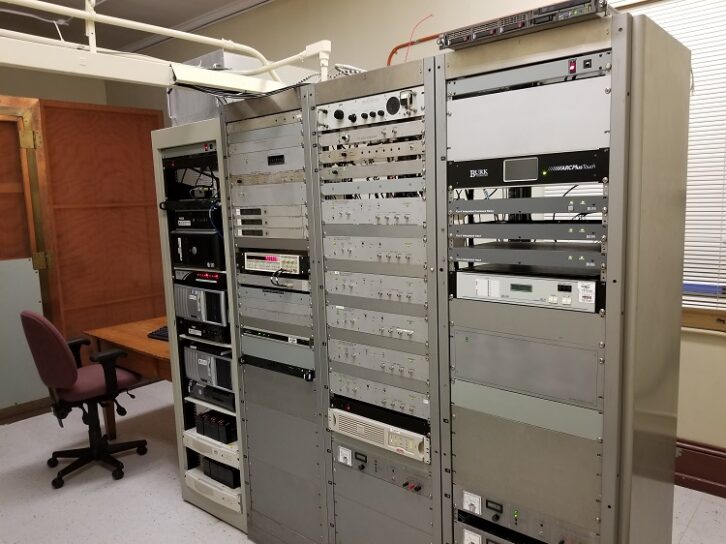
The station’s infrastructure, it said, is at the end of its useful life and experiencing regular failures.
The 1960s-era 3330 and 14670 kHz transmitters run at 3 kW, while the 7850 kHz transmitter runs at 5 kW, according to the NRC Canada website. The operation uses three antenna towers.
“Replacing the infrastructure and maintaining the service would be costly,” a spokesperson told us. The agency said that it is still finalizing plans for the future of the Ontario transmitter site, but that it has established a lifecycle process for items considered to have heritage, research or archival value.
Going forward, NRC will be focusing on aspects of maintaining the official time signal that it said are used most regularly.
Time synchronization can be used via the NRC’s web clock, telephone talking clock and Network Time Protocol.
The decision comes at a time when, according to the NRC’s 2026–27 Departmental Plan, the research council has outlined a multi-year strategy to cut spending, including an approximately $95 million reduction for the forthcoming fiscal year, growing to a $190 million reduction of expenditures by 2028–29.
“The government is committed to restraining the growth of day-to-day operational spending to make investments that will grow the economy and benefit Canadians,” NRC said on its website.
The NRC’s core science and research budget is approximately $1.72 billion for the upcoming fiscal year.
The reductions will also involve a decrease of approximately 510 full-time equivalents by 2028–29, the agency said on its website.
The idea behind CHU, as our James Careless profiled in 2020, was to provide accurate time-keeping information to people across Canada, especially those in rural and remote areas who needed accurate time and didn’t have local access to it.
CHU was launched as experimental station 9CC at the Dominion Observatory in downtown Ottawa. Regular time broadcasts began using the callsign VE9OB in 1929. It became CHU in 1938, and in 1947, the station was moved to its current site.
Time and again
Steve Herman is no stranger to the arena of time and frequency service broadcasts.
He authored a piece as chief national correspondent for the Voice of America on the proposed 2019 U.S. presidential budget, which called for a 34 percent cut in National Institute of Standards and Technology funding. It would have eliminated the NIST stations of WWV and WWVB in Colorado and WWVH on the island of Kauai in Hawaii.
Ultimately, the 2019 NIST budget preserved funding for the three stations. But both the proposed shutdown of CHU and the potential similar fate for WWV, Herman told the WWV Amateur Radio Club, are a “short-sighted retreat” from foundational scientific infrastructure.
“Legacy is not obsolescence,” he said.
CHU and WWV, Herman believes, stand as the ultimate resilient backup for the time-reliant systems that depend on satellite-based GPS, in part due to the nature of shortwave radio waves, which bounce off the ionosphere and travel thousands of miles across the continent and beyond.
“In a crisis where the satellite systems are compromised, these ground-based transmitters will continue to broadcast accurate UTC time,” he said.
Canada’s NRC told Radio World that due diligence was conducted before determining the shutdown plan of CHU and took into account remote and northern Canadian communities, as well as maritime operators in the Atlantic Ocean.
“This work confirmed the availability of official time through alternative mechanisms meeting a variety of use cases considered most critical,” an NRC spokesperson said.
For the science of it
Researchers rely on time signals from stations such as CHU, as well as WWV and WWVH in the U.S., as an HF radio beacon source, which can serve a variety of endeavors.
The Ham Radio Science Citizen Investigation is a group intended to advance citizen and scientific collaborations for research and understanding of near-Earth space dynamics and space weather through amateur radio activities.
The group said in a statement that the service CHU provides is not replicated by other professional networks. The global community of citizen and professional scientists alike, HamSCI said, will be poorer for the station’s silence.
“CHU signals, as they propagate toward ever-expanding radio receiver networks distributed across the U.S. and Canada, experience significant variations in frequency, amplitude and phase,” the group said in its statement.
Those observations through receivers such as software-defined radios, the group said, allows better understanding of the physics behind the variations and advances space weather knowledge.
HamSCI’s Personal Space Weather Station Network has collected approximately 25,000 observations of CHU signals to date.
The group’s statement cited members of the HamSCI community who actively use CHU as a propagation beacon for frontier and independent research projects.
“Radio broadcasting for all kinds of purposes has proven resilient for more than 100 years,” Herman told us. “Other technologies have supplemented it but not subsumed it and for good reason as we’ve seen when more modern technologies fail to get the job done.”
[Do you receive the Radio World SmartBrief newsletter each weekday morning? We invite you to sign up here.]