Static Radio is a new “podcast radio” app, melding the experience of radio with the convenience of podcasts. It promises that “every show on the dial is independent and human-made.”
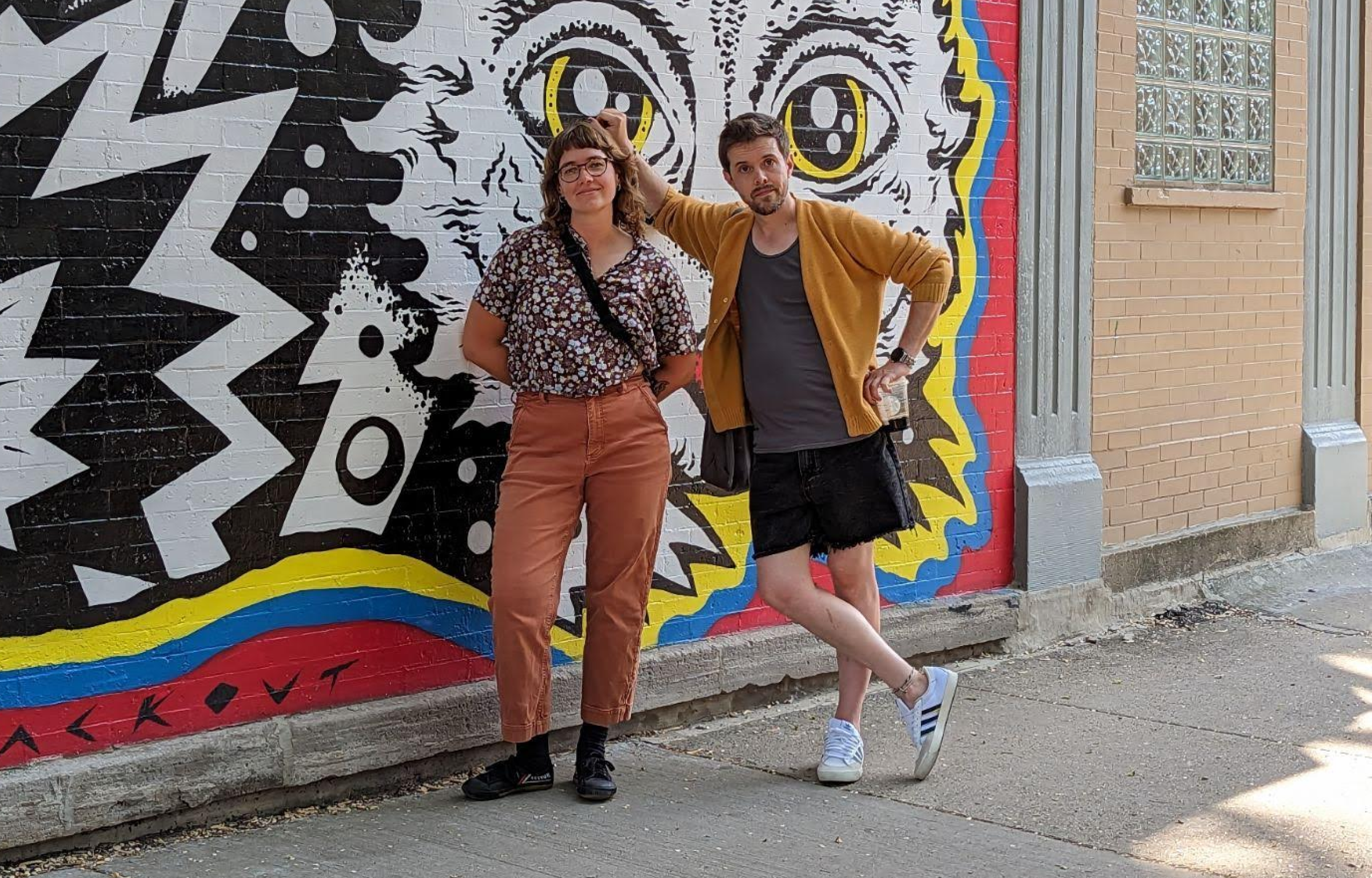
To learn more about it, we asked founders Brendan Fitzpatrick and Angela Runge. They operate Best Practice, a two-person design and software studio in Chicago.
Radio World: Where would someone hear Static Radio and why should they tune in?
Brendan Fitzpatrick: Static Radio is like community radio, but for podcasts. It’s a free radio dial with nine stations, always on, playing independent and local shows.
Like radio, everyone tuned into a station hears the same thing at the same moment, and each station shows how many people are listening right now.
Podcasting gave people something live radio never had: time-shifting. But what got lost is the serendipity of live broadcasting, which is always playing whether or not you show up, so you tune around and land on something you weren’t looking for.
Static is our way of bringing that back, and of sharing the shows we’ve fallen for. All you do is spin the dial of stations and tune into a show already in progress.
Credit: Courtesy Dave Maher.
You can listen in a web browser, or in Static’s apps for iPhone, iPad, Mac, Android and Wear OS.
RW: What are your backgrounds and how do those experiences inform this project?
Fitzpatrick: I’ve loved radio and audio gear since a young age, and won several call-in contests on WGN in the 1990s by performing on-air feats like impersonating then-Chicago Bulls announcer Ray Clay.
Angela, who serves on the board of Spudnik Press, a Chicago community print shop, loves printmaking and zines which have been an influence that runs all through Static’s look.
We met at IBM, where Angela still works.
RW: The notion of “spinning the dial” is part of the experience. Why?
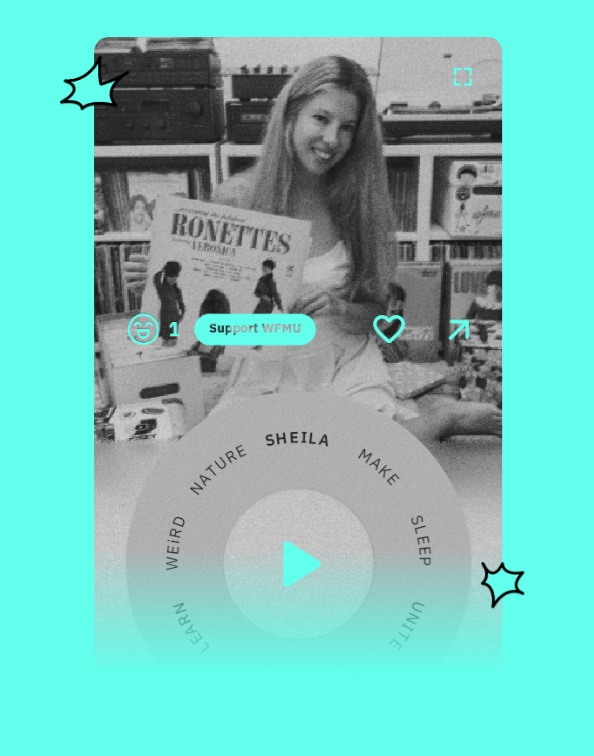
Angela Runge: We love analog radios, and nothing compares to turning the knob on a vintage transistor radio. Static’s dial brings some of that feeling back to a touchscreen: It clicks from station to station using haptic detents, and each show’s sound and artwork crossfade into the next.
A search box only returns what you already know to ask for. A dial gives you the show you’d never have thought to type in.
There are nine stations, and each one has its own personality.
“Learn” is history, science, philosophy, and culture. “Make” is craft and fabrication (like woodworking one hour, puppetry the next). “News” is for independent reporting and documentary rather than punditry.
“Work” is all instrumental music for deep focus. “Weird” is, well, weird, with shows on folklore and the paranormal. “Nature” is for field recordings.
“Sleep” is relaxing noise like rain, plus bedtime stories. “Unite” is for organizing topics like civil liberties, labor, or mutual aid.
The two of us love DJ Sheila B from WFMU and have listened to her show, “Sophisticated Boom Boom,” while working together for years, so the “Sheila” station plays from her archives and carries a Support WFMU button.
RW: What is the business model for Static Radio, how do you bring in revenue?
Fitzpatrick: Static is free to listen to, with no accounts and no subscriptions, and we want to keep it that way. Two things are built to pay for it. Community bulletins are 30-second spots between shows that anyone can book on the station that suits them. And via Patreon, anyone can join free or become a Static Pal for $5 a month.
We never put ads inside anyone’s episodes.
RW: How do you decide who will provide the shows and content?
Runge: About 1,000 shows we’ve curated are on the dial now, and the list grows each day.
We’re looking for the kind of show someone obsessed with a subject would press on their friends, made by someone just as obsessed.
Open a podcast app and the charts are full of things you have to wade past: dead feeds that stopped publishing years ago, AI-generated shows, a company’s marketing podcast dressed up as a show, a promising find that was only ever a trailer.
None of that is on Static. A program of ours combs through the Podcast Index for candidates, then we work through them by hand, and we’re pickier about what should be kept off the stations than what we put on.
We won’t pretend nothing junky slips past us, but when it does, we make sure it doesn’t come back.
For months, our test version of the app had an “It stinks!” button that only the two of us could see. Whenever something turned up that didn’t belong, one of us pressed it, and the show was either taken off or moved to a station that suited it better.
Episodes play from the podcaster’s own feed, and if anyone would rather not be on the dial, we take them off promptly and with thanks.
RW: Is there technology at work behind the scenes that our readers would find interesting?
Runge: Yes, a few things, and they all come out of how much we love these shows.
First, every show gets the whole screen. When an episode plays, its own artwork becomes the station for as long as it’s on. Our software samples 16 columns of color along the bottom edge of each cover, and the app continues each one down behind the dial, so it looks like one printed poster for that show. Even the dial recolors to match.
Also, we want every show to sound its best. We measure each episode against the EBU R128 broadcast standard using three 30-second windows from its beginning, middle and end. We then apply a gain offset toward –16 LUFS, without ever re-encoding anyone’s audio.
And Static is only for shows made by people. We kept running into AI-generated shows while searching for new ones, so we added two automated checks to help us. One looks at how a feed publishes, flagging patterns no human producer makes, like dozens of episodes appearing at once on a mechanical schedule. The other listens to a short sample for the telltale rhythm of AI-generated two-host conversations: unnaturally clean silence between turns, a cadence that’s too regular, every voice at the same level.
Finally, every listen counts for the show. Each listener’s app works out from the clock where its station is and plays the episode straight from the show’s own feed, so every listen lands in the podcaster’s download numbers, with their ads and analytics intact.
RW: At the moment only a handful of people tune in to a given station, as you’ve told me. So it’s early days. What will constitute success for you?
Fitzpatrick: For us, success is measured in shows people keep, not hours people spend with us.
Podcasters hear from new listeners who found them on the dial. We’d love every host on Static to get at least one note that starts “I heard you on Static.”
And the stations feel lived in. Whenever someone tunes in, day or night, there are other people there listening with them.
For someone who’s loved radio as long as I have, hearing from Radio World was a genuine and very pleasant surprise.
RW: You also have mentioned a 30-second audio bulletin. What’s that about?
Fitzpatrick: Between episodes, we play a 30-second community bulletin that can be about anything: a shop opening, a new record or book release, a love letter, a podcaster plugging their show, a lost pet. They’re for small businesses and independent people and projects only, nothing corporate, and we encourage everyone to be creative and a little wacky.
We’d love the bulletins to have some of the spirit of public-access TV. Two of our favorites right now: one is simply a recording of cicadas that Angela made, and in the other, someone counts backward from 30.
A single play is $15 and a pack of ten is $100.
RW: What else would Radio World readers find interesting?
Fitzpatrick: Mostly we’d love to hear from radio people about what we’ve got right and what we’re missing.
We’ve also put Static on a 2009 Chumby One, whose knob tunes the stations, and we’re testing a version for the Playdate handheld that uses its crank as the dial.
Radio World readers can book a free 30-second bulletin. Use the code RADIOWORLD anytime before Dec. 31, and it stays in rotation for a year.
Watch a short walkthrough video below.
Radio World invites both users and suppliers to tell us about recently installed new or notable equipment. Email [email protected].