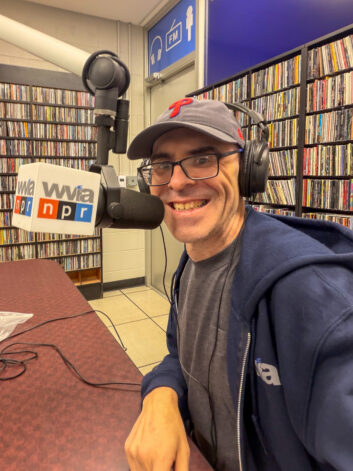
A new Radio World ebook considers trends in consoles and control surfaces. In this companion piece, Mark Ruddy takes our questions. He’s chief engineer at WVIA Public Media, covering Northeast and Central Pennsylvania.
Radio World: Mark, what do you consider the most important trend in the design of consoles and control surfaces for radio broadcast studios?
Mark Ruddy: It seems that consoles are trending as less of a hardware item, and more of a software item.
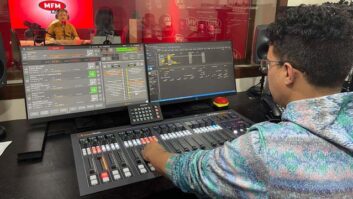
The shift to an on-screen console seems that it can work for some applications, but I am happy to see that innovations continue in hardware-based control surfaces. Being a radio station that operates with live personnel, they are familiar with the layout of a hardware-based console. The most important functions for me as an engineer are to see levels for a source that is loaded into a channel and for the surface to function reliably and accurately.
Even though control surfaces are trending smaller, it is good that options still remain for larger layouts and designs.
RW: What is the definition of a radio console now?
Ruddy: In most cases, it is akin to a keyboard for a computer. It is there and functions as a radio console, but really with other means to connect, it is less critical of a component for operation. The exception does exist still for analog or digital-based consoles, but when audio isn’t passing directly though the console, it’s more of an interface.
RW: How has their evolution changed the way engineers view them and plan around their installation?
Ruddy: The evolution of consoles into control surfaces has certainly made things more efficient and effective when planning installation. In most cases it is just running a network cable and power, with the audio entering the system through other means, the installation of a control surface is much neater and in the case of AoIP, it keeps wiring localized and minimizes cable runs.
RW: To what extent has scripting changed console operations, and what does scripting make possible?
Ruddy: Scripting allows for more under-the-hood tasks to be accomplished without anybody realizing what it is doing. Even by doing simple routes or logic controls, it’s very much more efficient.
If you have an automation system that integrates with your installation, it makes things even easier for an operator by being able to execute a hotkey and not having to worry about anything else.
RW: How vibrant is the marketplace for analog consoles?
Ruddy: I believe that there is still a need for analog consoles and will be. Some stations don’t need much more than that for their operations, and they are very useful for at-home studios. Current analog consoles make for a cost-effective upgrade for an aging console.
RW: Any suggested best practices or common errors to avoid when choosing one?
Ruddy: Just recognize your requirements, then make sure to research all available options. What is right for one operation isn’t necessarily right for another. There are many manufacturers making quality consoles and systems, but each one does have its pros and cons. I would also say to reach out to other stations or groups who are using the system you’re looking at to get their opinion and run questions by them as well. That was invaluable for me in choosing our current system.