We’re previewing technical sessions and trends of the upcoming NAB Show.
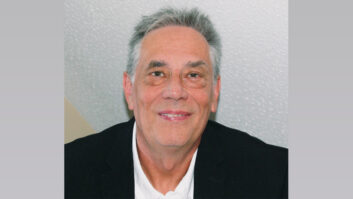
NAB Vice President, Advanced Engineering David Layer will give talks about AM radio and hybrid platforms before and during the convention.
Radio World: What will your sessions be about?
David Layer: My presentation to the Public Radio Engineering Conference will focus solely on AM radio, and I plan to spend most of my time telling the audience about all the interesting AM radio-related work ongoing within the National Radio Systems Committee.
As it turns out, my colleague and good friend John Kean is presenting at the PREC as well, also about AM radio, so he and I will be coordinating our presentations as we work together on the NRSC projects. It’s fair to say that John is the brains behind a lot of this work, and we’re fortunate that he is “on the job” here.
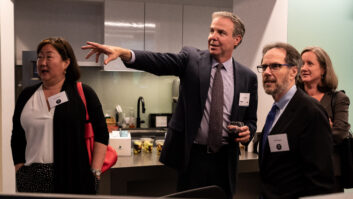
Also I’ll be speaking on the NAB Show floor on Tuesday, in the TV and Radio HQ Theater, about “Improving AM Coverage and the Future of Digital Radio Listening.”
This talk will include some of the material I’m discussing at the PREC, in particular on the NRSC’s AM booster project, targeted to a different audience. I also plan to discuss my thoughts on the importance of broadcasters using digital radio signals and why digital plus hybrid — over-the-air plus internet — technology is the best combination to keep their stations “looking as good as they sound.”
RW: The NRSC has been conducting research about AM single-frequency networks. What is the status of that work?
Layer: AM broadcasters are disadvantaged compared to FM and TV broadcasters in that they are not authorized by the FCC to make use of on-channel booster stations.
Also known as single-frequency networks or SFNs, main signal-booster signal combinations can help broadcasters reach listeners within a station’s service area that experience poor reception. Modern transmission technologies, including RF channel simulation tools that accurately model SFNs, and precise timing control between main and booster stations, are being used successfully in the support of SFNs in FM radio and broadcast TV services.
It stands to reason that AM broadcasters should also be able to employ these techniques and improve their coverage and service to listeners.
The NRSC is pursuing an AM booster project with the ultimate goal of developing a technical record to support adoption of a petition for rulemaking at the FCC that establishes rules for AM booster stations.
This project is expected to consist of a number of phases including laboratory testing of AM co-channel interference to develop parameters for booster station design; investigation into small antennas suitable for booster station operation; and ultimately construction and field testing of an AM radio SFN utilizing the learnings of the earlier work, under experimental authorization.
Our current challenge is identifying a full-service AM station that we can work with on booster experiments. We hope to identify a station in the Washington, D.C., area as that is where our testing resources are located. Once a plan is in place for conducting tests on a specific station, I expect the other parts of the project will move forward.
RW: Hybrid radio systems like DTS AutoStage are becoming more prevalent in automobiles. What do they portend for the way radio uses metadata and its broader user experience?
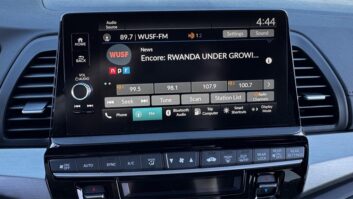
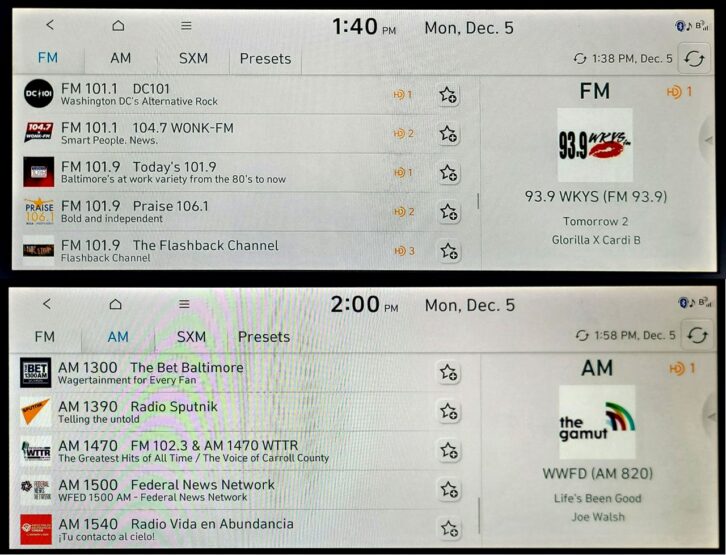
Layer: I am a big fan of hybrid radio systems, and DTS AutoStage is clearly leading in this technology. Well-designed hybrid radio systems give the AM and FM radio bands a totally consistent user experience with respect to metadata, where all stations in the band look great with station logos and station information.
NAB recommends that all broadcasters participate in hybrid radio and make the necessary investments to provide great metadata to listeners. At the same time, many broadcasters should also be thinking about how they can support digital radio (i.e., HD Radio) technology and start broadcasting in digital.
There are far more vehicles with HD Radio than with hybrid radio, and the radio “product” on the dash will look better and better as more broadcasters consistently transmit metadata using the HD Radio system.
RW: The number of AM stations in the United States has been declining, slowly but consistently, for some time. What role do you see the band playing in American life in another few years?
Layer: AM radio continues to play a vital role in the emergency infrastructure of the U.S. as the backbone of the Emergency Alert System. This is a role not easily replaced by other technologies, and NAB has been a strong supporter of the AM Radio for Every Vehicle Act, which recognizes this and would keep AM radio in vehicles for the safety of all Americans.
As an audio service, both AM and FM face challenges due to the increased competition that internet-delivered audio represents. I primarily focus on the technical aspect of these services in my role at NAB, and I expect NAB to continue to investigate and encourage use of technologies, like AM boosters and the use of digital radio, that help broadcasters to stand out in this ever more crowded field of choices.
[For more coverage of the convention see our NAB Show page.]