This is the fourth in a series about the author’s experiences helping to launch and operate WDOG(LP) “The Rock Dog.” Read Dan’s first feature in the series, “It’s the People Who Craft a Career in Radio,” his second, “In New Philadelphia, the ‘L’ in LPFM Stands for Local,” and his third, “This LPFM Fills a Rock Music Format Void.”
WDOG(LP) 105.9 in Tuscarawas County, Ohio, is a small, 100-watt ERP station.
At the most recent count, there are just over 2,000 similar stations. Roughly based on technical limitations — including height, terrain, nearby stations and a host of other factors — these stations generally get a solid signal out about 3.5 miles.
With a good wind, flat terrain or just a lot of luck, that distance can be multiple times farther. But generally speaking, an LPFM can do a good job covering a local small town or two, assuming they are in close proximity.
Core tenets
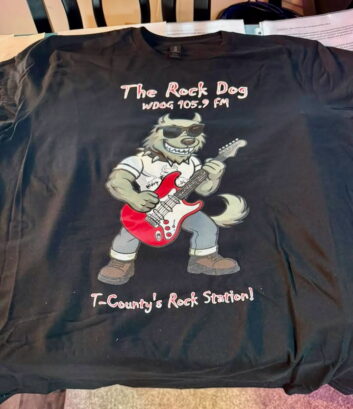
The thoughts and design philosophies behind LPFMs are as varied as the stations themselves; what is “right or wrong” for one may not be the same for others.
Having started commercially in radio in 1980 — or 1974 if you count the refrigerator box station in the garage — I have been fortunate to work for some excellent program directors and awesome stations, both big and small.
Here are a few core principles that have worked for me and the LPFMs I have assisted, built or been a part of:
- FM is FM: There is not a different switch for noncommercial FM, commercial FM or LPFM. It is just FM, and the listener should hear no technical difference between one station and the next.
- Broadcast for the masses: It is called broadcasting for a reason. Licenses are very limited, so capture the broadcast audience you can. If you are programming to one person or a dozen people, just buy them all iPods and be done with it. Otherwise, program to the largest underserved audience available.
- Make it big: Just because you have a 100-watt ERP and a station four channels down the dial is a big Class C with 100,000 watts does not mean you need to be “the little mouse.” Sure, their signal goes further, but your branding does not have to be “little.”
- Be local and relevant: The best way to reach listeners is to ensure what you are doing, what you are playing and what you are saying is desirable to hear and of genuine importance to them.
- Quality counts in everything you do:
- Events: If you do a remote or community event, do it with zeal and excitement.
- Music: If your format is music-intensive, make sure every song or piece is of the highest technical quality — clean fidelity, zero distortion and low noise.
- Production: On PSAs or underwriting, aim for zero mistakes, stumbles or slurs. Anything pre-produced should be 100% perfect; there is no excuse for sub-par pre-production.
- Design and maintain consistent branding: You may have volunteers without much experience, but if your brand is “The Voice of Mapleville,” the next announcer shouldn’t be calling it “Mapleville’s Hit Music Station.” You are building a recognizable identity. When we hear “Dodge Trucks are Ram tough” in one commercial, we don’t hear “Dodge Trucks are tough as nails” in the next. Even if the sentiment is similar, changing the phrasing fails to build a consistent brand.
- Understand the psychology of radio: Radio works best when you speak one-to-one with each listener — not “listeners” as a group. When opening the mic, pretend you are talking with a close friend. — say “YOU”, not “hey gang.” Radio audiences today are rarely like those in the 1940s sitting around a console radio together; it’s usually just a woman driving to work or a guy in his livingroom. It’s just you and one person together on either side of the speaker. Speak one-to-one!
- Smile and stay positive: People turn on the radio for fun, good music, entertainment or an engaging personality. A genuine smile can actually be heard in your voice, elevating the listener’s mood. Instead of saying “the weather sucks,” reframe it positively: “This snow will make for great sled riding!” Keep a positive spin on things and enjoy the process.
The magic of the medium
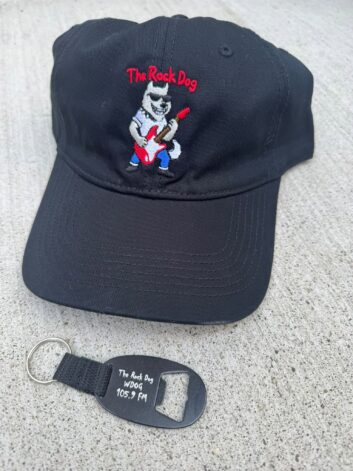
You truly know you are doing things right when a listener approaches you like a long-lost friend and says:
“Hey Dan, how are you doing? It was so funny when you talked about that pothole and your coffee!”
You might look at that person and realize you have never met them in your life, yet to them, you are that daily friend. The psychology of radio is wonderful because you learn how to make a genuinely positive difference in people’s lives while having a blast doing it.
The mission at “The Rock Dog”
At WDOG, most volunteers do not have much (or any) prior on-air experience. Because of this, our focus is simple:
- Relax, have fun and be yourself.
- Talk one-to-one with the audience.
- Keep content relevant, interesting and local.
- Reinforce our core mission statement: Support the community, support the people and support local non-profits.
Looking ahead
Because of our commitment to localism, heavy community involvement and creative promotions are essential. Next time, we will discuss:
- Events like Woofstock ’26
- Promotional efforts that support the local community
- How “The Rock Dog” became a “Cop Dog” to support the New Philadelphia Police Department when their K9 retired unexpectedly, helping them raise funds for a new police dog.
Comment on this or any article. Email [email protected].
In part 5 of the series, Dan talks about why community involvement for an LPFM is so important.