Here is a sampling from recent letters to the editor. Read more Radio World reader letters.
Computing’s Early Radio Days
I always enjoy Tom Vernon’s articles on history I lived through! That includes “Early Adopters: When Computers First Met Radio”.
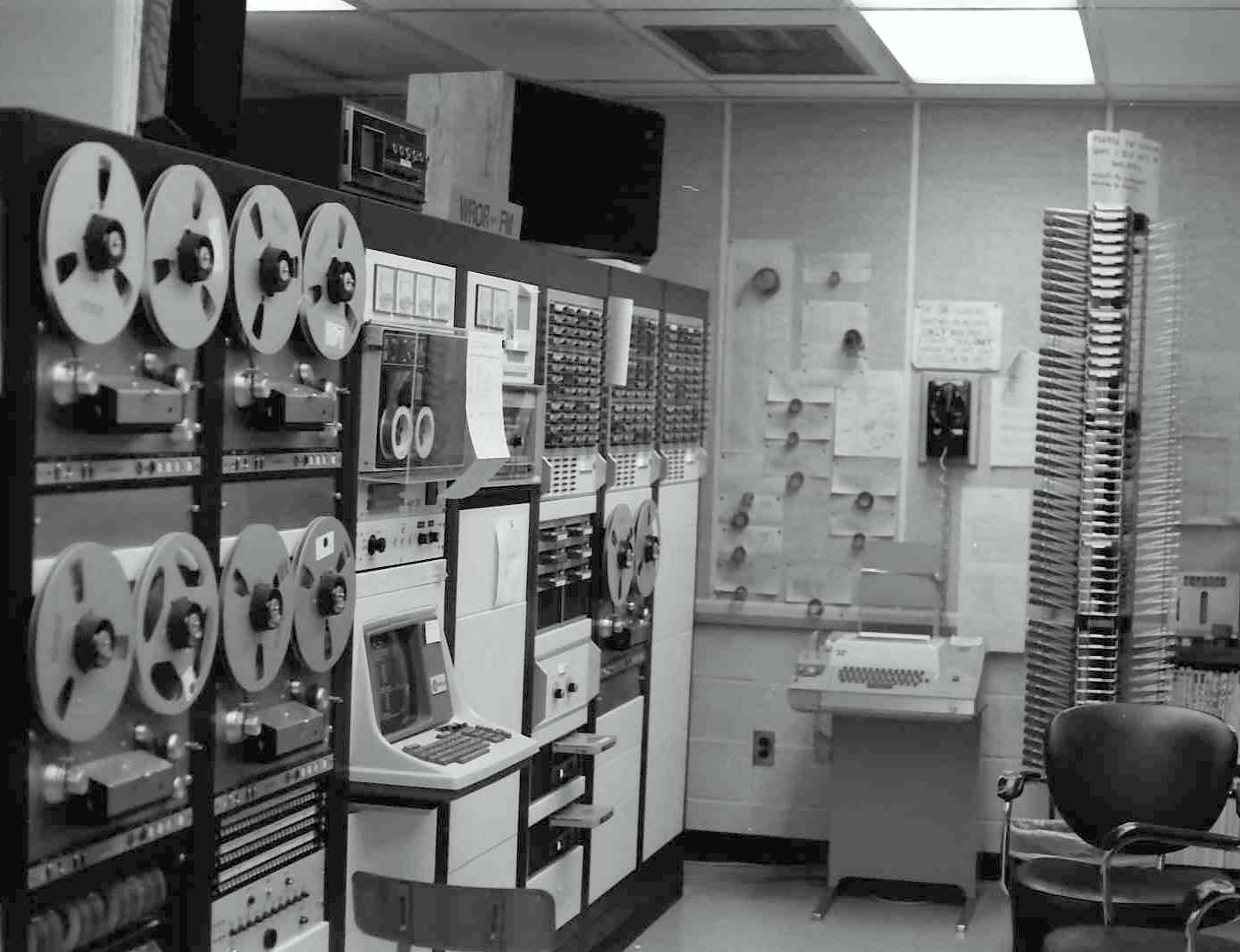
I remember seeing a station in Los Angeles using automation based on PDP-8. It was pretty amazing! A few years later, I ended up teaching PDP-8 assembly language programming at Cuesta College in San Luis Obispo,
Calif. I still have the book.
On transmitter control, one of our early products was the TEL-171, which replaced the analog metering on the Moseley TRC-15A with digital metering.
Because the data was “too valuable to keep in the box,” we included a front-panel DB25 connector that gave access to the channel select, raise and lower, and multiplexed display data. Bill Bordeaux of Insterstellar Communications designed the ITO-177 (for “intelligent transmitter operator”) that contained the firmware and hardware to connect a Commodore 64 to the TEL-171.
I also designed the PCC-180, which emulated the studio end of the Moseley TRC-15A/TEL-171, the Moseley DRS-1, TFT 7601 and TFT 7610 remote controls. It included a BASIC interpreter allowing user supplied code to automate transmitter operation and logging. The PCC-180 used a Motorola MC6800 microprocessor with firmware written in assembly.
Next was the DRC-190, which also included the BASIC interpreter, plus the full remote-control hardware to handle up to 100 sites. The DRC-190 used a Motorola MC6802 microprocessor with firmware written in assembly.
More than you ever wanted to know about these products can be found at https://bh.hallikainen.org, scroll down to Hallikainen and Friends.
Harold Hallikainen
Radio, Please Slow Down
Recent discussions here about the viability of radio miss an important point. Time compression is killing listenability.
The speedup of content makes news, sports, weather and commercials all harder to absorb. Stuffing 70 seconds of copy into 60 seconds leads to listener fatigue and tune-out. And for what? More three-minute commercial breaks half-filled with PSAs?
How about dialing back on the time compression, particularly at night? Give us a chance to actually understand the content.
Curt Holsopple, K9CH
Colonial Heights, Va.
Without Receivers, Does It Matter?
Thanks for publishing Thane Conriocht’s letter “Bring Radio Home”, in which he wrote that the real issue with EAS is that we no longer live in homes that have radios. It’s good to know that at least some people in radio know what has changed at the consumer level.
In a real national emergency, there’s the original alerting to the public, which might now mostly come from cell phones. Then there’s audio from the government about what to do next. Run? Hide? I don’t frankly think they have much of an answer, but at least radio gives them a chance to try, even if the power and the internet are off everywhere.
But the public needs to have receivers or it’s all pointless.
Radio isn’t as important as it once was, but it’s still out there everywhere, and that’s what counts.
Gary O. Keener
San Antonio, Texas
[Check Out More Letters at Radio World’s Reader’s Forum Section]