Show Us Your Mic Collection” is a new Radio World feature in which intrepid broadcasters and readers show off their microphones. Have a submission? Email us at [email protected].
If you spend enough time around a broadcast facility, one thing can lead to another, and you’ll end up with a collection of microphones.
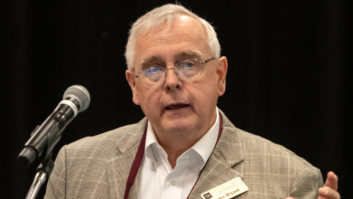
For some people, it’s a chance to share the history and technology behind each of their mics with others. Stanley Coutant is one of those people.
If you’ve never heard of Stan’s website, you are in for a treat.
It is a goldmine of information of information on microphones. Coutant has put together a massive collection of documentation, photos and even recordings of the microphones in use — so you can truly hear how each of them sounds.

Coutant has been my “go-to” expert on all things microphones for years. He’s a retired professor who taught audio technology. He collects spec sheets, data and recordings on the models he owns.
All of his microphones work, he said. The best sounding models, he explained, are the Electro-Voice RE38N/D dynamic and the Neumann M149 Large-diaphragm condenser.
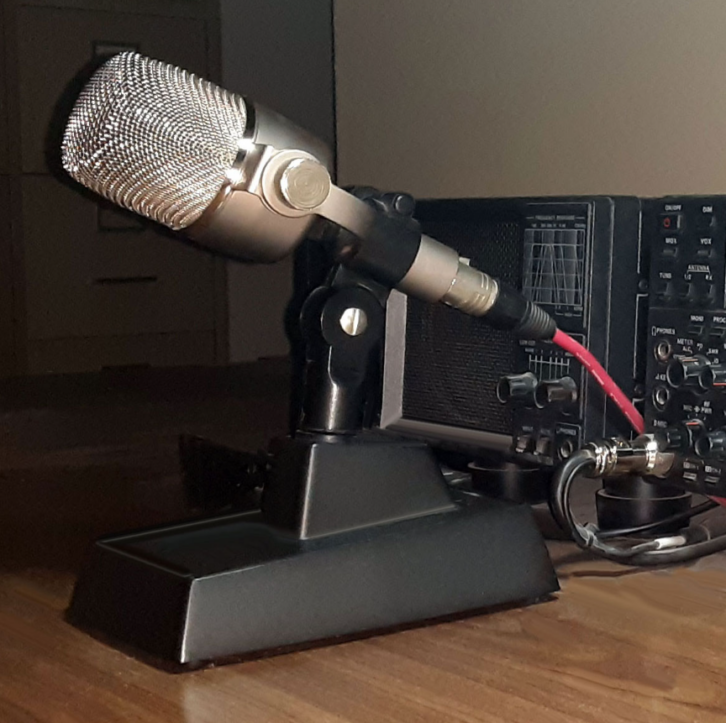
He’s now collected models for 25 years, though he said he sold off many of them to a studio operator in New York.
Coutant told us that he became interested in microphones as a child. While in the fifth and sixth grades in the mid-1950s, he played the alto saxophone in his school’s orchestra.
His dad lended him a Webcor reel-to-reel to record his performance.
“Later, I realized the fidelity was poor, which began my quest to understand how mics, tape speeds, head gaps and so much more affect the quality of audio recordings,” Coutant told us.
His parents would buy land in the Mojave Desert of California. Around that time, Coutant would become infatuated with RF through his use of CB radios, and he became a licensed amateur radio operator, AA6SC, in 1967. Coutant would enroll in Pasadena City College, where he joined 89.3 KPCS(FM) — now KPCC — the school’s student-operated station.
[Related: “The EV 635A Heads Into the Sunset”]
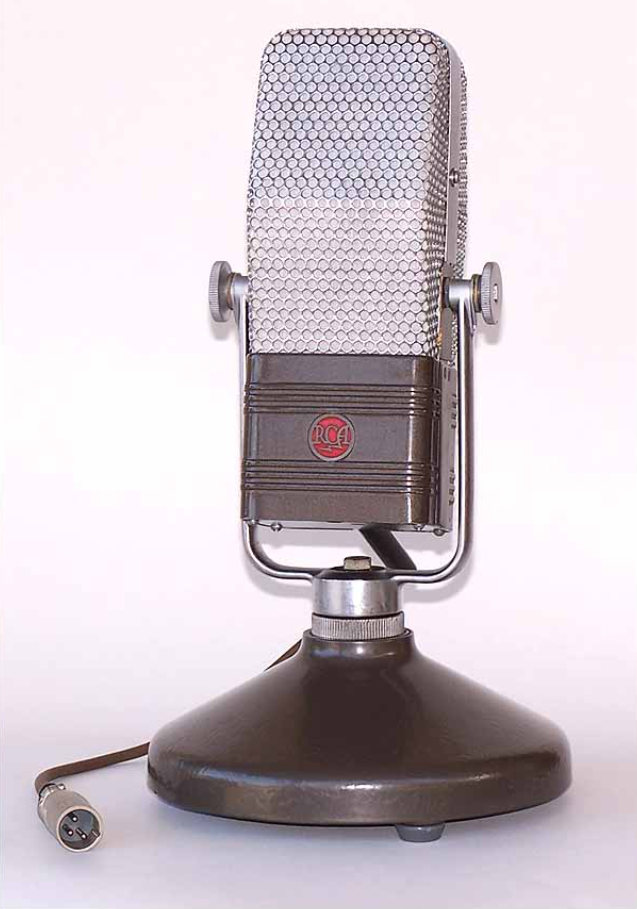
“It was there that I got to experience my first real professional microphones, the Electro-Voice 635A, and this beautiful RCA type 44-BX,” Coutant said.
Following his time as a student at PCC, Coutant went on to complete his studies at UCLA. He earned a California community college lifetime services teachers’ credential, and he was hired at PCC to teach audio controls and broadcast operations in its communication department.
Coutant retired from teaching in 2003.
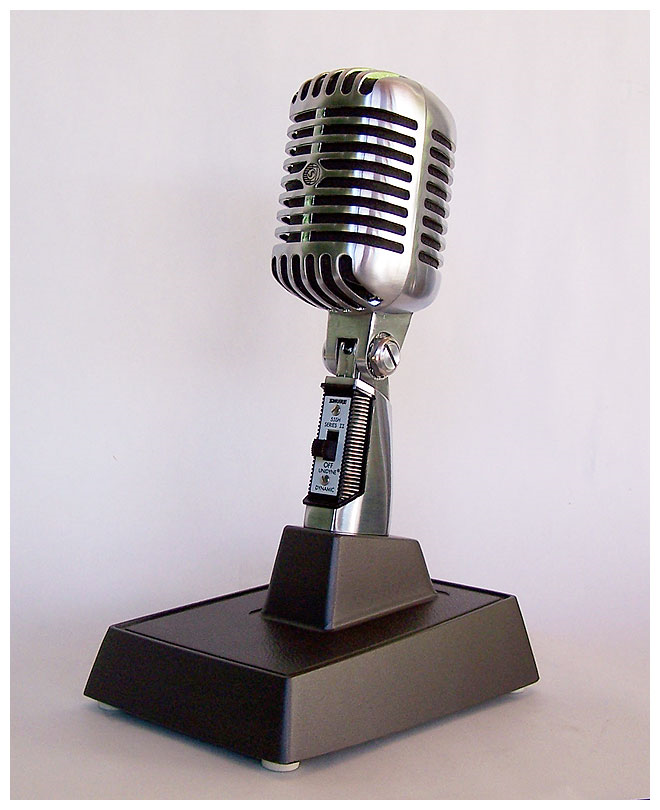
“But before I left campus, I purchased a worthy collection of top-quality mics, including AKG, Audio-Technica, Electro-Voice, Shure and Neumann,” he said.
What’s his all-time favorite?
“The 44-BX I mentioned,” he said. Coutant was presented the model by the dean of the PCC communication department upon his retirement.
Thanks to Stan for sharing with us! We highly encourage you to check out his website for links and information on all of the microphones we mentioned.
If you have a cool collection of mics, or even one very special mic with a history, then “Show Us Your Mic Collection.”