Robert Brown, CBRE, writes from California to remind us that a lot of broadcast engineers and technicians visit transmitter sites by themselves and work alone.
A DOE told me early in my career: “No radio or TV station is worth dying for.” Your most important job is to work safely and return to your family at the end of the day.
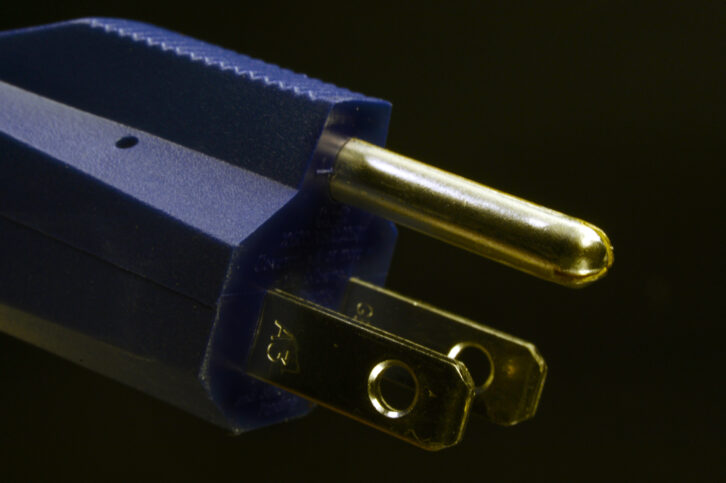
With that in mind, be aware that many convenience outlets are not supplied with a ground fault circuit interrupter or GFCI.
This topic is addressed in the “NFPA 70 E Standard for Electrical Safety in the Workplace,” published by the National Fire Protection Association. It tells us that indoors or outdoors, GFCI protection should be provided when an employee is operating or using cord sets (extension cords) or cord and plug connected equipment supplied by 125 volt, 15, 20 and 30 amp circuits.

If such protection is not installed at the site, you can use a portable GFCI unit, many of which are sold online for under $50 by companies like Grainger, McMaster-Carr and other vendors.
Fuses and circuit breakers protect wiring and equipment, but a GFCI protects people. Current flowing across the heart and lungs is most dangerous (think about where you put your hands) with 30 mA to 40 mA considered to be the fatal range for most adults. This is far below where a 15 Amp circuit breaker would trip, but “A” style GFCIs will trip at 6 mA.
Inside a GFCI is a coil of wire that has both the hot and neutral running through the center of the core. In normal operation, the current goes out to the load and returns to the panel on the neutral, and the two magnetic fields cancel each other out.

But in a dangerous condition, the current goes out through the hot and does not come back on the neutral. The magnetic field produces a current in the coil of wire that trips the device and disconnects power from the circuit.
So Robert cautions that if you are using corded tools and equipment such as fans for ventilation, tools or light carts, please inspect your cords for abrasions. And if the ground plug is missing, repair or replace it so at the end of the day you can return home safely to your family.
Hidden gem
Dale “Squeak” Porrray, AD7K, is a retired ham who spent his working days selling amateur radio gear and is always looking for good deals. He wants to let readers know that the HanRongDa HRD-757 radio that we mentioned previously, often sold for around $86, was selling for quite a bit less recently at Ali Express.
He adds that there once was a store called Radio World in Boulder City, Colo., that catered to radio amateurs. Unfortunately, it closed when the owner retired. There currently is an electronics supplier called Radioworld in Canada.
A TIP we’ve all experienced
Reading our recent discussion about tongue-in-cheek technical terms like “percussive maintenance,” retired broadcast engineer Brian Lee was reminded of a term he coined to describe a common equipment failure: T.I.P., or “technician-influenced problem.”
In far too many cases the “problem” could be traced to the technician, like the person who forgot to plug something in or turn the equipment back on. Yes we’ve all been there.
Brian describes himself as an old analog engineer from way back, working with Broadcast Electronics Control 16 automation, ITC triple-decker cart machines, the first version of BE AudioVault, and the Harris SX-1 and SX-1A AM transmitters. You get the picture. All great memories.
What TIPs can you remember?
CopperWatcher
Sometimes it seems that copper theft has reached epidemic levels. Broadcast engineers should know that many insurance companies are mitigating their own risk by discontinuing coverage for vandalism, or they may require a separate rider to cover copper theft. Check your coverage.
[Related: “Thieves Ravage Memphis AM Radio Transmitter Site”]
Surprisingly, it may not be the copper strap that’s at risk these days, it’s your air conditioner condenser unit. Thieves can get much more money for an entire compressor assembly than a few feet of strap.
This is where a product called CopperWatcher comes in. It supervises power and refrigerant pressure to your A/C.
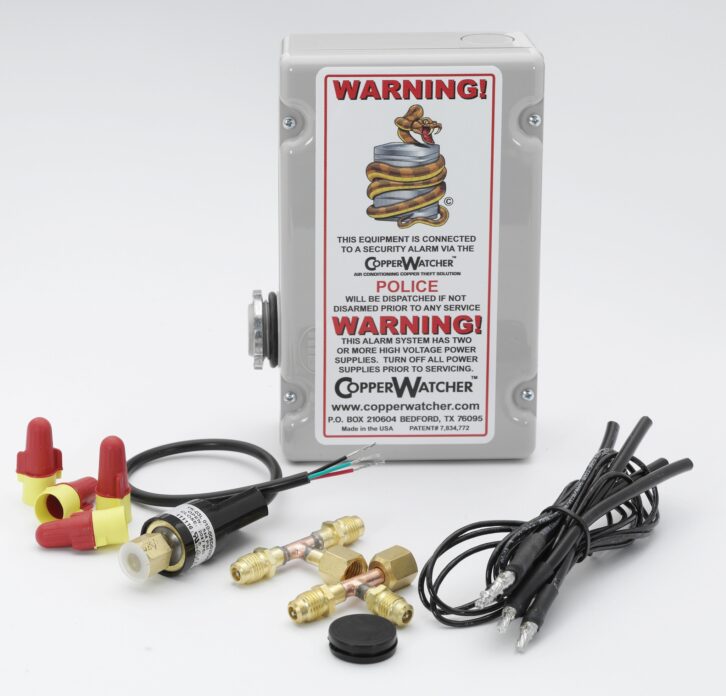
“When power is shut off or copper tubes are cut, the CopperWatcher sends a signal to the existing burglar alarm system,” according to its website.
“The burglar alarm systems loud siren sounds drawing attention to the would-be thieves. CopperWatcher is intelligent enough to tell the difference between a purposeful shut down and a local power outage, and will not send a false alarm to the security panel, saving you a possible fine with your local authorities and the nuisance the audible alarm will cause.”
The Texas-based company provides an informative website at www.copperwatcher.com. The online store offers a variety of packages for around $500.
Workbench submissions are encouraged and qualify for SBE recertification credit. Email [email protected].