It’s familiarity, a recognizable voice or reassuring music where radio still offers a connection in a world that feels more uncertain by the day.
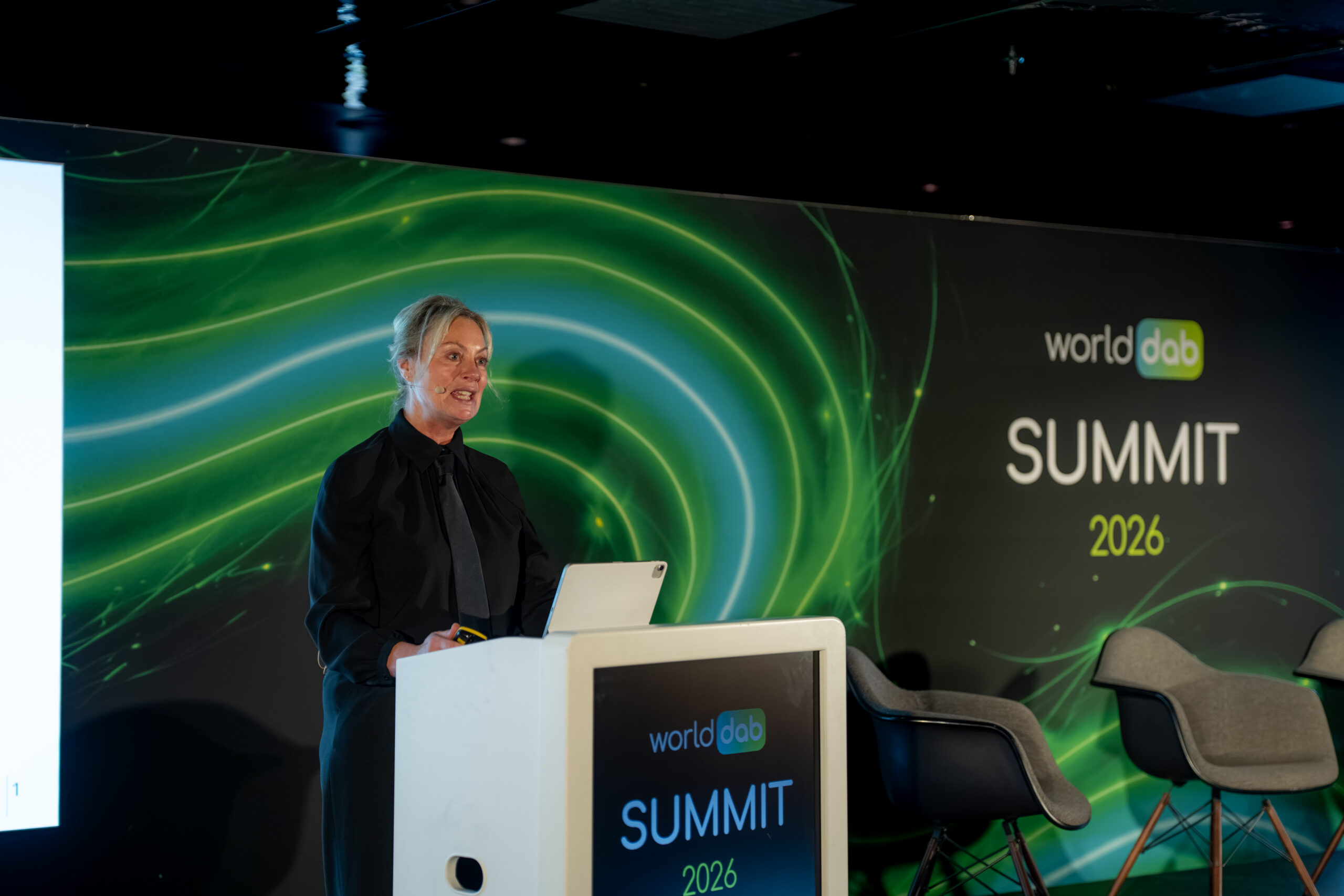
And that sentiment was a theme throughout a keynote offered by Jacqueline Bierhorst, president of WorldDAB, at the group’s annual summit which was held this year in Vienna, Austria.
Bierhorst shared ideas on how broadcasting can even stay sustainable in such a volatile environment and why radio’s place in the car remains so vital to making it so that, even a decade from now, radio will be on the minds of audio lovers.
And she used her stage to update stakeholders on the digital radio mode DAB+, the platform for which WorldDAB advocates.
She has led the organization for three years since her election as president in November 2023, having previously served as vice president and on its steering board since 2015.
Radio World received a transcript of Bierhorst’s remarks of which we incorporate into our story below.
Creating value
Bierhorst admits that a central question for broadcasters is building a sustainable business. Digital distribution, she said, creates room for a brand to grow or for a new music format to emerge.
She pointed to U.K. radio advertising revenues that reached £747 million in 2025, up 39% since 2013, while revenues in the Netherlands reached €271 million, up 39% since 2016.
That growth cannot attributed to DAB+ alone, she said. “But they show that radio can grow in a digital media market, and that a strong digital strategy can support that ambition,” Bierhorst explained.
But a listener cannot choose what they cannot find.
At WorldDAB Automotive in Frankfurt, the group’s car-buyer research across six markets found that 83% of car buyers listen to radio in the vehicle.
[Related: “Survey: Car Shoppers Demand Radio in Their Autos”]
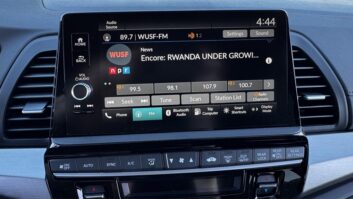
Dashboards are changing, however. “Screens, apps and voice assistants influence what people discover and how easily they reach it,” Bierhorst said.
For listeners, the experience should feel straightforward, she said. They want their station to be there, and broadcasters, vehicle manufacturers and technology partners all have a part to play in making that happen.
Good metadata and clear station identities matter, Bierhorst added, as do design decisions around search and radio’s prominence on the dashboard screen.
The choices made now will shape listening habits for years, she warned.
“We should bring the evidence about what drivers value into those conversations, and make sure broadcast radio keeps a clear and accessible place in the car,” Bierhorst said.
Lean into radio’s strengths
Vienna, Bierhorst noted, is a city that knows the power of sound.
Maybe sound is the word, then, that Bierhorst was getting at when she talked about what radio might mean in a decade.
The experience may become more personal and more interactive, she theorized, potentially incorporating visuals, conversations with a voice assistant or services we have not yet imagined.
“We should be excited about that,” she told the audience.
Whatever form it takes, Bierhorst emphasized that broadcast radio should lean into its core strengths: free-to-air access, the ability to reach millions at once and reception that does not depend on every listener having an internet connection.
A new reason for radio to matter
Bierhorst also pointed to the Automatic Safety Alert platform as a development warranting industry attention.
In September, Deutschlandradio and Media Broadcast launched ASA DE on Germany’s national DAB+ network in coordination with the civil protection authority BBK.
With an ASA-compatible receiver, a warning can wake a radio from standby and reach someone who was not already listening, providing another route for information when mobile or internet connections are unavailable.
Bierhorst spoke proudly overall of momentum surrounding DAB+. She expressed gratitude toward departing WorldDAB Project Director Bernie O’Neill, who will leave the organization at the end of 2026 after 16 years.
“The role takes someone who can move comfortably from a policy discussion to an event program, from a committee meeting to a conversation with a country taking its first steps in digital radio,” Bierhorst said.
“Bernie has done that year after year, helping others share their knowledge and keeping the work moving,” she added.
With the aid of O’Neill, Bierhorst said that the DAB+ digital broadcast mode is well positioned over the next decade. Roughly one-third of countries worldwide now have some level of investment in the technology.
That doesn’t necessarily mean those countries are broadcasting in the technology, of course. Bierhorst said that figure ranges from early interest and trials to full rollouts.
But Estonia has launched regular services, she said, while Czechia and Croatia are developing their markets.
Kenya has moved from preparation to an on-air trial, Senegal has launched 18 public services on air and Thailand has extended trial coverage and conducted an ASA test on Oct. 29.
“I’m particularly pleased that we will hear from Poland today,” she said.
Konrad Bródka, head of the Department of Radio Spectrum at Poland’s Office of Electronic Communications (UKE), outlined Poland’s DAB+ network rollout later on at the summit.
With Polish FM frequencies nearly exhausted and public broadcaster Polskie Radio already reaching approximately 90% of the population on its national multiplex, UKE recently opened market consultations on allocating unused capacity across two additional nationwide multiplexes and 17 local multiplexes, Bródka said.
Been around the world
In the past year, Bierhorst has traveled to places like Croatia, Saudi Arabia, Indonesia and Lithuania. While those markets are vastly different, she said one aspect remains the same.
“Those visits have reminded me how relevant radio is, and how much people care about its future,” she said.
Even a decade from now.
Radio World welcomes letters to the editor on this or any story. Email [email protected].