Public radio continues to face steep budget deficits after the loss of federal funding. But the surge in donor support in 2025 has largely carried over into 2026, according to the latest Public Radio Techsurvey from Jacobs Media.
Many in the pubcasting community have wondered if donations might slow down over time.
In conjunction with the Public Media Content Collective, Public Radio Techsurvey 2026 gathered input from 17,000 core public radio listeners using email databases of 49 U.S. stations. Jacobs cautioned that the survey does not represent all public radio listeners and is not stratified to the U.S. population.
Fred Jacobs, president of Jacobs Media, said in an online presentation that stations can stave off the effects of government cuts by using smart fundraising measures.
“Up to 72% strongly agree or agree that as a result of the political climate out there, they’re actually increasing their support to public radio, whether we’re talking generations, gender or format. This is truly a great sign, and I think maybe one of the most important slides in the entire deck,” Jacobs said.
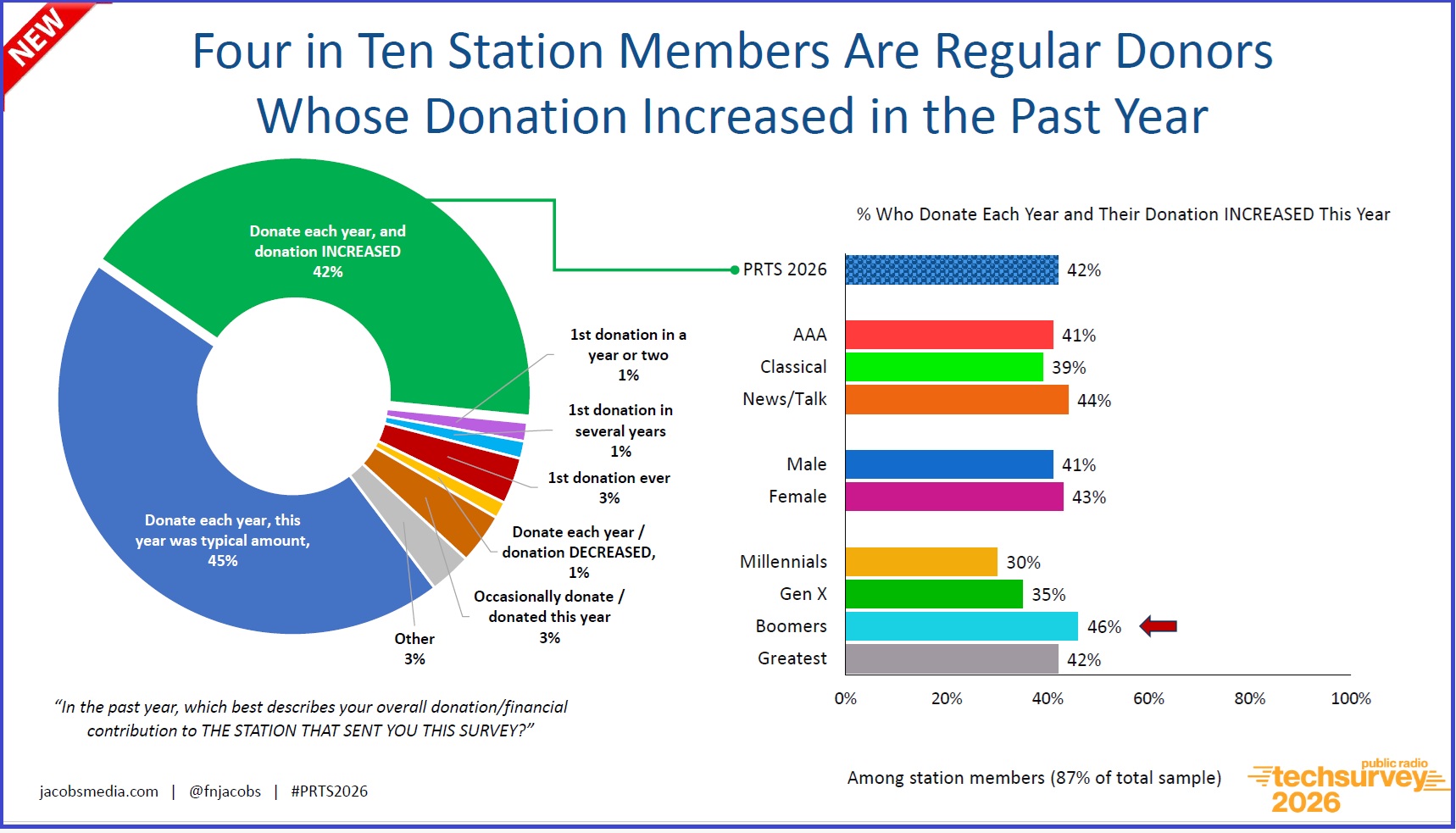
Of the core listeners participating in the survey, four of every 10 say they donate every year, but this year they increased their donations, he said. See below (you can click on these slides to enlarge).
Political conditions continue to have a major impact on core public radio listeners, which is fueling fundraising, he said.
In fact, 39% strongly agree that what’s happening in politics will lead them to increase their support for public radio. The research found that women are more likely to feel that way than men.
“There’s a strong possibility that next year will be pretty solid as well,” Jacobs said.
One in five station listeners in the survey anticipate donating a greater amount next year than usual.
The most effective funding pitch for public radio stations (72%) is government funding cuts and the need for listener support. That’s followed by appeals of making public media available for all and then the need to support independent media in the community.
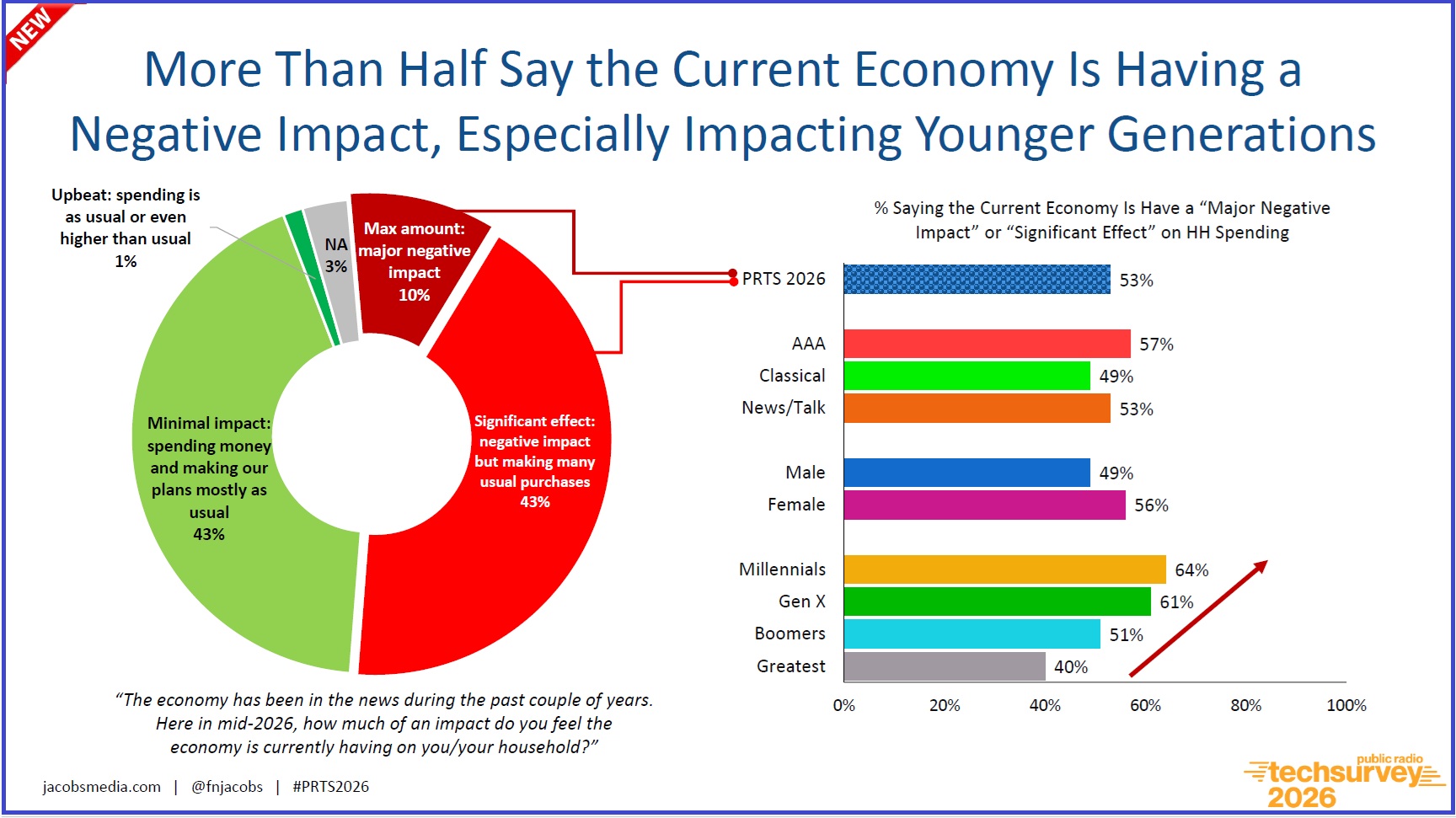
Current economic pressures were also measured. The Techsurvey shows that the economy is affecting the ability of respondents to give. More than half say it is having a negative impact on their spending.
“One in 10 core public radio listeners say they are being affected in a major way, a negative impact in their life as a result of the economy, and then 43% are saying the economy is having a significant effect, negative impact,” Jacobs said.
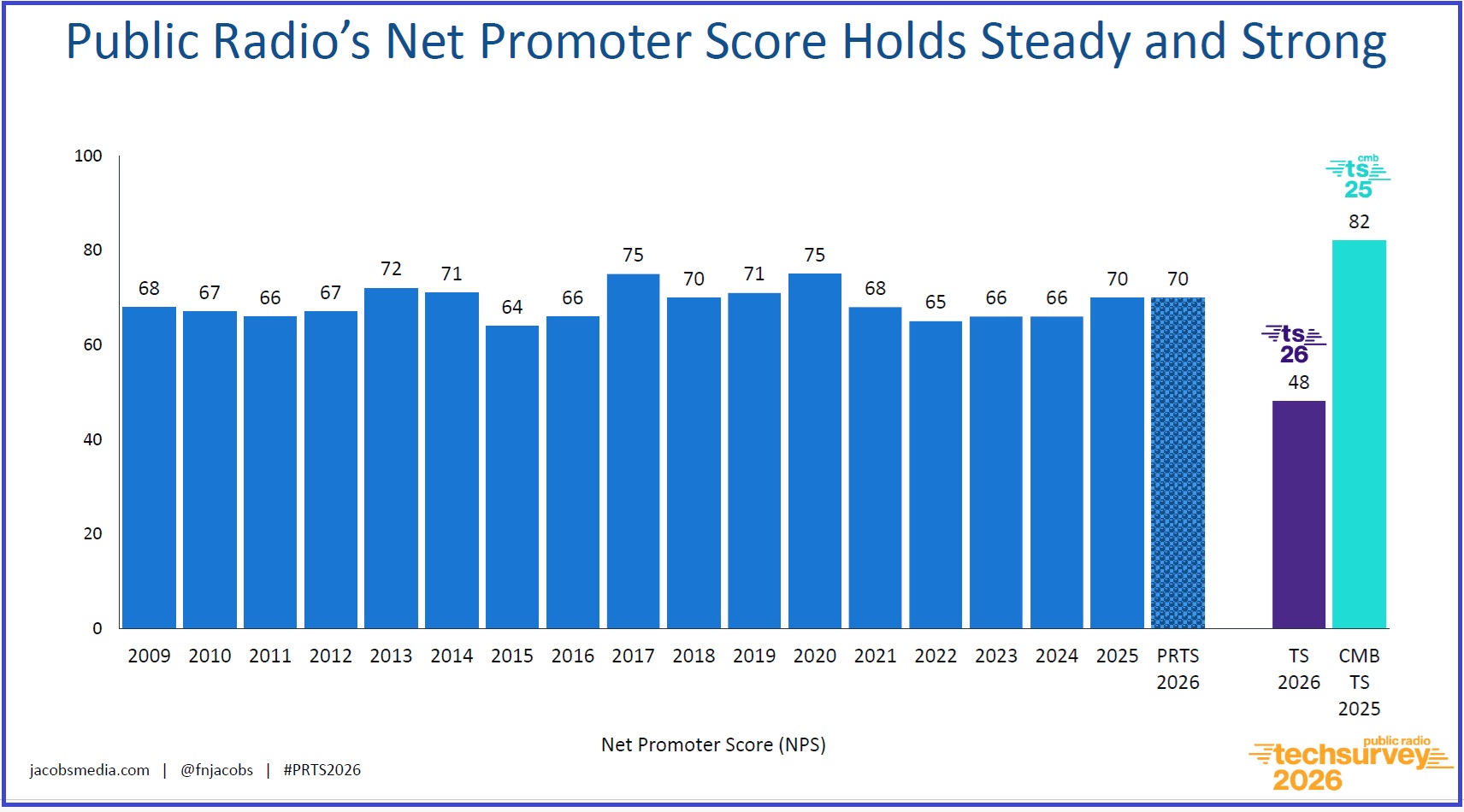
The public radio “net promoter” score remained at 70 for the second year in a row. It’s ahead of commercial radio but below Christian music radio results, Jacobs said.
Net promoter scores gauge whether core listeners are likely to recommend a public radio station to others. Public radio’s score has remained fairly steady since 2009, spiking to 75 during the covid pandemic.
“I think you’re definitely looking at reactions to the federal cuts as part of this year. In contrast, commercial radio has an average net promoter score of only 48, so that’s quite a gap there. Christian music radio, on the other hand, actually has a whopping 82,” Jacobs said.
When examining the three prominent formats of public radio –—AAA, classical and news/talk — clearly AAA is the big leader with a net promoter score of 80.
“By the way, that’s no fluke. It has been trending that way over the past several years. News/talk fans are the toughest graders with a score of only a 66,” he said.
Those who like public radio spend the vast majority of their time listening. In fact 40% say it’s all they listen to, Jacobs said. An equal amount say they listen to public radio most of the time. Women are the most likely to say they listen all the time, with millennials and Gen X listening less than boomers and the “greatest generation.”
However the aging of the largest subset of public radio core listeners is a concern. “Demos remain in Medicare territory,” Jacobs said.
The average age of those participating in this research project is 66.5 years old, compared to 65 three years ago. Sixty-five percent of listeners in the survey are 65 or up, according to Jacobs.
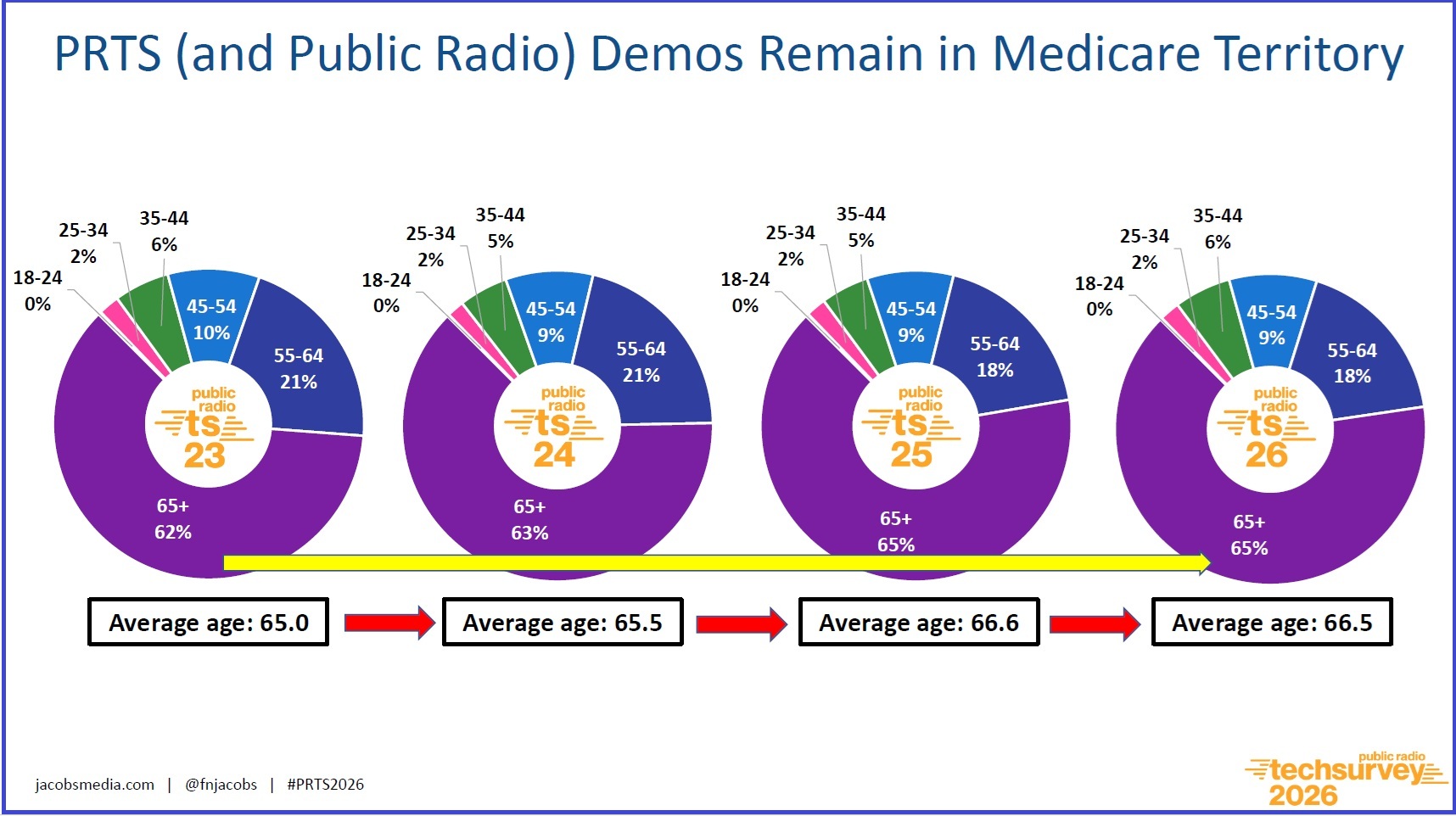
“The aging of public radio has been a long-time concern. Stations need to look for content, events and connections to achieve greater relevance with younger fans. Generational common threading is important strategically,” Jacobs said.
The study found that being local can give public stations an edge in their market. Nearly 75% agree that it does. It is the case especially among progressively younger Techsurvey respondents, Jacobs says. Men and women are about even in the findings.
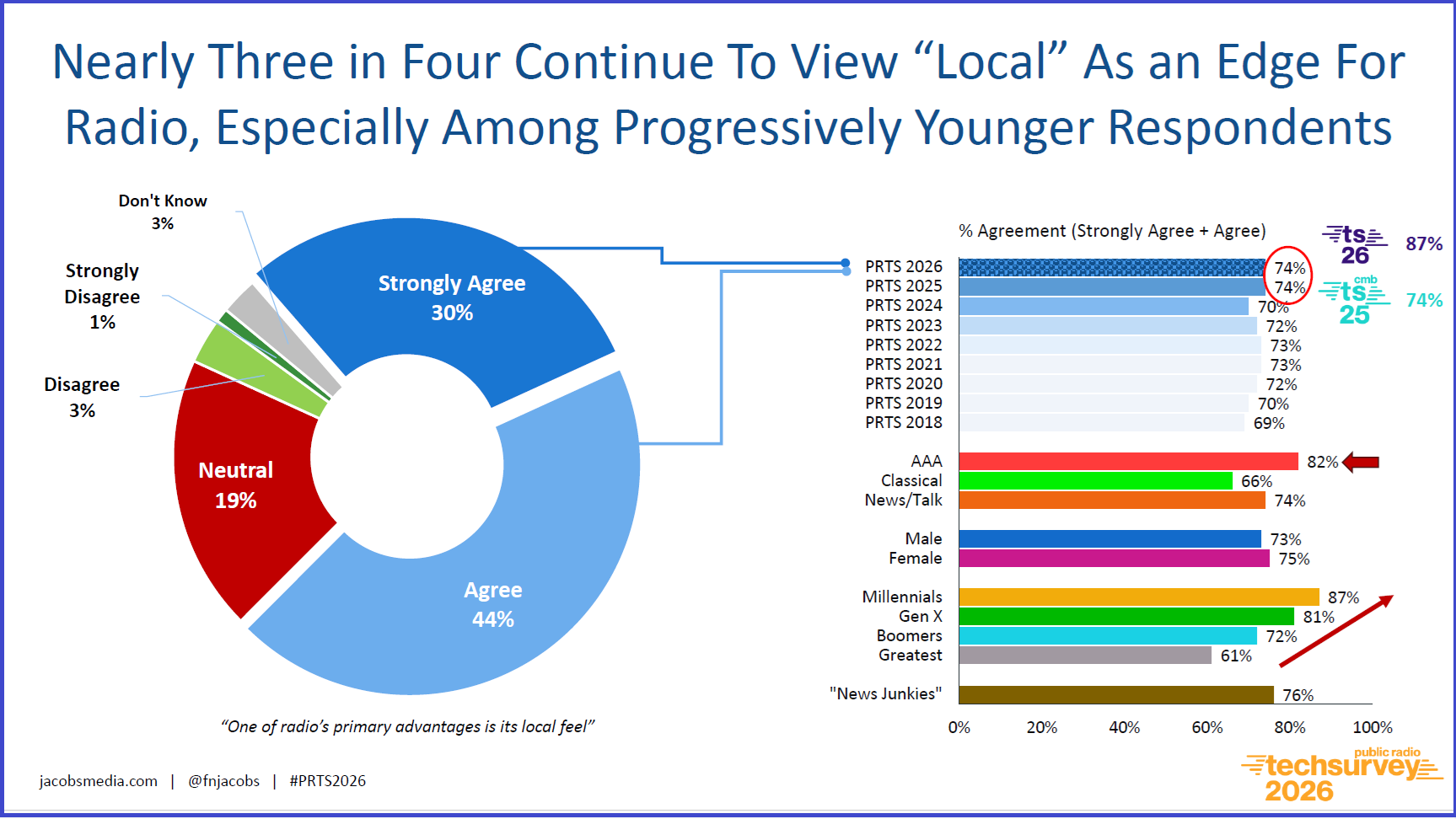
However, only 39% strongly agree that the local public radio station they listen to is “well-connected in the local community.” Meanwhile, 46% want their station to have greater visibility in the community.
In the next part of our series about the Public Radio Techsurvey 2026, we will examine how in-car listening dropped even further as listening habits continue to shift to digital.