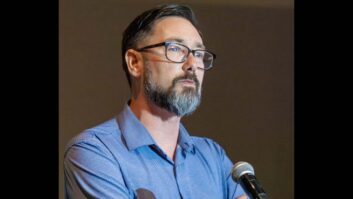
In this “Future in Focus” series, we’re asking industry thought leaders, executives and engineers to comment on top trends of the past year and what they expect for radio in 2026.
Bennett Kobb is a technical volunteer at KZSM(LP) in San Marcos, Texas, and the editor of Experimental Radio News. He is a former contractor to the IPAWS public alert and warning program at FEMA.
Radio World: What do you think is the most important thing that happened in the world of radio in 2025?
Bennett Kobb: The FCC has long had rules on the books against news distortion. These were intended to protect the public against egregious and false news reporting. Additionally, stations are obligated to operate in the public interest.
That rules and policies about distortion and public interest are seldom invoked, is a credit to broadcasters’ professionalism and integrity.
In 2025, however, we saw an emboldened FCC threatening news distortion and public interest accusations against stations doing their jobs. This disturbing development is I believe the most important thing that happened in our field during the year.
A close second would be the forced closure of the Corporation for Public Broadcasting, which has supported noncommercial radio and TV for decades. The effect of CPB funds cutoff will not be limited to noncom stations. I believe it will affect the equipment suppliers and industry services on which all radio depends.
RW: What technology or business trend do you think is going to have the greatest impact in 2026?
Kobb: I am concerned that increased use of AI and automation will bring blander, less interesting and less innovative programming to the airwaves. If there is an encouraging note, it is the continued growth of locally focused LPFM stations and the many independent productions they air.
It is my hope also that the FCC and FEMA will move aggressively toward software-based Emergency Alert Systems, which promise to reduce the costs and complexity of EAS compliance — especially burdensome to the smaller stations.
Neither FCC nor FEMA seem to have any data at all as to the extent to which radio stations actually forward EAS alerts to the public. The FCC requires that stations submit the EAS Test Reporting System (ETRS) forms, but ETRS concerns EAS readiness and not daily EAS participation.
The agencies like to point out that thousands of EAS alerts are issued per year. No one knows how many are actually relayed to the broadcast audience.
RW: What will be your main professional goal or project?
Kobb: I am supporting my local LPFM station in acquiring new studio and transmission equipment and tower. I am helping other LPFMs across the country through the Grassroots Radio movement. I also will continue to track FCC experimental licensing in my newsletter.
Of special interest is the sustained pressure on the commission to do something about shortwave radio, where the FCC rules have not changed in decades and financial services companies are demanding access for high-speed intercontinental data transmission.
[Related: “FCC Reminds Experimental HF Stations to Identify Themselves”]
RW: How will our industry be different in 10 years?
Kobb: I will go out on a limb and project that both AM and FM radio and even HD Radio will decline in favor of audio streams on ATSC 3.0 TV stations.
The audio capacity of these new digital TV operations is substantial; experts have predicted it will supplant the existing terrestrial radio infrastructure.
A radio station won’t even need a license. The licensee will be the ATSC 3.0 broadcaster who will function as a digital service provider to the radio content producer.
Grand claims perhaps, and it is clear that ATSC 3.0 rollout to the consumer has not satisfied FCC or industry. Yet in ten years I expect the patent, encryption and receiver adoption issues of ATSC 3.0 to have been resolved so we can look forward to a new generation of radio.
Radio World welcomes comments on this or any story. Email [email protected] with “Letter to the Editor” in the subject field.
Read more stories like this in our News Makers section.