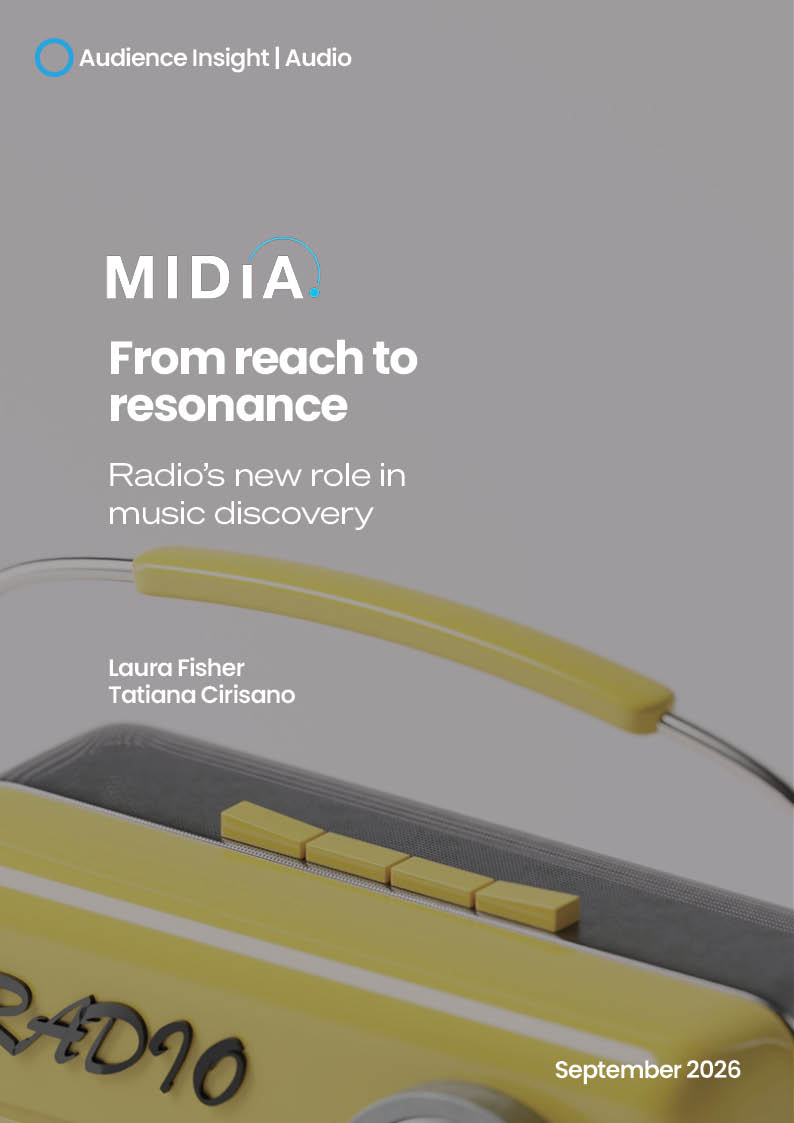
 Radio has an opportunity to use its core strengths to drive music discovery for new generations of consumers.
That’s the theme of a recently released report from MIDiA Research, which based its findings on research involving consumers in the U.S., U.K., Canada and Australia.
“In an entertainment landscape dominated by ubiquity, fragmentation and algorithms, new generations and music superfans are craving scarcity, shared experiences and human curation,” the company states in a summary of the report, which is available to its subscribers.
MIDiA found that 42% of live radio listeners aged 20 to 34 tune in for music discovery.
The company believes that radio offers these consumers qualities that more “modern” services such as streaming may struggle to provide.
In a blog post on this topic, the company’s Audio and Entertainment Analyst Laura Fisher points to London’s NTS as an example of how “radio’s revival is visible at the cultural edges before it shows up in the mainstream.”
She describes it as “a station built on human curation, niche taste-making and a loyal, participatory relationship with its listeners. … Tuning into a schedule, trusting a DJ’s taste, and listening alongside an unseen but real audience are all becoming more sought after.” (Read her blog post.)
“Streaming borrowed many features from radio but left behind three of its greatest strengths: context, human curation and dynamism,” MIDiA states in a release about the report.
It believes that modern music fans “are drawn to radio for its ability to help them discover music, enjoy curated playlists and music selection, and feel part of a shared listening experience.”
The traditional hooks of news, weather and travel are less central to this group, it said. “The appeal of live radio lies increasingly in its role as a free, accessible source of entertainment and discovery.”
The company said the opportunity “comes at a time when radio’s overall position is relatively weaker than it has been historically.” It said music streaming has narrowly overtaken radio as the main music consumption format, “in part by adopting radio-like features.”
But it concludes that “radio is well placed to reestablish itself as an important source of music discovery. … The opportunity lies in strengthening what makes radio distinctive, rather than trying to become more like streaming.”
Its report is based on consumer surveys of about 4,000 people, conducted annually from 2022 to 2025, in the United States, United Kingdom, Australia and Canada.