Research by Jacobs Media shows that public radio station listening on digital platforms is achieving even more traction while leakage continues from the traditional listening method.
The latest Public Radio Techsurvey of more than 17,000 core listeners to 49 stations shows public radio listening is now 54% via broadcast and 43% digital, compared with 83% broadcast 13 years ago.
The trend lines are flattening but the gap is closing and “those two lines are going to cross,” said Fred Jacobs, president of Jacobs Media. (Click images to enlarge.)
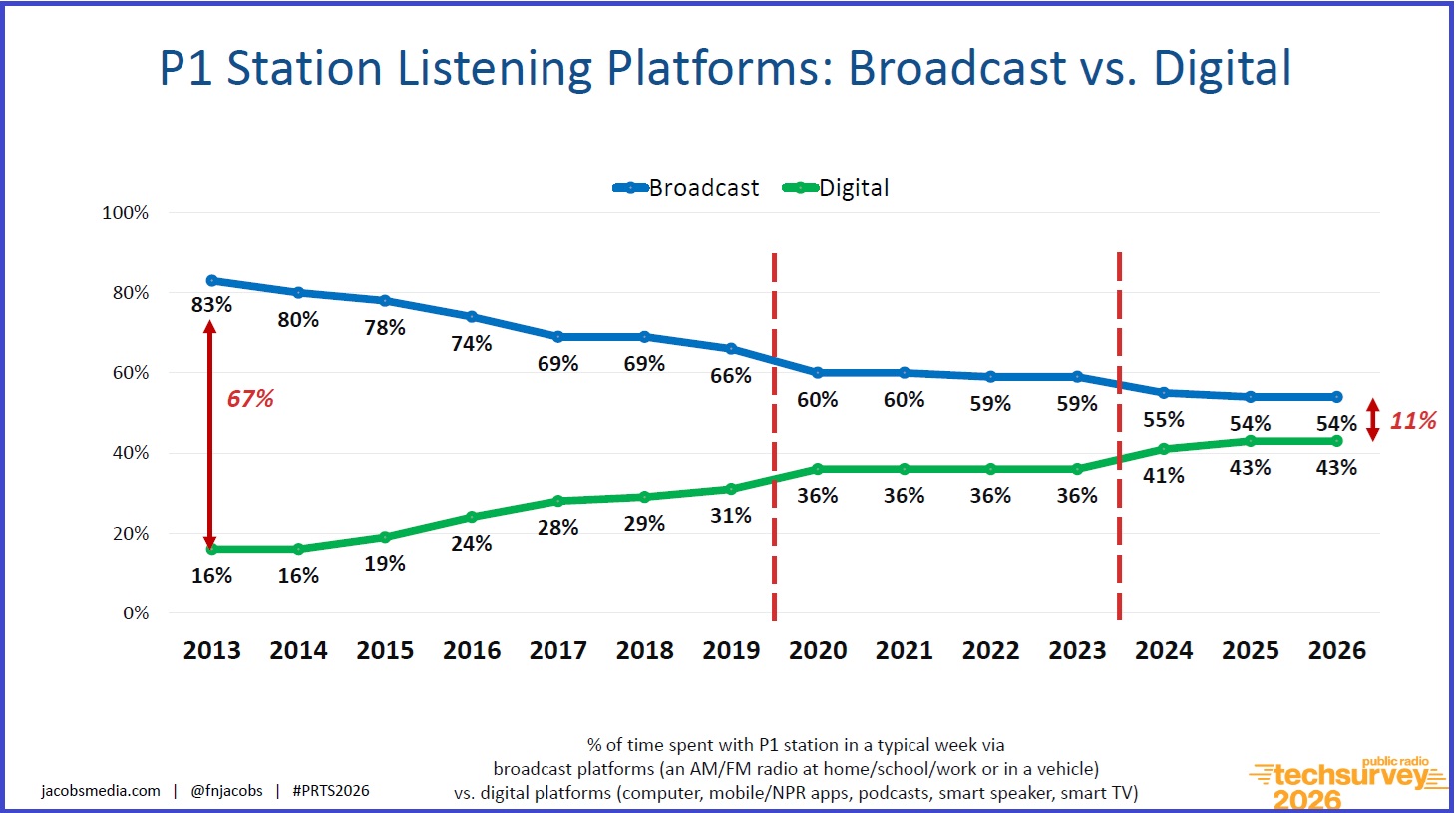
AAA-formatted stations have already crossed over to majority digital consumption.
Computer streaming, smart speakers, mobile apps and podcasts make up the majority of the digital sources that these consumers use to listen to public radio.
Jacobs finds that mobile is a key conduit for public stations, especially connecting with young people. Mobile app adoption in the survey was 44%.
Men are more likely than women to download their favorite public radio stations app (47% vs. 42%). Of those who have downloaded their P1 station’s app, 57% rate it excellent and another 32% as good.
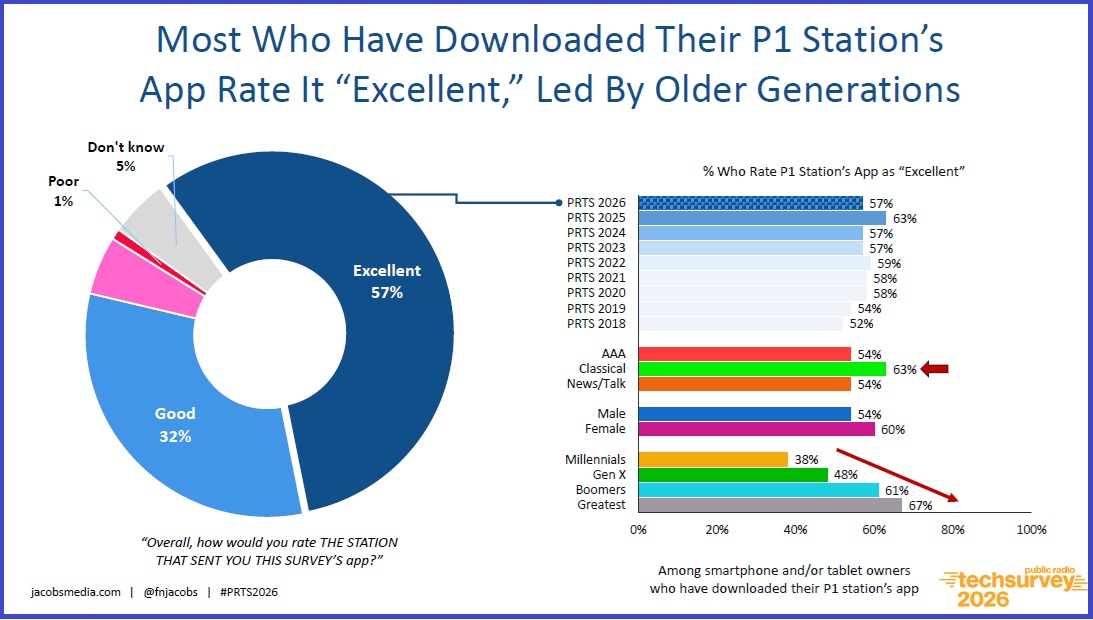
“The good news is, if you have a mobile app for your radio station, chances are those who have downloaded it will be happy,” Jacobs said during an online presentation this month.
There is also growing opportunity to focus on mobile donations, according to the survey, which he said is vital in the post-federal funding era.
The research shows fewer core listeners to public radio still own a traditional radio at home, and the number is dipping quickly from 83% in 2018 to 68% this year.
Worth noting is that the average age of those participating in this year’s research project was 66.5. Respondents are mostly members of radio station databases.
Statistically, in-car AM/FM listening is at its lowest point ever, according to the study. The latest data show that among these core listeners, the percentage of time spent with AM/FM in a car on a weekly basis is now 52%, down from 56% a year ago and down from 65% in 2018.
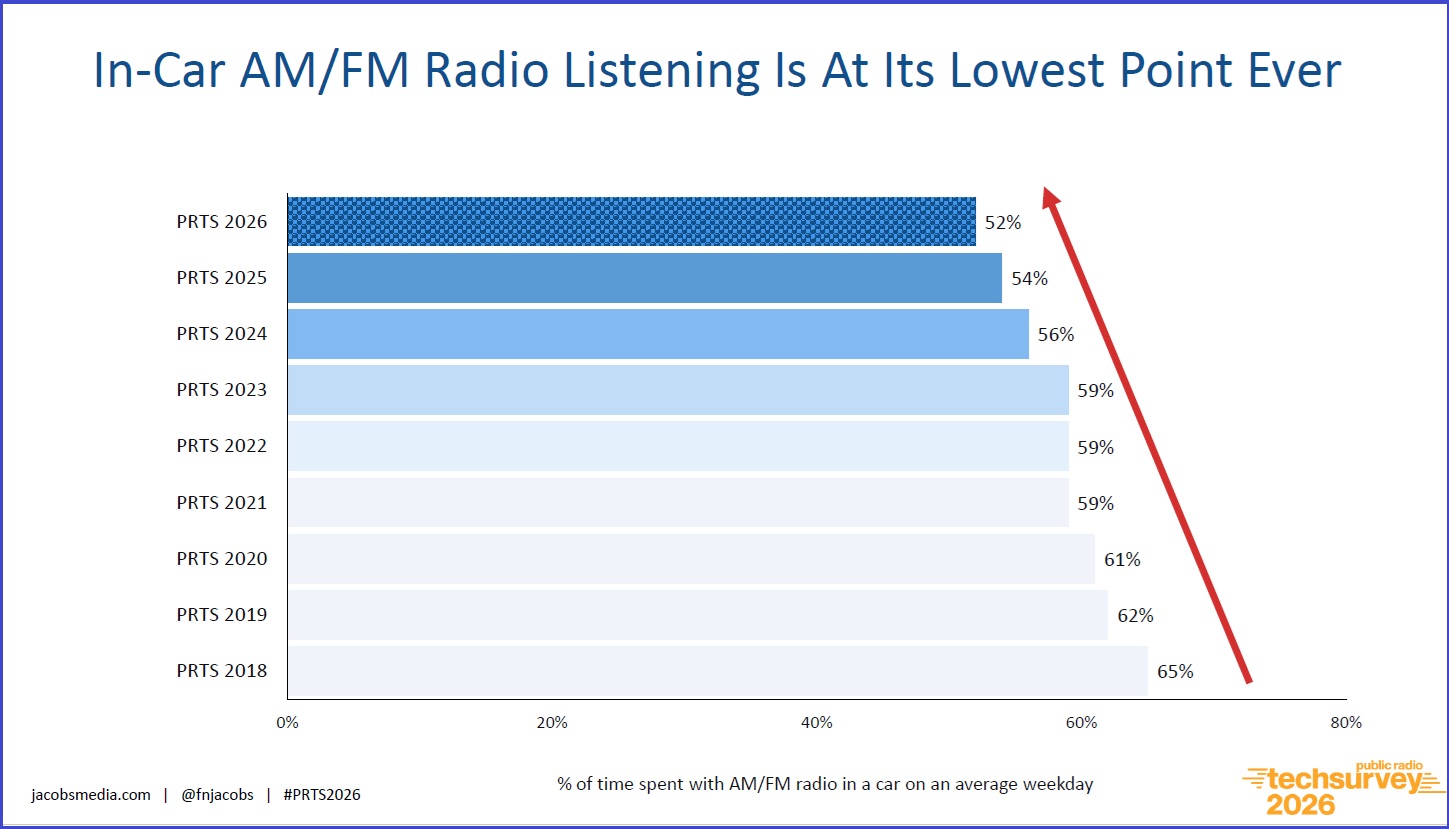
Jacobs said that in coming years, in-car listening will shift from a reliable habit to a problem.
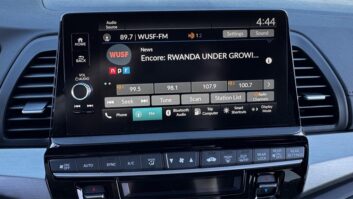
Broadcast radio continues to fight for its visibility in the dash. Jacobs wrote that stronger dashboard metadata might help keep public radio in that game.
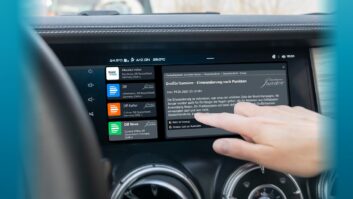
To that point, the survey found that nearly three in four respondents own a vehicle with dashboards displaying artist and title information, and almost half say they pay close or above average attention to the dashboard display, especially true in the case of younger generations like Millennials and Gen X.
What are they looking for in addition to song and artist? The survey says strong choices include emergency weather info, name of host or program and breaking news alerts.
While overall listening in public radio appears stable, Jacobs says, nearly 10% of respondents report listening to less of it in the past year. Those core public listeners say they are instead listening to other non-radio options more often, including Spotify, SiriusXM, their own music playlists and smart speakers.
Perhaps surprisingly, the importance of having air personalities lags when compared to commercial radio, according to Jacobs.
Only 40% in the survey say it’s the reason why they listen to public radio, but it’s 60% for commercial radio listeners.
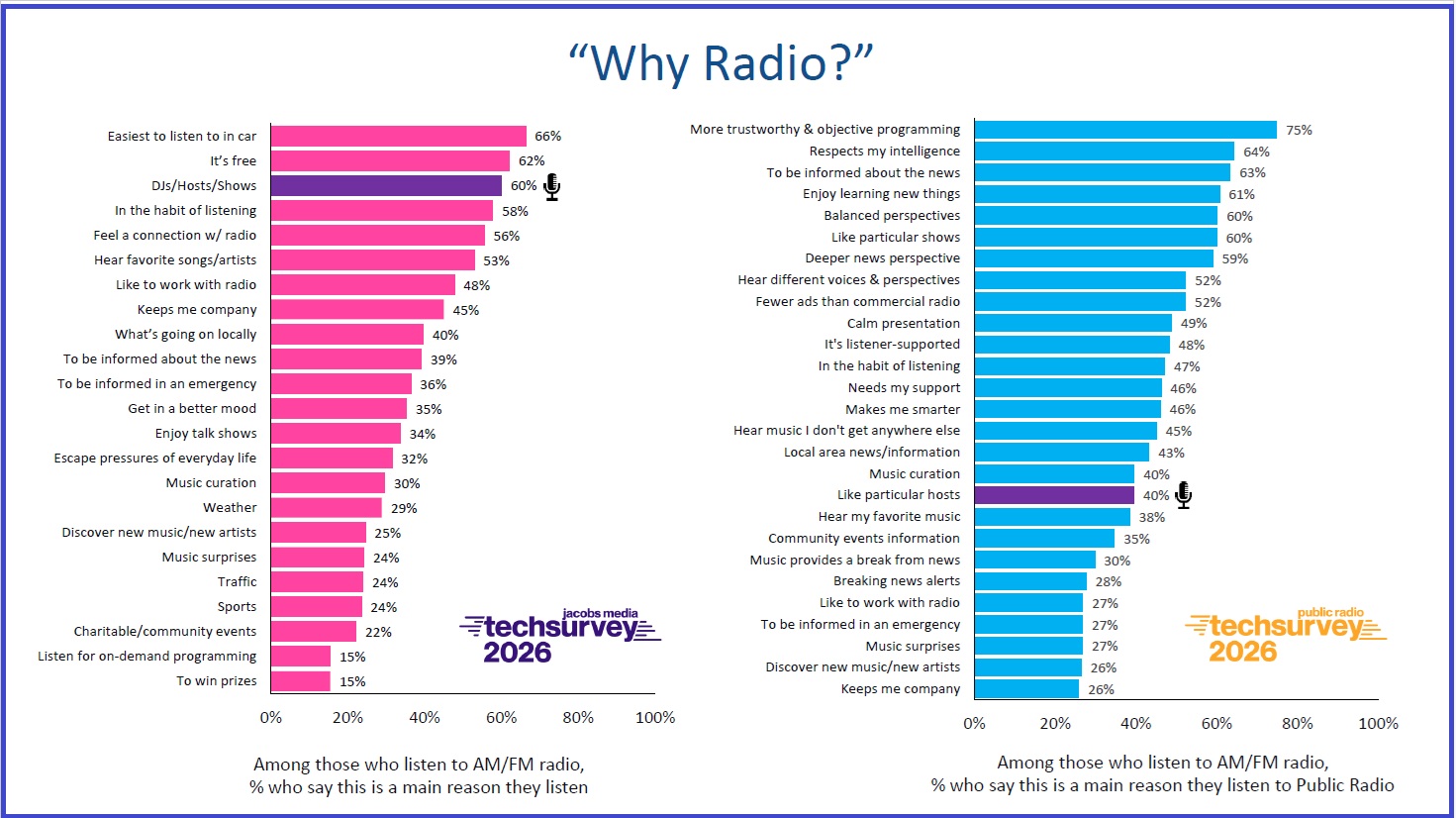
Female respondents tended to care more about personalities than men (43% vs. 36%).
Video is trending up with 35% of core public radio listeners saying they watch short videos when online at least daily, especially progressively younger listeners. That percentage shoots to 53% for Millennials and 45% for Gen X. Yet it drops to 31% for Boomers.
Increasingly, videos of podcasts in particular are becoming popular, according to Jacobs. The percent who say they frequently or occasionally watch video podcasts on YouTube jumped from 19% a year ago to 25% in the current survey.
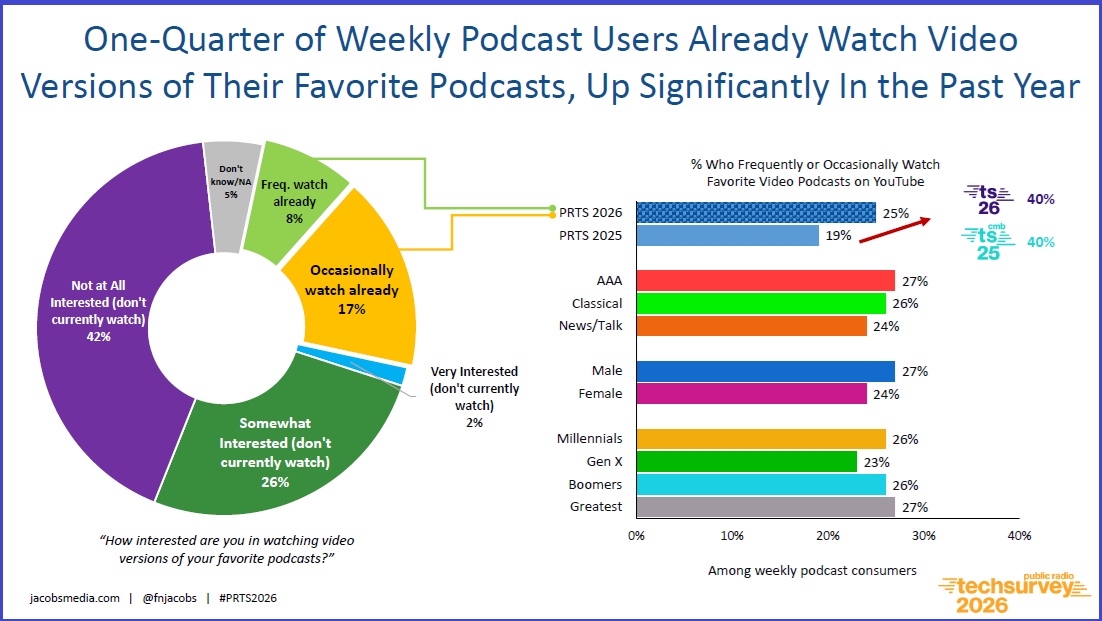
Sixty percent of respondents said they use YouTube weekly or more. Men use it significantly more (67% vs. 53%).
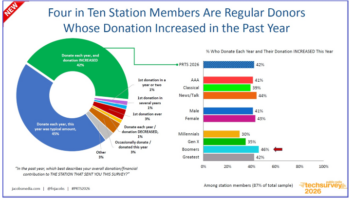
As we reported earlier, Jacobs also found that public radio continues to face steep budget deficits after the loss of federal funding but that the surge in donor support in 2025 largely carried over into 2026.
A video of the presentation is available here.
Jacobs Media also publishes Techsurveys for commercial radio and Christian radio.