Five years ago, the listener-supported, community radio voice in the Great Salt Lake region made a bold move.
KRCL(FM) 90.9 FM, on the air since 1979, sold its building in 2021 at 1971 West North Temple St. in Salt Lake, where the station had been located for 20 years.
The station moved about two-and-a-half miles east to a former mattress warehouse on West 300 North. It partnered with Giv Group, a Salt Lake-based developer with a sustainability mindset. The new location, in Salt Lake’s Guadalupe neighborhood, is much closer to its downtown.
But the studio move was only phase one of KRCL’s plan.
On April 2, the station revealed to its listeners what it really desired: a space for Utah’s newest independent venue for live community performances and gatherings.
Publicly accessible
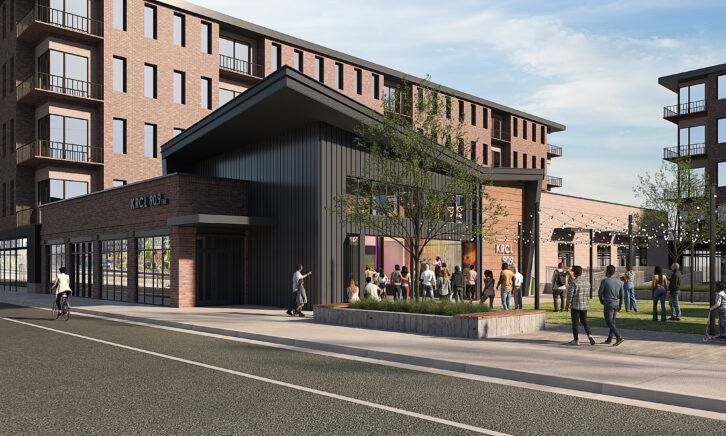
In 2021, KRCL’s new home had to quickly be converted into studios and offices that the station would use to keep broadcasting rather seamlessly. That was phase one.
Some of its longtime listeners, KRCL Executive Director Gavin Dahl told us, wondered why the station would move from a building it owned into a seemingly “never-ending” construction zone.
But to ensure it secured funding to survive in the interim, it kept its community space plans under secrecy.
The second phase resulted in expansion of the space, where KRCL added offices, common areas and an upgrade to its live band room to record performances, including sound, lighting and video equipment.
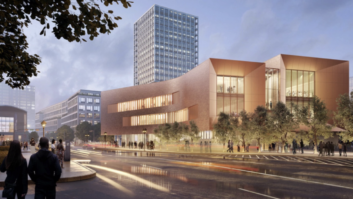
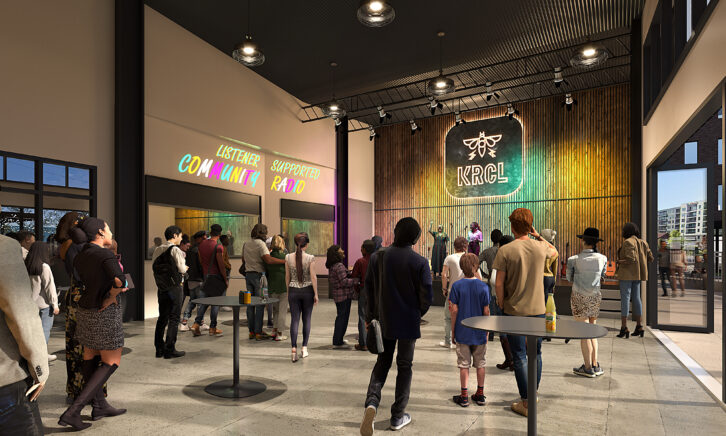
Finally, the “Next Generation” is a performance space that is capable of hosting more than 100 live events each year that can also be lent to the community.
The facility will include an all-ages performance hall with a 200-seat capacity, an outdoor plaza, three production studios and a conference room, as well as an educational studio dedicated to Donna Maldonado, the station’s former general manager.
All from its newfound neighborhood digs in a growing neighborhood described as “covert, creative, diverse and proximate.”
“Our block is a unique connection point,” Dahl said.
The West 300 North location is also one of only three locations in the Salt Lake Valley where Utah Transit Authority’s commuter railway, FrontRunner, meets the light rail system, TRAX, Dahl explained.
There are approximately six bus routes intersecting nearby, with protected bike lanes and a new pedestrian bridge across the train tracks.
Dahl hopes the bridge will aid the new venue’s attendance from area high school students, while offering a way to reconnect the Guadalupe and Rose Park neighborhoods with Salt Lake’s Marmalade section and downtown itself.
Drawing the 801’s next generation
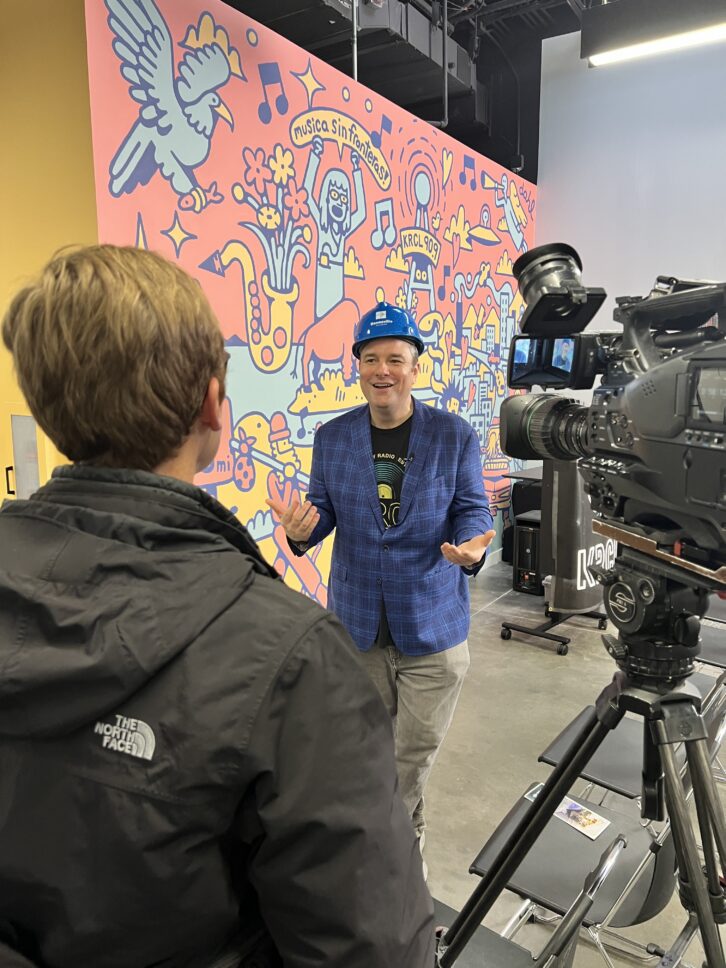
Many of KRCL’s long-standing listeners who enjoy its blend of music from alternative rock to reggae, blues to bluegrass and highlights of at least one track by a Utah artist every hour, discovered the station organically through its Class C FM signal that transmits atop Farnsworth Peak.
That’s not changing, of course. But the reality, Dahl explained, is that for younger listeners, a vibrant studio with live music performances represents a much easier way to gain visibility.
“You might attend a teen band’s first ever performance or an elementary student art show in our space and learn about KRCL at the same time,” Dahl envisioned.
He anticipates about 200,000 people will walk past the new building each year just for the live music at its neighboring venue, The Union Event Center.
Dahl drew inspiration from his visit to KEXP(FM)’s public lobby on the Seattle Center campus in its Uptown neighborhood. He also corresponded with KMFA(FM) in Austin regarding its small performance space, which was originally intended for chamber music but now hosts a wide range of public and private events.
[Related: “KEXP Builds Around Human Power”]
“We looked around at many stations that have added live community spaces,” he said.
He also cited WBUR(FM)’s Boston CitySpace, which has driven approximately half of its revenue from event rentals.
Dahl has a history of working in community radio and nonprofits. He previously served as general manager for KDNK(FM) in Carbondale, Colo. and also spent time in Olympia, Boise and Spokane after getting his start in Seattle.
He joined KRCL in 2022 and has spearheaded its community engagement campaign.
Go your own way
Last month, the station announced its plans to the public after completing the first two phases and achieving approximately 75% of its project budget.
There were audible gasps in the crowd, Dahl recounted, when the station revealed how much money it had raised for the effort. KRCL achieved $6.2 million of its desired $7 million from Giv Group, individual donors and other foundations.
The Kahlert Foundation, meanwhile, which funds organizations in Utah and Maryland to help them benefit their communities, pledged $1 million to name the KRCL building.
Individual donors have contributed approximately $800,000 so far.
KRCL also couldn’t have done it any other way. The ambitious effort comes at a time when, as Dahl so eloquently put it, the station was left with one option: “Go fund yourself.”
The station lost approximately $136,000 yearly through the loss of federal funding from the Corporation of Public Broadcasting, and it lost around $250,000 from its Next Generation Warning System grant from FEMA.
In 2025, the station overcame its deficit. Its listeners stepped to the plate.
“Community radio could not thrive without membership donations,” he said.
In all, KRCL has about 4,500 active members.
The station has been supported by the developers at Giv Group, project management from Bonneville Builders and leadership from Architecture Belgique. Dahl also credited skilled KRCL volunteer board members who range from an architect, a builder, a banker and a retired executive who has led multiple nonprofit capital campaigns in the state.
“We went from expecting to lay people off to adding instead,” he summarized.
Serving the Great Salt Lake
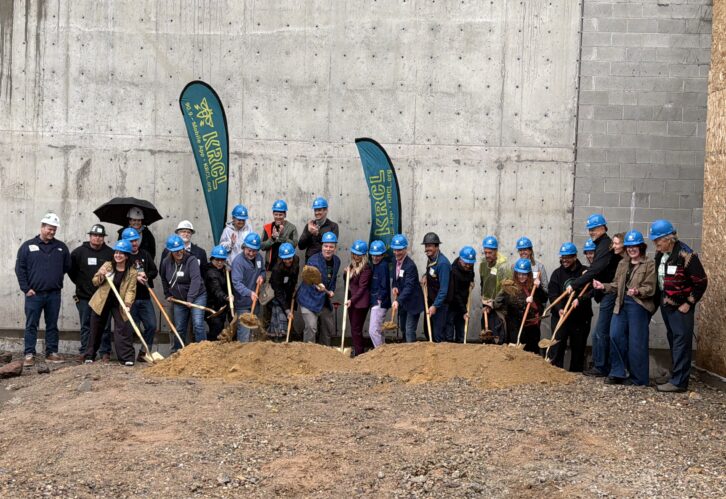
On May 1, KRCL signed the construction contract for the project.
The KRCL “Next Generation” campaign will host a grand opening in summer 2027.
Today, KRCL has nine full-time staff members, 12 part-time staffers and another 12 contractors. Dahl credited the support of Lewis Downey and Bill Ramsay, two longtime engineers who have been part of the development along with Assistant Engineer Griffin Hall.
The station also has around 50 volunteer DJs and more than 200 off-air volunteers.
No longer an NPR affiliate, KRCL airs 100% locally produced programs, Dahl said. It runs about 40 programs that air once a week and six shows that air on a daily basis.
The station belongs to two regional coalitions that contribute to its overall sound, the Rocky Mountain Community Radio coalition and the Great Salt Lake Collaborative.
The end result once the space opens next summer, Dahl anticipates, is the formation of a new audience through human interaction, as it approaches the 50th anniversary of its first broadcast in 1979.
“Community connection and music discovery are still the purpose,” Dahl said. “Amplifying voices too often ignored in other outlets remains integral to what we do.”
[Do you receive the Radio World SmartBrief newsletter each weekday morning? We invite you to sign up here.]