In an age when virtually any broadcast can be “remote,” the very definition of a studio is changing — if there’s a studio at all. This is one in a series about how stations are creating and managing audio from anywhere, thanks to virtualization, cloud, IP and other technologies. This is from the free ebook “Audio Production (From Anywhere).”
“With the recent advancements in consumer technology, radio now has endless options to create content outside the studio and bring the broadcast experience to the listeners,” says Andy Gladding.
He is chief engineer for Salem Media of New York and chief engineer and adjunct professor at WRHU Radio/Hofstra University. He and his wife Katie also are the owner/operators of 98.1 WKZE(FM) in Salisbury, Conn.
While familiar broadcast codecs remain a gold standard, he said, a variety of software and hardware options allow stations to create interactive experiences for the listeners onsite and over the air.
One of his favorite free tools is Sonobus.
“This has broken the barrier for stations to do audio remotes using cheap alternatives to hardware codecs. A simple laptop with a USB codec device or microphone provides the remote connection, while a PC running at the station with a consumer sound card provides the studio end connection,” Gladding said.
“It’s free, simple to use, easy to understand and operates on a PC, Mac, Android, iOS or Linux-based platform.”
Staff members that may not be technically savvy can connect a device to a venue’s Wi-Fi or hotspot and be on the air within minutes.
He pairs it with an economical Zoom PodTrak P4 recorder.
“You can have up to three microphones and a Bluetooth connection and the unit will generate an automatic mix-minus to the host device over USB. It also has four independently controllable headphone outputs. It will also interact via USB with an iOS or Android device, so get a tablet with a SIM card and you’re on the air from anywhere.
Sonobus is user-configurable and can operate with a range of codecs, he said. “Testing the buffer settings is important before using it in the field. Sonobus will also require some minor IT knowledge to get the connection through the station firewall, but it’s fairly simple.”
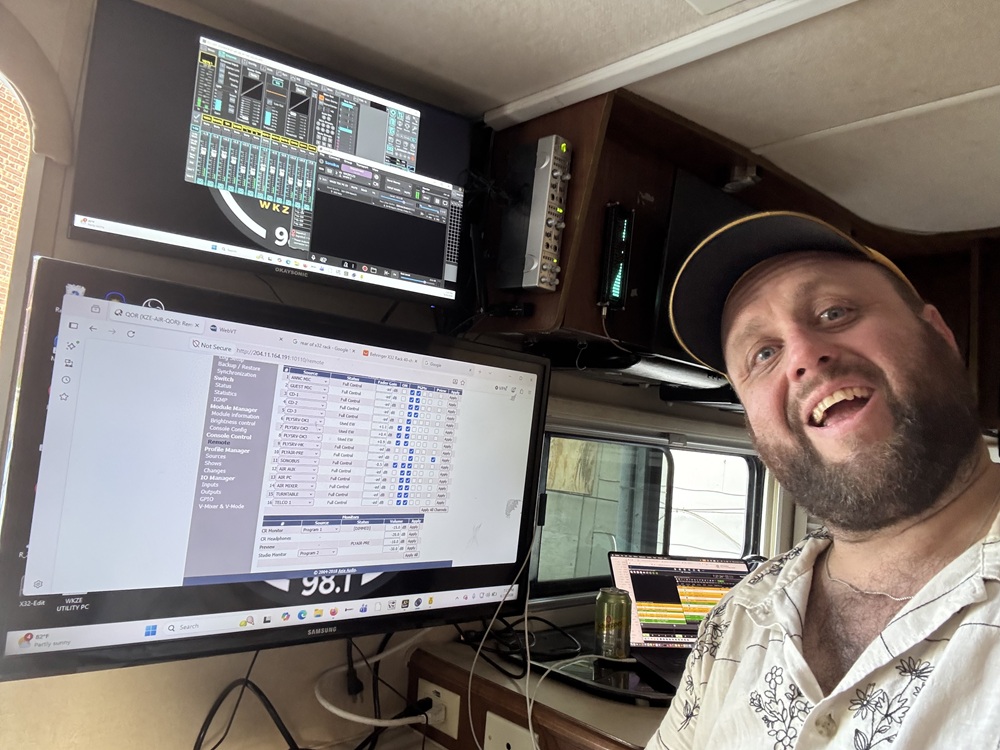
Gladding makes sure WKZE is prepared to intake and distribute audio in almost any format and from any location.
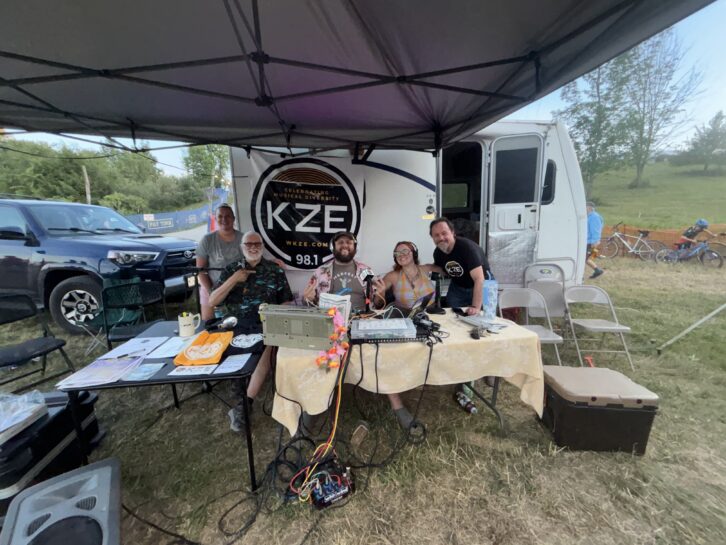
“We have a variety of connection options, from Comrex Access to VoIP lines to freeware options like Sonobus. I also have kits ready in all shapes and sizes for my mobile team.”
Recently, they have developed a new tool for gathering high-quality audio and video.
“During the spring, I happened across a cheap RV trailer on Facebook Marketplace and turned it into a remote vehicle we call ‘The KZE Kamper.’ This is a true rolling satellite audio and video studio, complete with three Wi-Fi access points, Comrex Access, Behringer X32 AES 50 routing and mixing, remote control of the station PlayoutONE and Livewire systems and a host of other features.”
The “Kamper” can handle up to eight Wi-Fi cameras with PTZ control. It manage other AoIP connections internally and has 5G and Starlink ISP connections. It also has backup power, AC and a studio inside for doing live breaks and artist interviews from the field.
“It was designed primarily for handling large-scale concert production, but is flexible enough that it can be employed for station remotes and promotional events. It even has remote monitoring, visual silence sense indicators and other station Stat-Mon, making it a true one operator media delivery and content creation machine.” (See sample video from the KZE Kamper.)
“Radio is fun,” Gladding concludes. “The technology should be used to help creators make better content and spend less time dealing with logistics.”
Comment on this or any article. Email [email protected].