In this letter to the editor, the author comments on the article “U.S. HD Radio by the Numbers.” Radio World welcomes letters to the editor on this or any story. Email [email protected].
 The author is vice president of operations and technology for Louisville Public Media, which includes 89.3 WFPL(FM), 90.5 WUOL(FM) and 91.9 WFPK(FM).
I recently read your article in about HD Radio signals and found it to be a fascinating presentation of the numbers.
One area where I would be very interested in seeing additional data, though not easily accessible, is the number of stations that initially launched HD Radio broadcasts but have since discontinued them. Our stations at Louisville Public Media are among that group.
In the early 2000s, funding was made available to many public radio stations to implement HD, and, being the nerds that we are, we all jumped at the chance to add this new technology to our stations.
[Related: “Xperi Says 12 Million Vehicles Have DTS AutoStage”]
Over the past two decades, as transmitters were upgraded or HD Radio equipment failed, a significant number of stations quietly turned off their HD signals and never restored them. For many, the benefits simply did not outweigh the expense of operating them: additional power and HVAC requirements.
At Louisville Public Media, we maintained HD Radio service on all three of our stations for many years. Occasionally, when one would fail, it sparked internal debate about whether the investment was worthwhile.
I consistently argued that few listeners actually tuned in via HD Radio. Standalone HD radios are extremely difficult to purchase, and although many new cars now include them, well under half of vehicles on the road in our market are equipped. Even when drivers have an HD Radio receiver, they often don’t know it — or don’t realize when they are listening in HD.
Early on, I even encountered car dealers who would disable HD in new vehicles because customers returned complaining of reception dropouts caused by time alignment issues. In such cases, it is unlikely those listeners ever turned the feature back on.
Roughly 10 years ago, we replaced all of our HD gear, but since then, two of our three stations have experienced HD failures. As a result, both our news and classical services are now analog-only, with our AAA/rock station the lone HD holdout.
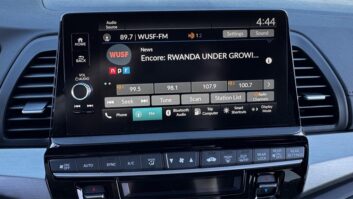
Interestingly, my perspective on HD has shifted somewhat. It is not the audio quality that keeps us invested; most listeners don’t perceive or value that difference in a noisy car environment. Rather, when our AAA station’s HD failed, the complaints we received were not about the sound at all. They were about the loss of car dashboard metadata.
That may be the only reason I would advocate for reinvesting in new HD equipment: to maintain the enhanced metadata display that listeners clearly appreciate.
I recall that Xperi once released survey data on the availability of HD radios, though I have not been able to locate it again. That strikes me as the next essential piece of the conversation: What is the actual penetration of HD receivers among listeners?
Jacobs Media’s annual Techsurvey shows fewer than 20% usage of HD radios — of people willing to take long surveys. Among millennials, the survey showed HD radio usage dead last for all media consumption.
I’d be very interested in updated, independent data on HD Radio listenership. After all, what is the point of broadcasting in HD if no one is listening in HD?
— Charles Spivey, Louisville, Ky.
[Check Out More Letters at Radio World’s Reader’s Forum Section]