A well-done dashboard is a thing of beauty.
While I do care deeply about how new dashboards in cars allot space for terrestrial radio, this time around I’m addressing a different kind of dashboard: a data display created specifically for your radio station.
Data dashboards unify audience ratings, content, advertising and non-traditional revenue, expenses, budget tracking, streaming metrics and digital platform analytics. In other words, all the numbers you care about — finally in one place.
Luckily, radio is blessed with data. Unfortunately, most of it lives in discrete systems, with ratings in one place, streaming metrics elsewhere. And don’t even get me started on sales information, which is frequently trapped in spreadsheets.
It is frustrating to jump between systems to view such things as revenue versus inventory; podcast downloads; how well push notifications perform in creating tune-in; how often each promo is airing; and whether any of it is actually working.
This kind of scavenger hunt wastes time and makes decisions more difficult than they need to be.
A well-conceived dashboard pulls every input into one place, creating a single source of truth. Just as important, the view can be customized by role.
A general manager may want to see everything at a glance. A sales executive may only need pacing, pipeline and inventory. Engineers are likely the only ones who care deeply about uptime, stream health and alerts, not to mention using such tools to keep an eye on remote infrastructure.
For public radio stations, dashboards can make it possible to correlate pledge-drive messaging with real-time donation activity; to track donor churn alongside renewal predictors; and to measure how premiums impact donor lift — all without waiting for a post-mortem. You can probably think of many more applications for a well-designed dashboard.
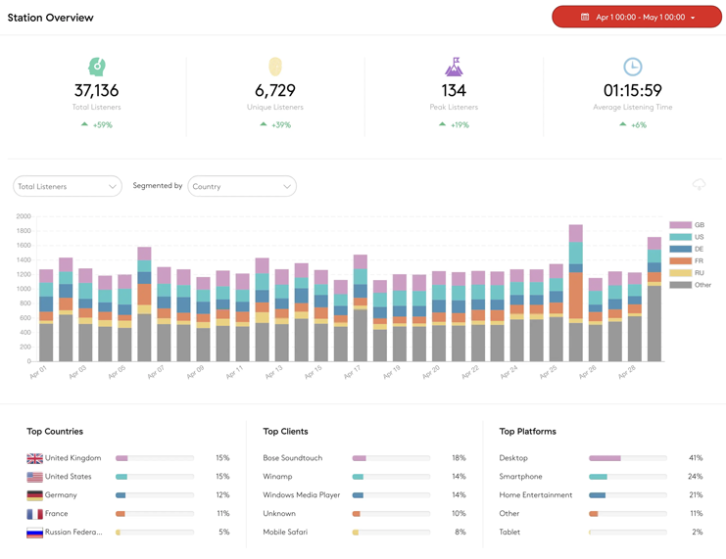
Not long ago, dashboards required significant investment in hardware, software and complex extract-transform-load processes. That barrier is gone.
Software-as-a-service pricing has made dashboards accessible to stations of all sizes. If you have the time and inclination, free platforms like Power BI Desktop can get you started. And because dashboards live in browsers and on mobile devices, there’s no need to build a custom interface.
“Affordability” may very well be the buzzword this year, which means any dashboard project must pass a cost-benefit analysis.
The good news is there are plenty of inexpensive options. Looker Studio, Metabase, Power BI or Tableau dashboards can be built by a freelancer for as little as $500 in a month.
If you can afford a SaaS product designed specifically for broadcasters, even better, as many of the inputs you’ll want have been anticipated. I highly recommend integrating your CRM so your dashboard includes sales pipeline, campaign outcomes, projected revenue and advertiser feedback.
Finally, decide who owns the dashboard. Failure occurs when nobody feels responsible for success.
A poorly-conceived dashboard is worse than none at all, and bad data leads to bad decisions. Be wary of vanity metrics, clutter, and unclear distinctions between historical trends and real-time activity.
This is your year to move meetings, programming reviews and sales conversations from gut reactions to informed decision-making. A great dashboard will sharpen good judgement, interpretation and communication for you and your staff.
Read a commentary from Juan Galdamez of Xperi about its dashboard for broadcasters that shows analytics gathered by the DTS AutoStage system.